Poetry is said to be one of the most beautiful ways a human being can express themselves. Through a careful choice of words, poets evoke certain emotions in whoever reads or listens to their works.
Not only contemporary types, indigenous communities have their own kind of poetry, too. In Southeast Asia, for example, a unique type of poetry is smong.
Smong is a kind of indigenous wisdom found in Simeulue, an island located offshore at the west coast of Sumatra, part of Indonesia’s Aceh province. Being an important cultural legacy, smong was passed down from generation to generation, creating a unique method of disaster mitigation in the island, which was struck by a severe tsunami in 2004.
What exactly is smong and how did it save Simeulue from the devastating disaster?
The Origins of Smong
The word smong is believed to be derived from the term kemong or semongan, which means “tidal wave” in Devayan, the indigenous language of Simeulue. Smong refers to a traditional poem containing instructions on how to evacuate when an earthquake or tsunami occurs.
Smong was composed by Muhammad Riswan, who was also famously known with his nickname Moris, a traditional authority figure in Simeulue. The creation of smong was prompted by a 7,6M earthquake and tsunami that occurred on the coast of Simeulue in 1907.
There are many versions of smong poetry. However, one of the most popular ones contains lines as follows:
Unen ne aleklinon (it started with earthquakes)
Fesangbakat ne mali (followed by a giant wave)
Manoknopsaohampong (the whole land was sinking)
Tibo-tibomawi (immediately)
Angalinon ne mali (if the strong earthquake)
uweksuruiksahuli (is followed by the receding of the ocean)
Maheyamihawali (please hurry and find)
Fano me singatenggi (a higher place to run to)
How was Smong Taught?
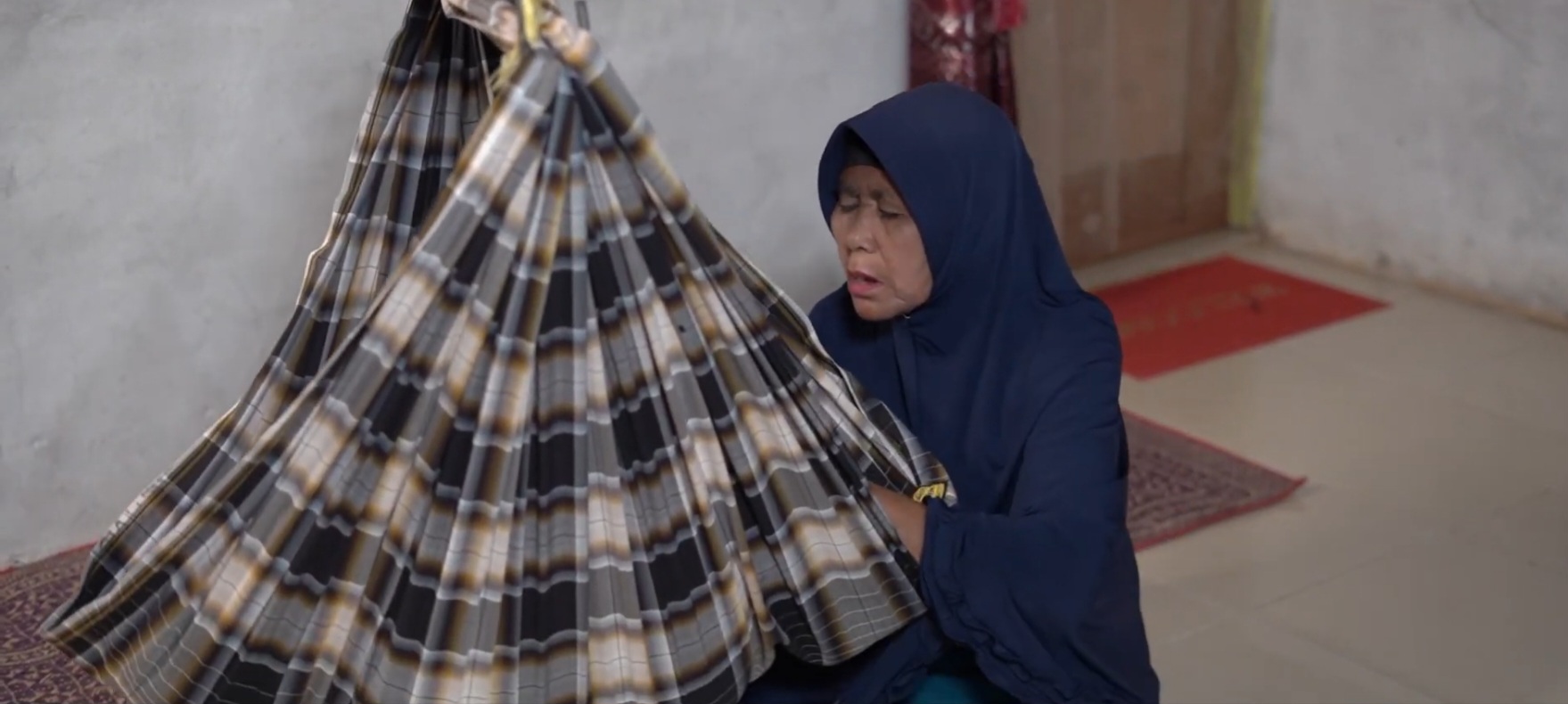
Smong is a type of oral tradition, which means it was taught through word of mouth. Through decades of experience, indigenous communities in Simeuleue have made smong their own.
Smong is passed down mainly through three methods. The first is manafi-nafi (folklore). Smong can be told through stories (hikayat) of past tsunamis, especially by older generations, such as parents or grandparents, towards young children.
The Aceh Transportation Agency notes that manafi-nafi is usually done during family gatherings or at mosques after evening (magrib) prayer. It is also sometimes told while families harvest cloves (cengkeh) together.
The second method is called mananga-nanga (lullaby). Parents often sing smong or tell them in the form of bedtime stories to lull babies and young children to sleep.
Similar to mananga-nanga is the third method, nandong (humming). Not only as lullabies for children, smong is also often sung in cultural performances and community events. It is even often sung to accompany Acehnese traditional dances, such as seudati.
The Effectiveness of Smong
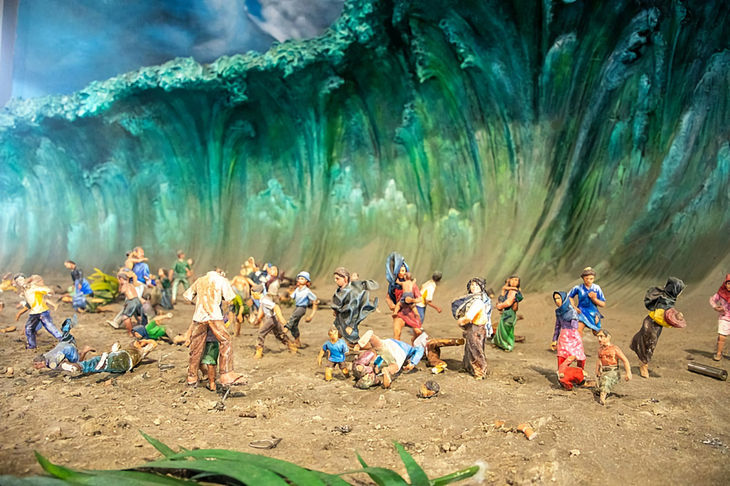
The 2004 Indian Ocean tsunami was a truly unforgettable moment for Aceh. The tsunami, preceded by a 9,1M earthquake, was reported to destroy 1,3 million houses and buildings, resulting in more than 300 thousand casualties.
Yet, a miracle happened in Simeulue. Despite the earthquake’s epicenter being located right at the northern side of Simeulue, only 7 out of the 71.517 total residents in the island died.
International researchers have agreed that the low number of casualties was largely due to smong practices. Before the earthquake and tsunami hit, the indigenous people of Simeulue already knew what was going to happen.
Intensive interviews towards locals as recorded in the IOP Conference Series papers notes that because of smong, the people of Simeulue immediately evacuated themselves to higher terrain. Locals ran to mountain ranges and hills with a height of 100–300 meters close to their settlements.
The research even reveals that the locals of Simeulue have never heard of the term tsunami before. Long before scientific knowledge came to the island, the locals have relied on smong as a form of local wisdom to save their lives.
Smong, an Important Cultural Legacy
In today's highly digitalized world, scientific knowledge about disaster mitigation is important. However, local wisdom such as smong is necessary to preserve, as they help institutions and governments in addressing and respecting the needs and values of indigenous communities.
Smong has the potential to become a transferable and adaptable form of tradition. It can be adapted through visual arts, songs, social media posts, and even popular media. Through this, we can make sure smong lives on as a unique cultural practice and approach for disaster mitigation.
References
Gadeng, A.N., E. Maryani, and D. Rohmat. “The Value of Local Wisdom Smong in Tsunami Disaster Mitigation in Simeulue Regency, Aceh Province.” IOP Conference Series: Earth and Environmental Science 145 (2018). https://doi.org/10.1088/1755-1315/145/1/012041.
PPID Perhubungan. “Smong, Kearifan Lokal untuk Mitigasi Bencana.” Dishub Aceh. Published on February 7, 2020. Accessed on July 3, 2025. https://dishub.acehprov.go.id/2020/02/07/smong-kearifan-lokal-untuk-mitigasi-bencana/.
Syafwina. “Recognizing Indigenous Knowledge for Disaster Management: Smong, Early Warning System from Simeulue Island, Aceh.” Procedia Environmental Sciences 20 (2014): 573–582. https://doi.org/10.1016/j.proenv.2014.03.070.
This article was created by Seasians in accordance with the writing rules on Seasia. The content of this article is entirely the responsibility of the author.