Southeast Asia is home to many forms of traditional arts. They range from music, dances, paintings, you name it.
Perhaps a lesser known form of traditional art is puppetry. From Indonesia's wayang kulit to Thailand's nang talung, Southeast Asians have mastered the art of using puppets to perform stories and captivate audiences, young and old.
In Viet Nam, water puppetry is a specialty, though the tradition has been fading as of late. What exactly is Vietnamese water puppetry and what makes it so distinctive?
The Origins of Vietnamese Water Puppetry
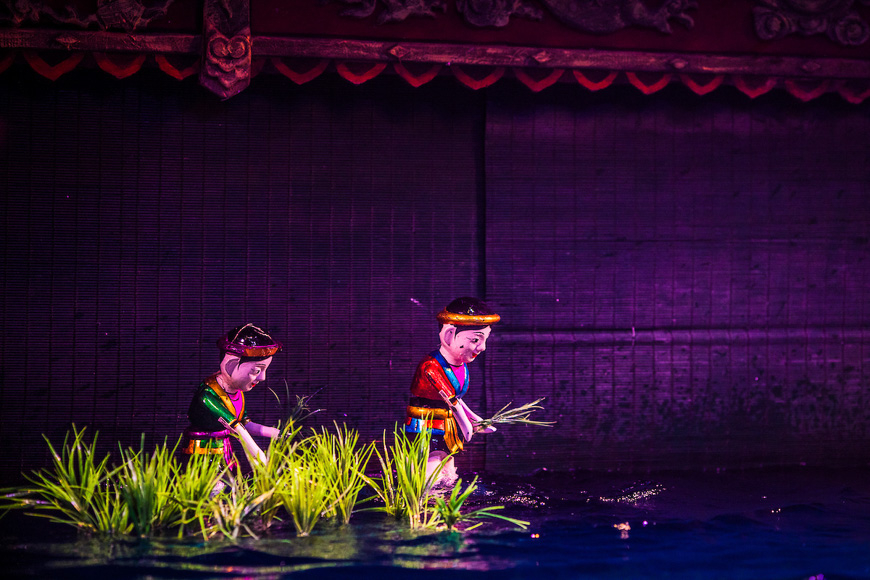
Vietnamese water puppetry is traditionally called mua roi nuoc, which literally translates to “making puppets dance on water”. This art form originated in the northern parts of Viet Nam, precisely in the Red River Delta, around the 11th century.
The World Encyclopedia of Puppetry Arts notes that mua roi nuoc was speculated to have come from China or Southeast Asia's wet rice society. It was invented by farmers who wanted a way to relax after a long day of work in the fields.
This implies that water puppetry is closely tied to Viet Nam's agricultural roots. Water puppet shows were also conducted to celebrate rice harvests or commemorate certain festivals and celebrations.
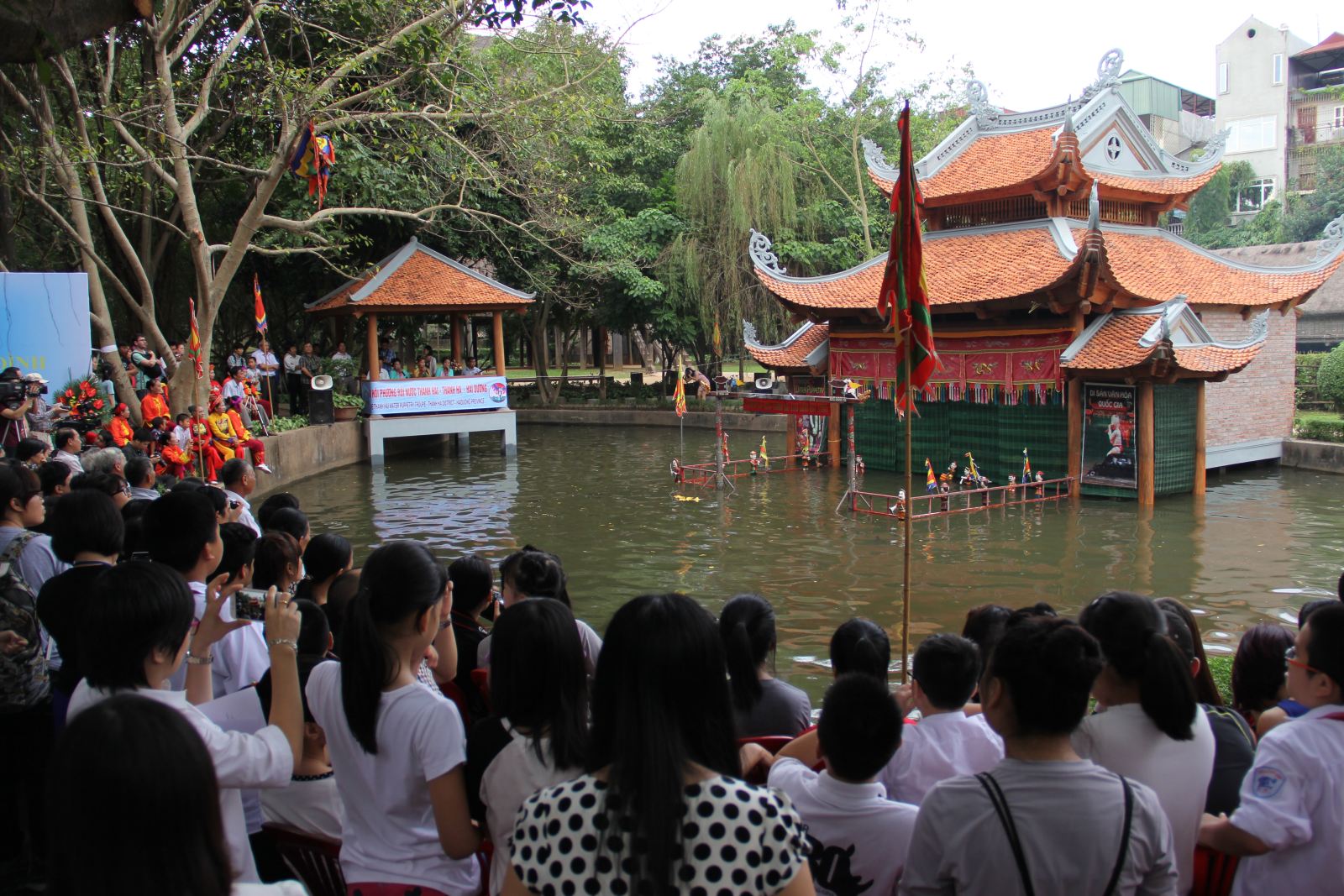
Mua roi nuoc was traditionally performed on ponds or flooded rice paddy fields. Today, many theaters are specifically built for mua roi nuoc performances, where artists stand waist-deep in water, making puppets glide and dance across the stage, hence the name of the art form.
From North Viet Nam, mua roi nuoc soon spread and became a traditional art form loved by both common people and royalty. It was even officially recognized by UNESCO as an intangible cultural heritage in 2018.
The Uniqueness of Mua Roi Noc
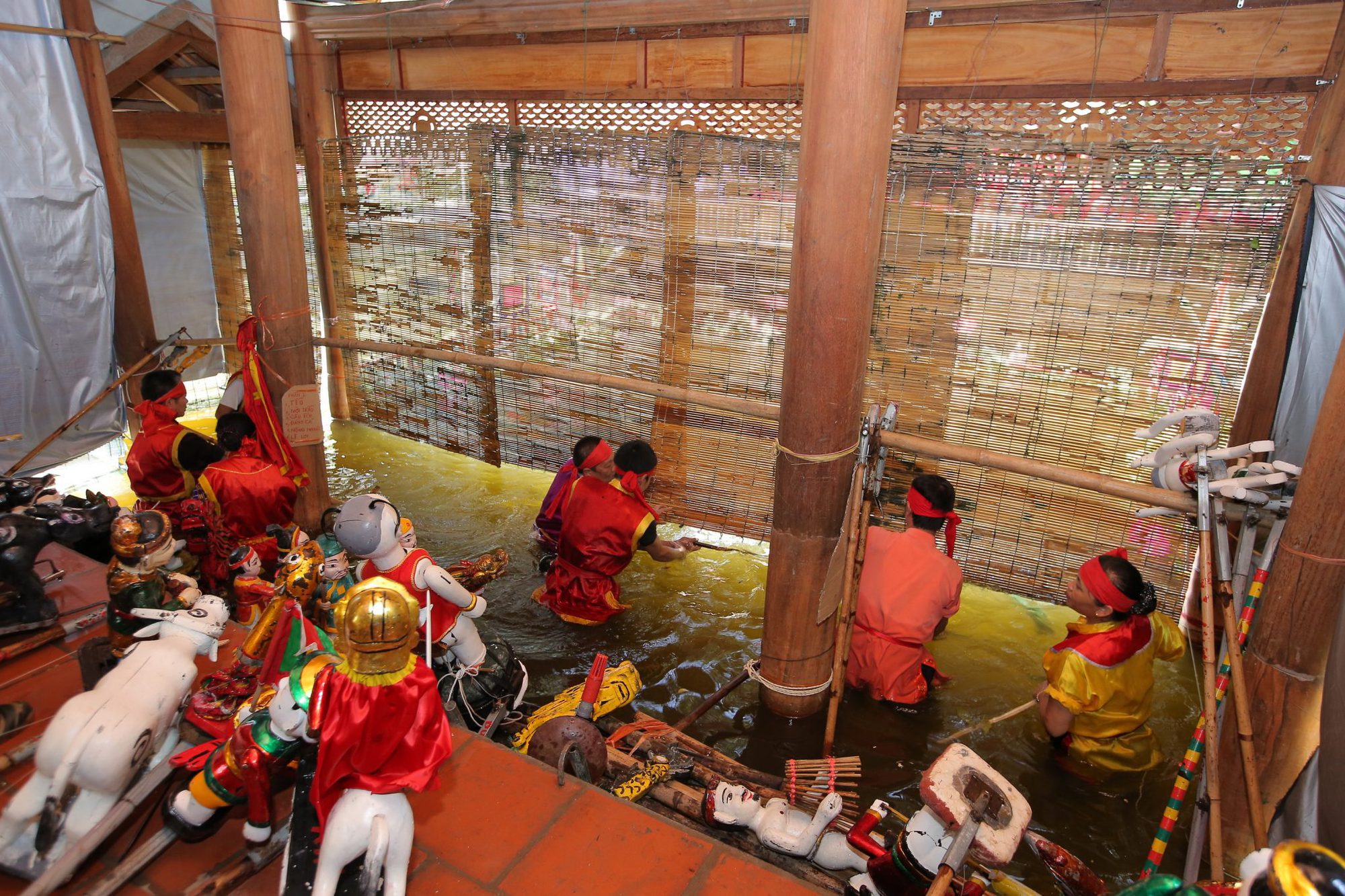
The official website of the Viet Nam National Authority of Tourism states that though most countries use string or rod puppets, only Viet Nam uses water as a medium for puppet performances. The water hides the puppets’ strings and puppeteers can create splashes for extra dramatic effects, adding flair to the story being performed.
Mua roi nuoc puppets are made of painted and lacquered wood and can weigh up to 15 kilograms. Puppeteers use strings, wires, and bamboo poles to move the puppets, but this still requires tremendous skill. Complex movements in scenes that include dances or naval battles are even more so physically demanding.
Mua roi nuoc performances tell stories from normal lives in farming villages to fantastical myths. Sometimes, they even tell chapters of Vietnamese national history, such as the war of independence.
The stories portrayed in mua roi nuoc performances are also geared according to their audiences. When performed for children, for example, puppeteers may decide on something more simple like animal fables with messages of honesty, kindness, and community life.
A Culturally Rich Art Form
Mua roi nuoc isn't just about puppetry – it's a mix of Viet Nam's rich cultural heritage. A simple proof of this is that mua roi nuoc performances are always in Vietnamese, showcasing a great respect for the nation's language.
Performances always start off with a character named Teu, a comedic narrator who is told to be a clown descended from heaven. Puppeteers hide behind a temple-like facade covered with a bamboo screen.
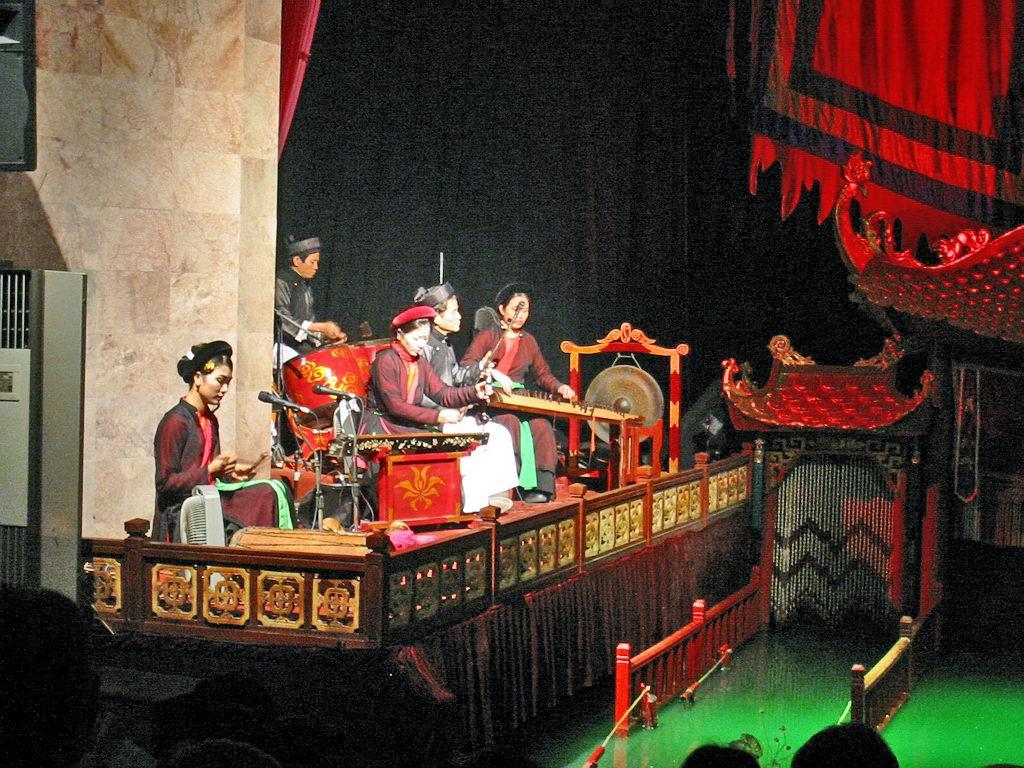
Each puppet signifies a different character with its own traditional costume. As for music, mua roi nuoc is typically accompanied by a traditional Vietnamese orchestra known as cheo, which comprises bells, drums, wooden flutes, lutes, gongs, cymbals, and singers.
The usage of lights, candles, and fireworks, adds to the poise and festivity of the performance. Therefore, even if the audience can't understand the story or see the puppeteers, the visual elements help enhance their viewing experience.
Fading Traditions, Adaptive Solutions
Mua roi nuoc has been facing challenges due to the rise of more modern forms of entertainment. Youth interest in learning the art of water puppetry has declined, and many people have not shown interest in watching mua roi nuoc performances, despite ticket prices being very cheap (usually only around VND50,000 or US$2).
The Covid-19 pandemic has also caused the mua roi nuoc industry to take quite the hit. Many theaters closed, and social distancing rules have made it difficult for puppeteers to perform.
Yet, there have been a number of adaptive solutions to preserve this fading tradition. For example, puppeteers have tried writing scripts of more contemporary stories in place of the usual traditional folklore. Some theaters have also started considering performing in English to garner more attention from foreign tourists.
If you decide to pay Viet Nam a visit, you can consider watching a mua roi nuoc performance in certain places, like Thang Long Theater in Hanoi or Golden Dragon Theater in Ho Chi Minh. Witnessing Viet Nam's indigenous heritage in the form of a special hour-long water puppet show may be what it takes for you to help maintain the tradition and appreciate the richness of Southeast Asian culture.
References
“All about Vietnamese water puppets.” Viet Nam National Authority of Tourism. Accessed on July 8, 2025. https://vietnam.travel/things-to-do/vietnam-water-puppets.
Foley, Kathy and Marcel Violette. “Water Puppets.” World Encyclopedia of Puppetry Arts. Accessed on July 8, 2025. https://wepa.unima.org/en/water-puppets/.
Ministry of Sports, Culture, and Tourism. “Water puppetry – a unique folk art of Viet Nam”. Viet Nam National Authority of Tourism. Published on October 7, 2022. Accessed on July 8, 2025. https://vietnamtourism.gov.vn/en/post/17806.
This article was created by Seasians in accordance with the writing rules on Seasia. The content of this article is entirely the responsibility of the author.