


Can you guess which flag belongs to Indonesia and which belongs to Monaco?
At first glance, they look almost identical, with two horizontal stripes — red on top and white on the bottom. But don’t be fooled. Behind this visual similarity lies a rich tapestry of history, symbolism and diplomatic intrigue that is well worth exploring.
The Beginning of the Resemblance: Who Came First?
One of the most common questions is: who used the red-and-white flag first? The answer isn’t as straightforward as it may seem.
Monaco officially adopted its red-and-white flag on April 4, 1881, during the reign of Prince Charles III. The design reflects the heraldic colors of the House of Grimaldi, the ruling dynasty of Monaco since the 14th century. The red and white combination has been a traditional emblem of the noble family for generations.
Indonesia, on the other hand, officially hoisted its red-and-white flag on August 17, 1945, during the proclamation of independence. But that doesn’t mean Indonesia copied Monaco.
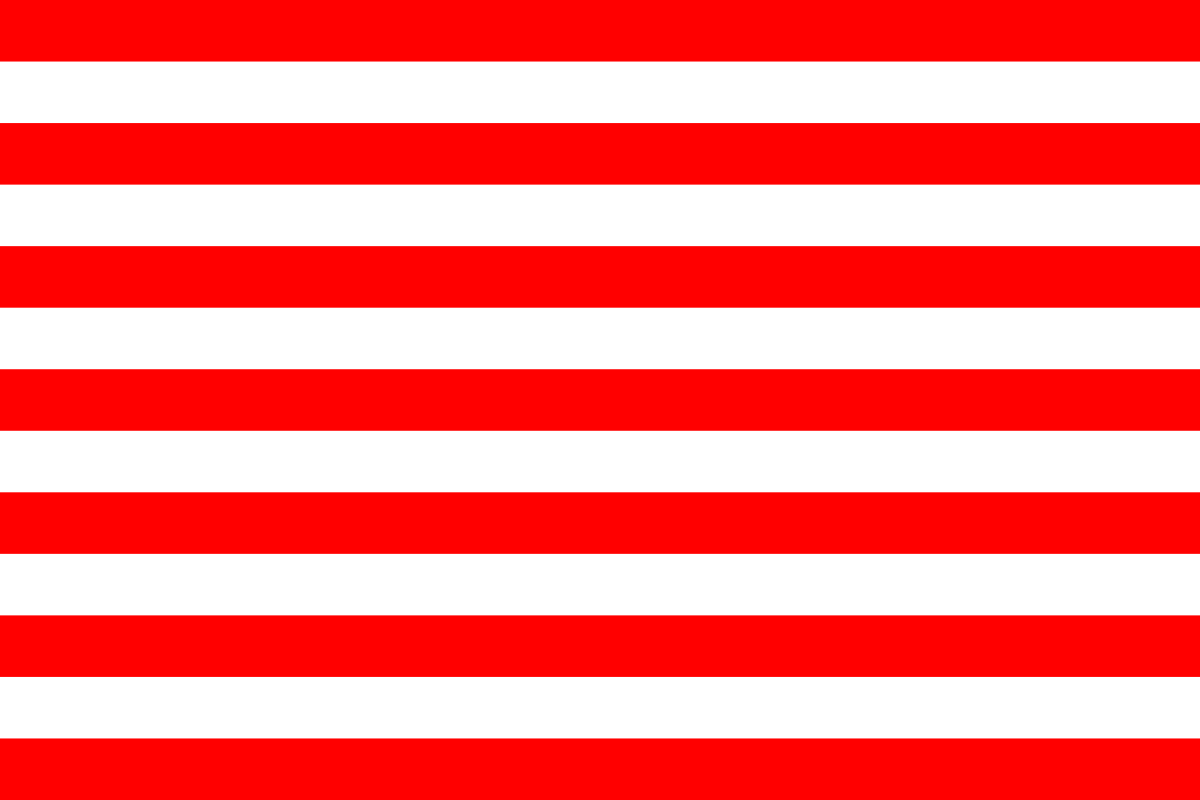
In fact, Indonesia’s red and white flag has much deeper historical roots — tracing back to the flag of the Majapahit Empire, which flourished from the 13th to the 15th century. This means that, culturally and historically, the red and white colors have long been embedded in the identity of the Indonesian archipelago, even before Monaco became a sovereign state.
A Moment of Protest: Monaco Objected, Indonesia Stood Firm
Due to the striking resemblance, Monaco did raise objections when Indonesia adopted the red and white flag after independence. They argued that Indonesia should have chosen a different design to avoid confusion.
However, the Indonesian government refused to change its national flag. The reasoning was clear: red and white had long symbolized the Indonesian people's struggle, completely unrelated to Monaco. The choice wasn’t arbitrary — it was deeply rooted in the nation’s history.
Eventually, both countries agreed to differentiate their flags by using different size ratios.
Indonesia adopted a 2:3 ratio, making the flag appear longer and slimmer. Monaco, meanwhile, uses a 4:5 ratio, giving its flag a shorter, squarer appearance. Though the differences are subtle — mainly in proportion and a slight variation in red hue — they are enough to establish each flag’s distinct national identity.
Same Red, But Not Quite the Same
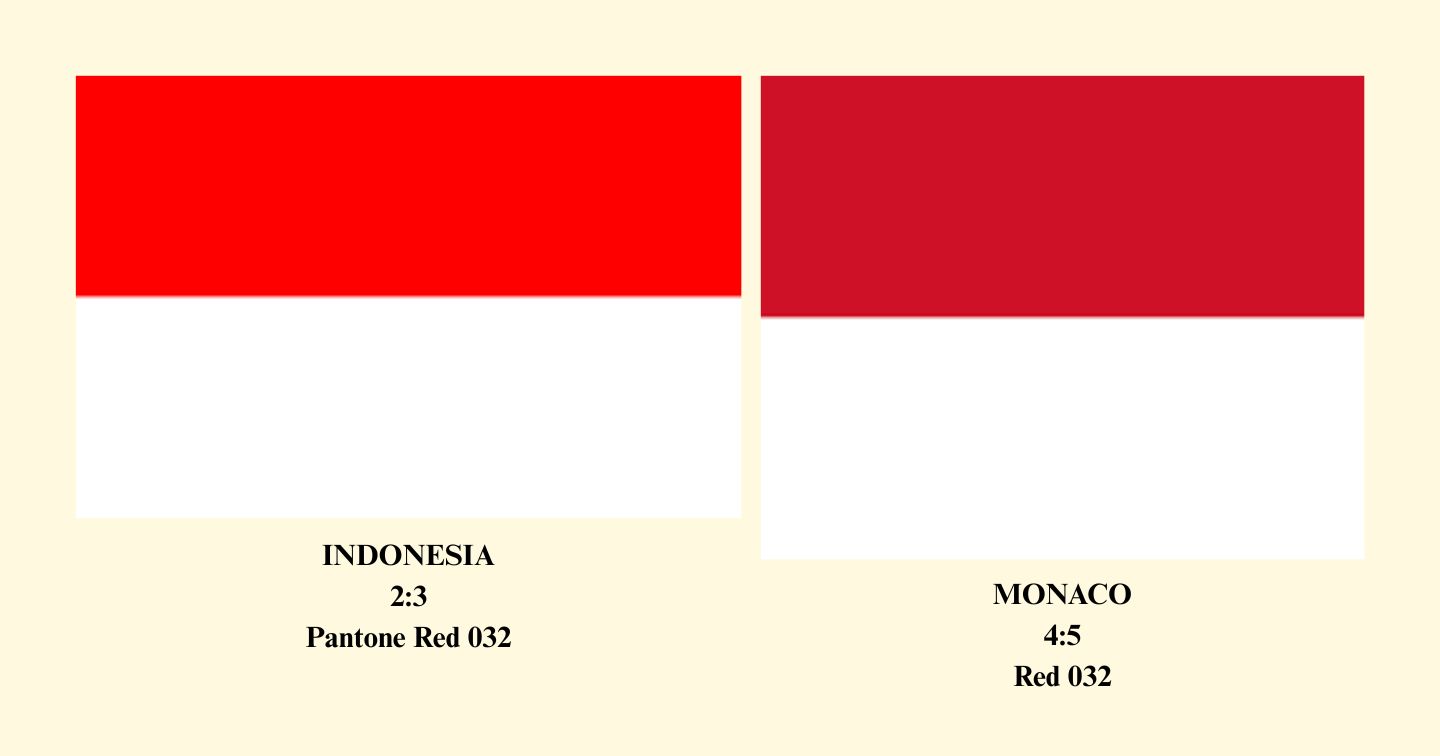
Beyond size, there’s another detail that sets the two flags apart: the shade of red. Both Indonesia and Monaco use red and white, but the specific tones of red they choose differ slightly.
Indonesia’s flag uses Pantone Red 032 (CMYK: 0% Cyan, 90% Magenta, 86% Yellow, 0% Black). Monaco, on the other hand, uses Red 032 C, which appears darker and denser in tone.
This difference might not be noticeable from a distance, but in the world of graphic design and printing, it’s quite significant.
Similar Look, Very Different Meaning
Despite their similar appearance, the philosophies behind the two flags are strikingly different.
For Indonesia, red symbolizes bravery and the blood of the people’s struggle, while white represents purity and sincerity. The flag is a powerful symbol of independence and burning national spirit.
In Monaco’s case, the red and white combination holds no meaning tied to struggle or revolution. Instead, it simply reflects the heraldic colors of the House of Grimaldi, the ruling dynasty for centuries. Monaco’s flag is more a symbol of aristocratic heritage than of the people or national resistance.
Not Just Indonesia and Monaco: Many Flags Have “Twins”
It turns out, Indonesia and Monaco aren’t the only countries with confusingly similar flags. Several other nations also have flag designs so alike, they can easily be mistaken for each other unless examined closely.
- Chad and Romania
This pair is often cited as the most identical flags in the world. Both feature three vertical stripes in blue, yellow, and red. The only difference lies in a slight variation in the shade of blue —almost impossible to distinguish without digital tools. - Senegal and Mali
Both flags feature vertical green, yellow, and red stripes. The key difference is that Senegal includes a green star in the center. Without that star, it would be easy to confuse the two. - New Zealand and Australia
Both flags have a blue background with the Union Jack in the top-left corner. Australia features five large white stars (including the Commonwealth Star), while New Zealand displays four red-and-white stars forming the Southern Cross. Similar, but with distinct constellations. - Ireland and Côte d’Ivoire (Ivory Coast)
Both flags use vertical stripes in green, white, and orange. The difference lies in the order: Ireland places green on the hoist side (left), while Côte d’Ivoire places it on the right. - Norway and Iceland
These Scandinavian countries both use the Nordic cross design. Norway’s flag has a red background with a blue and white cross, while Iceland’s has a blue background with a red and white cross — the reverse of Norway’s. - Luxembourg and the Netherlands
Both flags have horizontal stripes of red, white, and blue. However, Luxembourg’s blue is noticeably lighter, and its flag is slightly longer in proportion compared to the Dutch flag.


