When Indonesians think of women in sports, Susi Susanti often comes to mind—an icon who won the country’s first-ever Olympic gold medal in badminton at Barcelona 1992. But beyond her legendary legacy lies a powerful narrative of other Indonesian women who have defied expectations, broken records, and inspired generations.
From archery to weightlifting, from volleyball courts to Olympic podiums, these athletes have carved out their own place in history. Each of them not only excelled in their sport but also carried the hopes of a nation, challenged gender norms, and became role models for young girls across the archipelago.
Here are six remarkable women who, in their own right, made Indonesia proud on the world stage.
Lilies Handayani
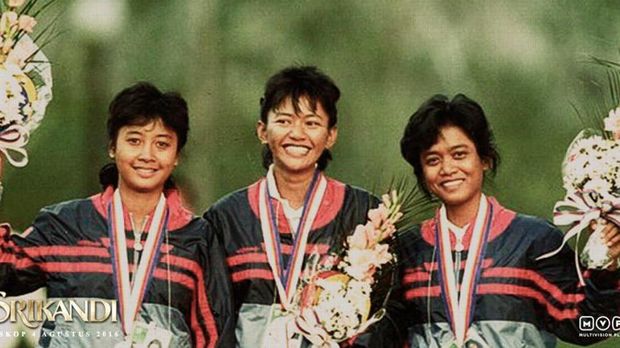
Lilies Handayani made history as the first Indonesian athlete to win a medal at the Olympic Games. At the 1988 Seoul Olympics, she and the Indonesian women’s archery team won a silver medal—the first-ever Olympic medal for Indonesia since the country began competing in Helsinki 1952. This achievement marked a turning point for Indonesia on the world sports stage.
Lilies was born into a family of athletes and originally practiced pencak silat, even winning a national championship. At her mother’s suggestion—a former national archer—she transitioned to archery. The switch wasn’t easy, but her passion and family support pushed her forward.
After retiring from competition in 2008, Lilies chose to nurture future generations. She founded the Lilies Handayani–Srikandi Archery School (LHSAS) in Surabaya, dedicated to training young archers. The school stands as her lasting contribution to the development of Indonesian sports.
Greysia polii dan Apriyani Rahayu
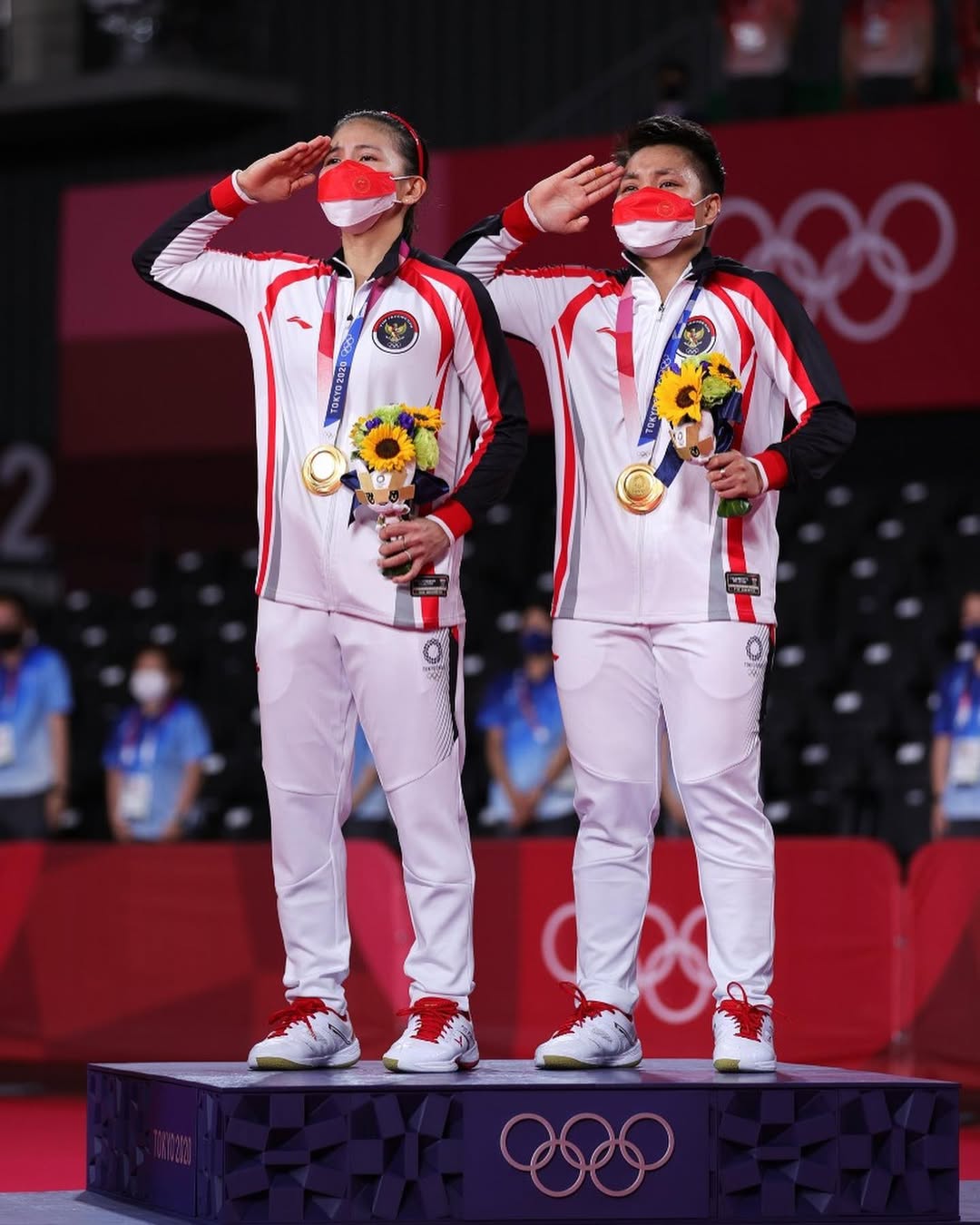
At the Tokyo 2020 Olympics, Greysia Polii and Apriyani Rahayu made history by winning Indonesia’s first-ever gold medal in women’s doubles badminton. They defeated China’s top pair, Chen Qingchen and Jia Yifan, with a score of 21–19, 21–15 in a stunning final match. This win marked a milestone, as it was the first gold since women’s doubles was introduced at the 1992 Barcelona Olympics.
Despite entering the tournament unseeded and ranked sixth in the world, the duo overcame every obstacle with determination. Their preparation was far from ideal—disrupted by the pandemic, they had played in only three international tournaments in 2021 before the Olympics. Yet, their chemistry, experience, and perseverance led them to one of the most unexpected victories in Olympic badminton history.
Off the court, their win carried national pride and broader impact. Greysia became the oldest female badminton player to win Olympic gold, while Apriyani became a role model for young athletes across Indonesia. Their triumph inspired a new generation and proved that belief, hard work, and unity could defy all odds.
Megawati Hangestri
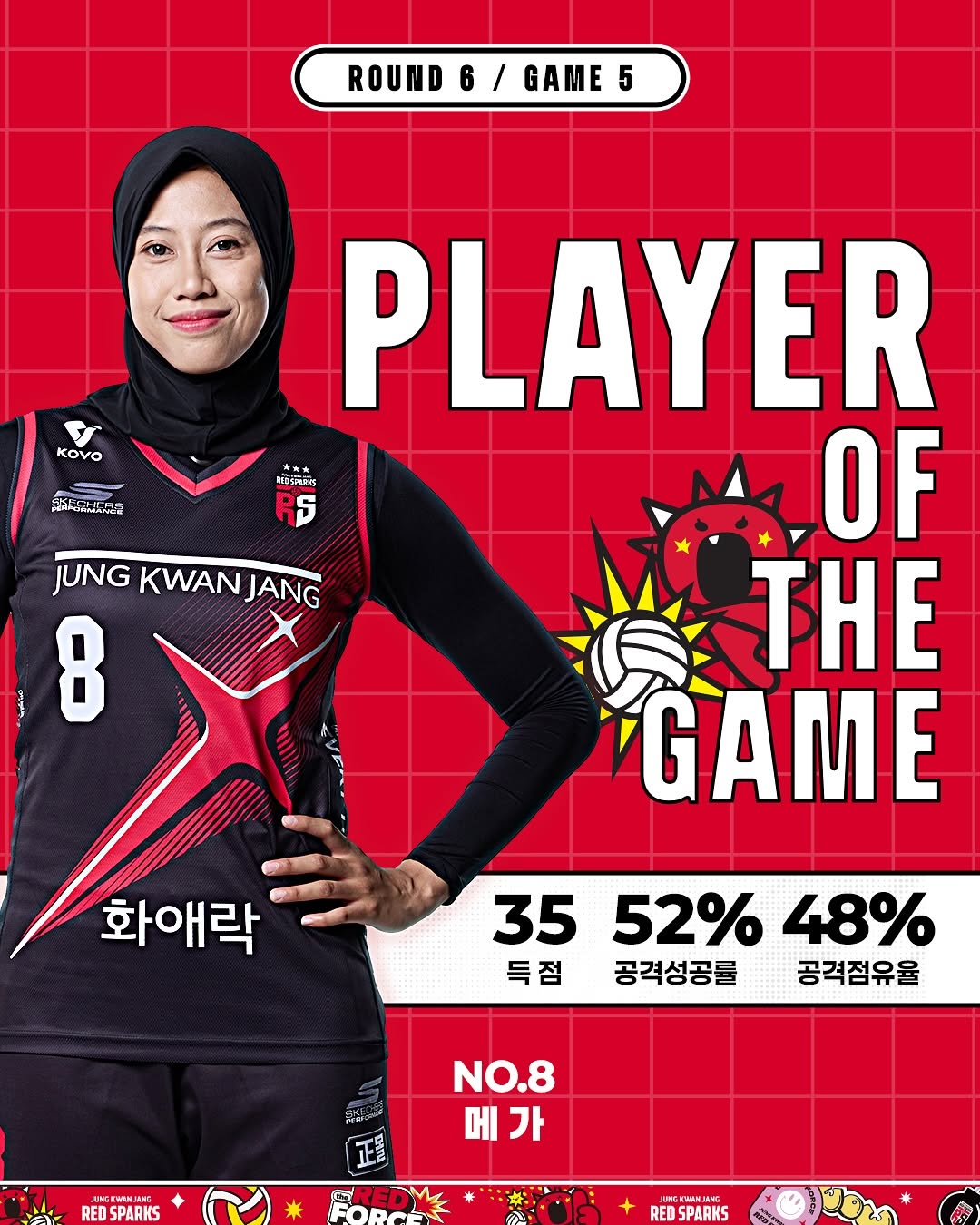
Megawati Hangestri Pertiwi, born in Jember, East Java, has emerged as one of Southeast Asia’s most inspiring volleyball figures. In 2025, she was named the world’s best female volleyball player by Volleybox, earning a score of 80.00 and surpassing top contenders from Chile and Belarus.
As an opposite hitter for Daejeon Red Sparks in South Korea’s V-League, she helped lead the team to the playoffs after years of absence and was included in the league’s Best Team for the 2023–24 season—marking a milestone in both her career and Indonesia’s presence in international volleyball.
Her journey was shaped by determination and adaptability. Megawati began playing with local clubs in her hometown before being called up to the national team for the 2017 SEA Games.
Over the years, she gained international experience in Thailand and Vietnam before landing in South Korea, where she had to overcome language barriers, cultural adjustments, and the high pressure of elite competition. Yet, she consistently delivered strong performances, proving her resilience and skill on a global stage.
Beyond the court, Megawati’s impact has been deeply felt in her community. Upon returning to Jember after her standout season in Korea, she expressed her desire to support young volleyball players and give back to the region that shaped her.
As a role model, especially for girls in rural areas, she embodies the spirit of perseverance and the power of dreams. Her story not only celebrates individual achievement but also signals the growing influence of Southeast Asian women in global sports.
read also: Megawati Hangestri: The Volleyball Heroine from Indonesia
Windy Cantika Aisah
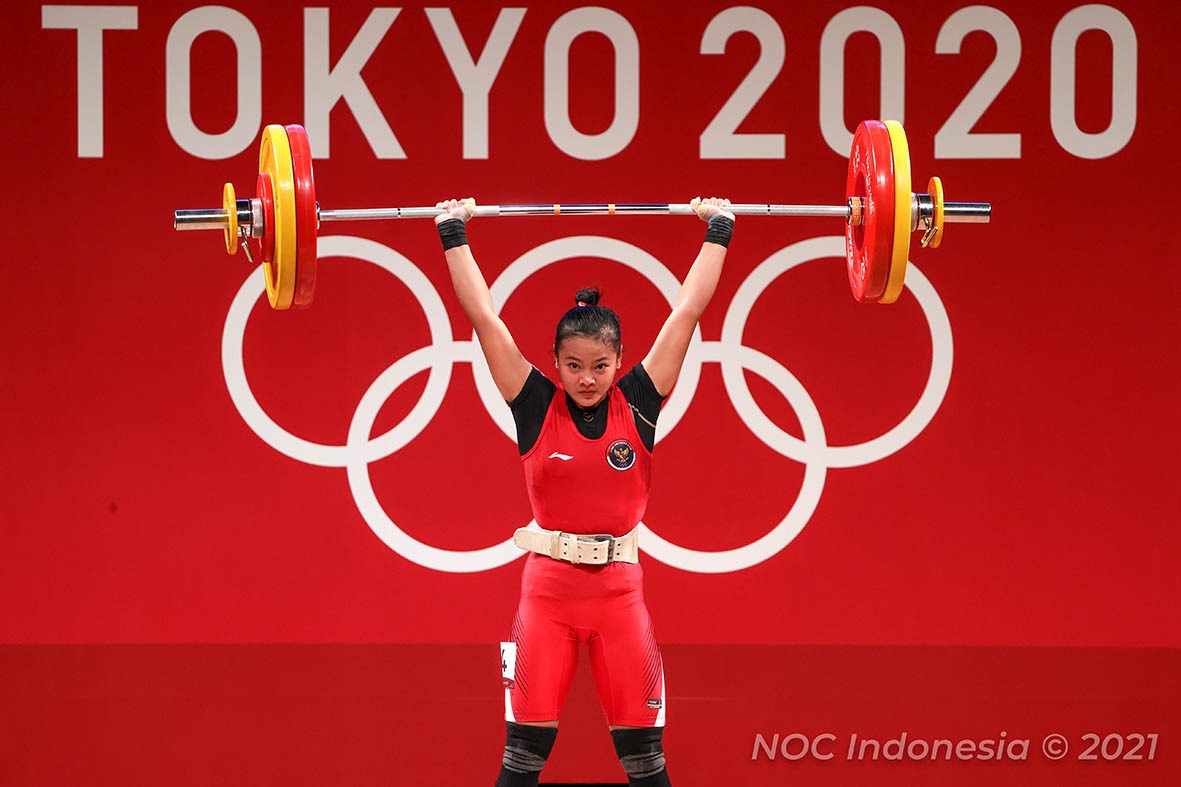
Windy Cantika Aisah, at just 19 years old, earned Indonesia’s first medal of the Tokyo 2020 Olympics by lifting a total of 194 kg in the women’s 49 kg category, securing bronze and making history for her country.
Her path wasn't smooth—she failed her first snatch attempt at 84 kg, succeeded on her second try, and was unable to lift 87 kg on her final attempt. However, she bounced back flawlessly in clean and jerk, lifting 103 kg, then 108 kg, and finally 110 kg to seal her podium finish. In her Olympic debut, she not only showcased extraordinary talent but also propelled weightlifting into the national spotlight.
Windy’s achievement is deeply rooted in family legacy—her mother, Siti Aisah, was also an accomplished weightlifter and an inspiration behind her daughter’s dedication to the sport, Windy's journey began in fifth grade, inspired by her mother, Siti Aisah, a former national weightlifter, and she had already clinched gold at the 2019 SEA Games and the 2021 Junior World Championships.
Beyond the podium, Windy’s performance at Tokyo ignited interest in women's weightlifting across Indonesia, especially encouraging young athletes from smaller cities and rural areas. As she continues to compete and train, her story has become a beacon of determination and possibility for the next generation of female Indonesian athletes.
These women are more than just athletes. They are pioneers, mentors, and symbols of resilience whose stories echo far beyond the arenas and podiums.
Through their victories, setbacks, and enduring spirit, they have reshaped how we see Indonesian women—not just as competitors, but as changemakers in a region where tradition and progress often collide. In a Southeast Asia still grappling with gender stereotypes, their achievements blaze a trail for future generations to rise, dream, and redefine the limits of what’s possible.
This article was created by Seasians in accordance with the writing rules on Seasia. The content of this article is entirely the responsibility of the author.