


It might be hard to believe, but a simple habit like chewing betel nut can hold traces of human history that span thousands of years. Who would have thought that dental plaque—the very thing we clean during a visit to the dentist—could serve as an archaeological "time capsule" preserving evidence of ancient traditions? This is exactly what an international team of researchers recently uncovered in Thailand.
In a study led by Dr. Piyawit Moonkham from Chiang Mai University, scientists discovered the first direct biomolecular evidence of betel nut chewing from 4,000 years ago.
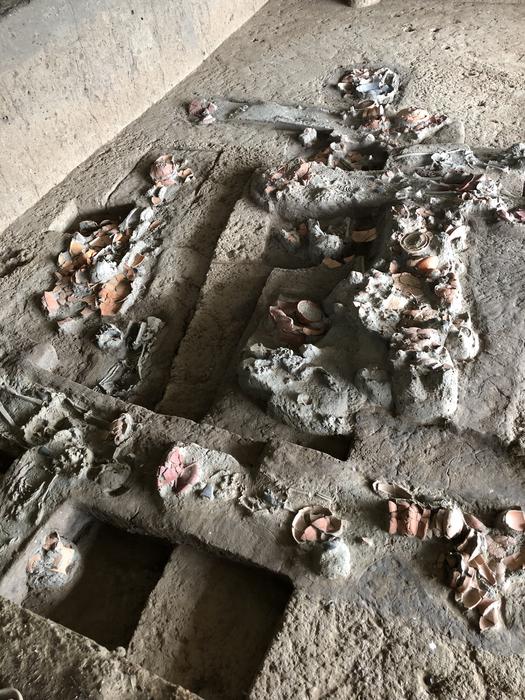
The finding took place at a Bronze Age burial site in Nong Ratchawat, central Thailand, and it opens a new window into how early humans interacted with psychoactive plants.
Dental Plaque as an Archaeological "Time Machine"
Ancient traces of betel nut are typically found through fossilized shells or teeth that have turned reddish or black due to regular chewing. But that wasn’t the case here. There were no stained teeth, no leftover shells. Yet, betel nut residues were still found. How is that possible?
The answer lies in dental plaque—or more specifically, dental calculus, which is hardened, calcified plaque that forms during a person’s lifetime.
The research team collected 36 plaque samples from six individuals buried at Nong Ratchawat and analyzed them using a sophisticated technique called LC-MS (Liquid Chromatography–Mass Spectrometry).
The results were surprising: three samples from a single individual, known as “Burial 11,” revealed the presence of arecoline and arecaidine—two major compounds found in betel nut that produce psychoactive effects in humans.
A Hidden Chewing Habit
Typically, chewing betel nut leaves distinct marks on the teeth. But not in the case of “Burial 11.”
The teeth were free of the usual red or black stains that visually signal betel nut use. This is where modern scientific methods prove their power.
Researchers believe the absence of stains could be due to several factors—perhaps a different chewing technique, specific oral hygiene practices, or even natural post-mortem degradation over thousands of years.
What’s clear is that just because the teeth weren’t stained, it doesn’t mean the person never chewed betel nut.
Taste, Relaxation, and Tradition
Betel nut—derived from the seed of the Areca palm—has been chewed by humans since ancient times. This tradition is widespread across South Asia to the Pacific and often involves mixing betel nut with Piper betel leaves (betel leaves), slaked lime (lime paste), and sometimes tobacco or the bark of certain trees.
This mixture, known as a “quid,” can produce effects such as increased energy, a sense of comfort, relaxation, and even mild euphoria.
Dr. Moonkham himself grew up in a family where betel nut chewing was common. To him, it wasn’t just a habit—it was part of social and spiritual life. While in modern times betel chewing has often been linked to oral cancer risks, particularly due to the combination of active ingredients and lime, in the past it may have served roles as medicine, a calming agent, or a marker of cultural identity.
An Archaeologist's Betel Nut Experiment
Before analyzing the ancient dental samples, the research team created a modern version of a “quid” to use as a control. They used traditional ingredients: dried betel nut, betel leaf, pink lime paste, and occasionally added tobacco and Senegalia catechu bark. These were then mixed with human saliva to simulate the original chewing conditions.
The goal was to detect and identify the chemical signature of authentic betel compounds—so they could compare it directly with the analysis results from ancient teeth. This step confirmed that their method was valid and capable of capturing the hidden chemical traces preserved in plaque for thousands of years.
What Makes “Burial 11” Special?
Interestingly, although only one out of the six individuals showed traces of betel nut, there’s no evidence suggesting that “Burial 11” held any special social status. He was buried with stone beads, but his grave did not significantly differ from the others.
It’s possible that many people at the time chewed betel nut, but only the chemical traces in this individual’s plaque managed to survive. Factors like frequency of use, post-mortem decay, and burial conditions could all influence whether the compounds were preserved. What’s clear is that the absence of visible evidence doesn’t mean the practice didn’t exist.
A Revolution in Plaque
According to Dr. Shannon Tushingham from the California Academy of Sciences, who was also part of the study, dental calculus analysis could mark a new revolution in archaeology. With just a tiny scrape of plaque, researchers can uncover ancient habits that leave no conventional archaeological trace.
Moreover, this method is minimally invasive and doesn't damage the original fossil, opening the door to further studies on ancient human remains in the future. The researchers even plan to apply this technique to more than 150 other skeletons found at Nong Ratchawat.
Source: Moonkham, P., Tushingham, S., Zimmermann, M., Brownstein, K. J., Devanwaropakorn, C., Duangsakul, S., & Gang, D. R. (2025). Earliest direct evidence of bronze age betel nut use: biomolecular analysis of dental calculus from Nong Ratchawat, Thailand. Frontiers in Environmental Archaeology, 4(1622935). doi:10.3389/fearc.2025.1622935


