The discovery of 2,000-year-old silver coins is reshaping how historians understand early trade across Southeast Asia.
A study led by researchers at the National University of Singapore (NUS), published in the journal Antiquity, argues that these coins provide crucial evidence of a vast regional trading network that once connected distant communities across the region.
Symbols, Origins, and Distribution
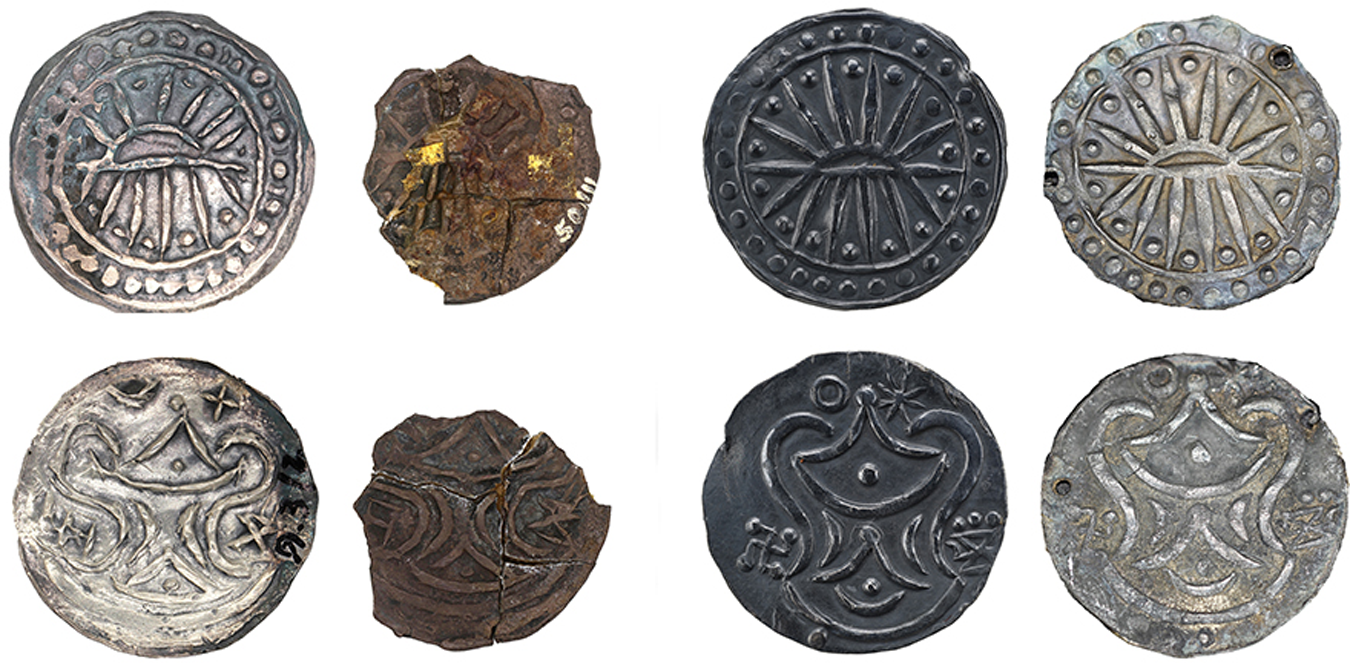
The coins, known as the Rising Sun/Srivatsa, bear two distinctive motifs: the rising sun and the Srivatsa, both deeply rooted in Indian religious traditions. The rising sun symbolizes renewal and prosperity, while the Srivatsa is an emblem tied to Hindu and Buddhist iconography.
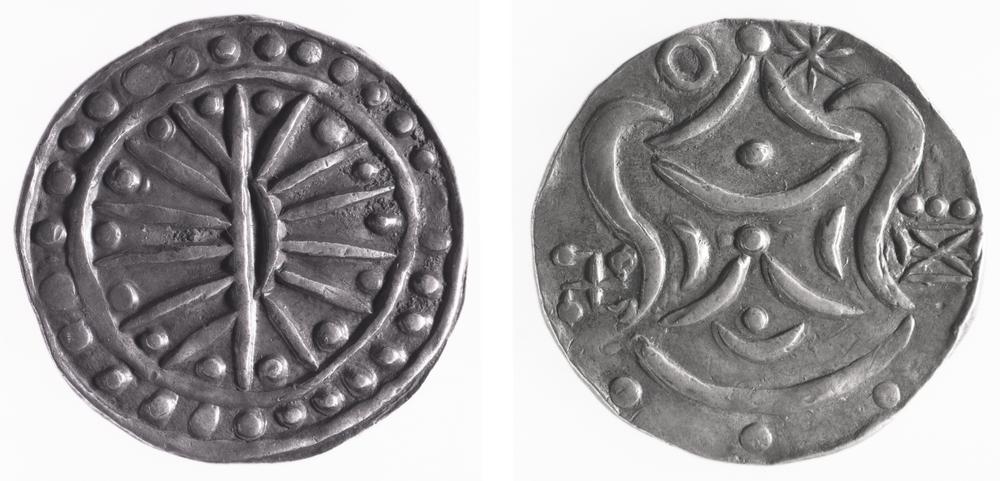
Their presence on Southeast Asian coinage reflects cultural and spiritual exchanges that stretched far beyond local borders, showing how religion and trade often traveled hand in hand.
These coins have been unearthed in a wide geographic area, from the river deltas of Bangladesh to the fertile plains of Vietnam. Such a spread suggests not only active trade but also shared systems of value and trust.
Historical records from China as early as the second century BCE also describe trade routes that connected Southeast Asia with political powers in Persia and South Asia, indicating that the region already played a crucial role in linking distant civilizations.
What makes this latest research particularly significant is that it marks the first comprehensive cross-regional study of these coins. Earlier findings were often interpreted within national boundaries, but by analyzing them collectively, the researchers highlight Southeast Asia as part of an integrated system rather than a set of isolated discoveries.
Evidence of Long-Distance Trade
Lead researcher Andrew Harris explained that the coins share notable similarities in both weight and metallurgy. Even more strikingly, several coins discovered in Bangladesh and Vietnam appear to have been cast from the same die. This means that minting practices, techniques, and standards of value were likely shared across different communities separated by hundreds of miles.
“This offers compelling evidence of extensive long-distance circulation,” Harris told Scientific News Today. “It forces us to think of Southeast Asia not as a collection of isolated kingdoms, but as a dynamic, connected region.”
In the ancient world, coinage carried meanings that went beyond commerce. Coins served as political statements, symbols of legitimacy, and markers of cultural identity. When rulers adopted similar designs, it often pointed to alliances or active relationships.
On the other hand, distinctive variations could signal competition, fragmentation, or periods of disrupted communication. In this sense, studying coins provides historians with valuable insight into the political and economic relationships of the time.
Mapping Centers of Power
Co-author Maria De Iorio emphasized that the study’s die analysis offers a window into the rise and fall of currency-based economies across mainland Southeast Asia.
“Our die study helps us map the expansion and contraction of currency-based economies,” De Iorio explained. “It reveals key ports, trade hubs, and the shifting centers of political power.”
By examining where the coins were minted and circulated, researchers can trace how economic influence moved from one hub to another. These patterns mirror larger shifts in political control and the emergence of trade ports that would later become vital nodes in Asia’s maritime and overland trade networks.
This perspective reinforces the idea that Southeast Asia’s ancient history was far from static. Instead, it was defined by constant movement, exchange, and transformation. The region acted as a vital corridor for the transfer of goods like spices, metals, and textiles, but also ideas, languages, and belief systems that shaped entire societies.
From Ancient Coins to Regional Connectivity
Although the study looks back more than two millennia, its implications remain clear today. The interconnected trade revealed through these coins highlights Southeast Asia’s long-standing role as a crossroads of cultures, economies, and ideas.
The fact that a single coin design could travel across rivers, coasts, and kingdoms underscores how deeply integrated the region already was in antiquity.
Rather than a collection of isolated polities, the findings suggest that ancient Southeast Asia was a region defined by exchange and movement, an identity that continues to shape its history and legacy.
What other hidden stories of connection do you think still lie beneath the surface of Southeast Asia’s past?