Have you ever heard of the Green Revolution that transformed Asian agriculture? Or are you curious about how superior rice seeds spread throughout the world? The answer lies in the role of the International Rice Research Institute (IRRI), the first rice research center in Southeast Asia.
Standing majestically in Los Baños, Philippines, this institute has been in existence since the 1960s. Like a heartbeat that pumps life, this institute has maintained the pulse of Southeast Asia's food security for decades. Come explore its history of innovation and dedication!
From Food Crisis to Revolutionary Solutions
In the 1950s, Southeast Asia was on the brink of collapse. The population explosion was not matched by increased rice production, while agricultural land was shrinking. Famine threatened, particularly in the Philippines, India, and Indonesia.
Seeing this situation, two major foundations, the Ford Foundation and the Rockefeller Foundation, decided to establish a food institute. In 1960, with support from the Philippine government, IRRI was born on 252 hectares of land provided by the University of the Philippines Los Baños.
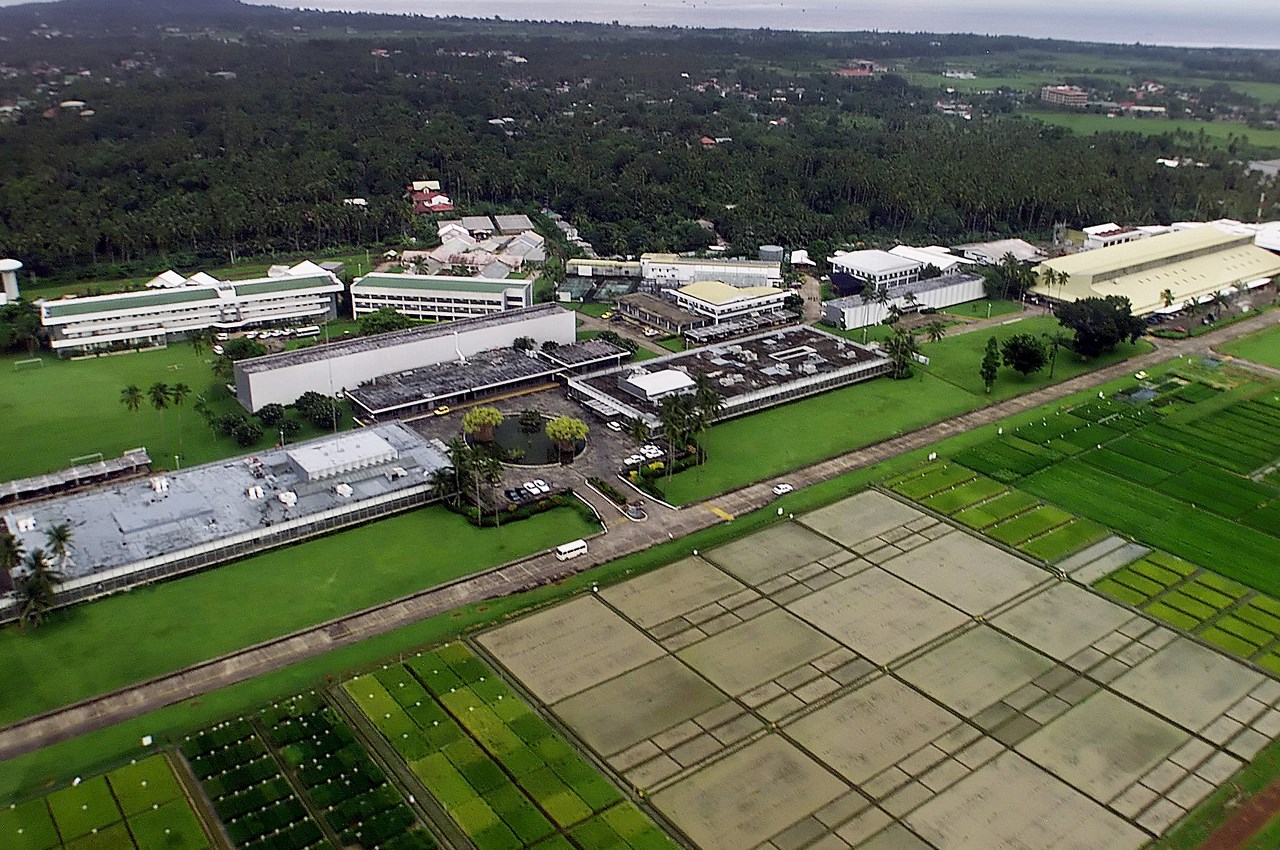
In December 1960, IRRI was inaugurated in the presence of Philippine President Carlos P. Garcia. Dr. Robert Chandler was appointed as the first director, with the mission of creating the "ideal" rice variety with a short duration, disease resistance, and high yield.
Exceptionally, IRRI was designed as a center for global collaboration. Scientists from the United States, Japan, and India worked side by side with local farmers. They didn't just work in the lab, but also went into the rice fields, observing the real challenges in the field firsthand.
IR8, The "Miracle Rice" That Changed the World
In 1966, IRRI introduced IR8, the first rice variety, a cross between "Peta" (Indonesia) and "Dee-geo-woo-gen" (Taiwan). Its nickname? "Miracle Rice"! Farmers who used to harvest 1-2 tons per hectare could now harvest 4-5 tons per hectare.
The secret lay in its short, sturdy stalks, which resisted collapse even with intensive fertilization. Its lifespan was also only 105-130 days—much shorter than local rice, which takes 150-180 days.
The impact was like a domino effect. The Philippines went from being a rice importer to self-sufficient in 1968. India and Pakistan adopted IR8 en masse, reducing the risk of famine.
It's no wonder that a massive Green Revolution took place in Asia in the 1970s, with IRRI as the driving force. But innovation didn't stop there. Responding to the attack of planthoppers, IRRI launched IR36 (1982), a planthopper-resistant variety with a shorter lifespan (105 days). This variety holds the record as the most widely cultivated food crop in history.
Evolution Towards Sustainable Agriculture
Entering the 21st century, new challenges emerged. Climate change increased floods and droughts, while farmers faced soaring production costs. IRRI innovated.The focus was no longer just "high yields" but also "environmentally friendly."
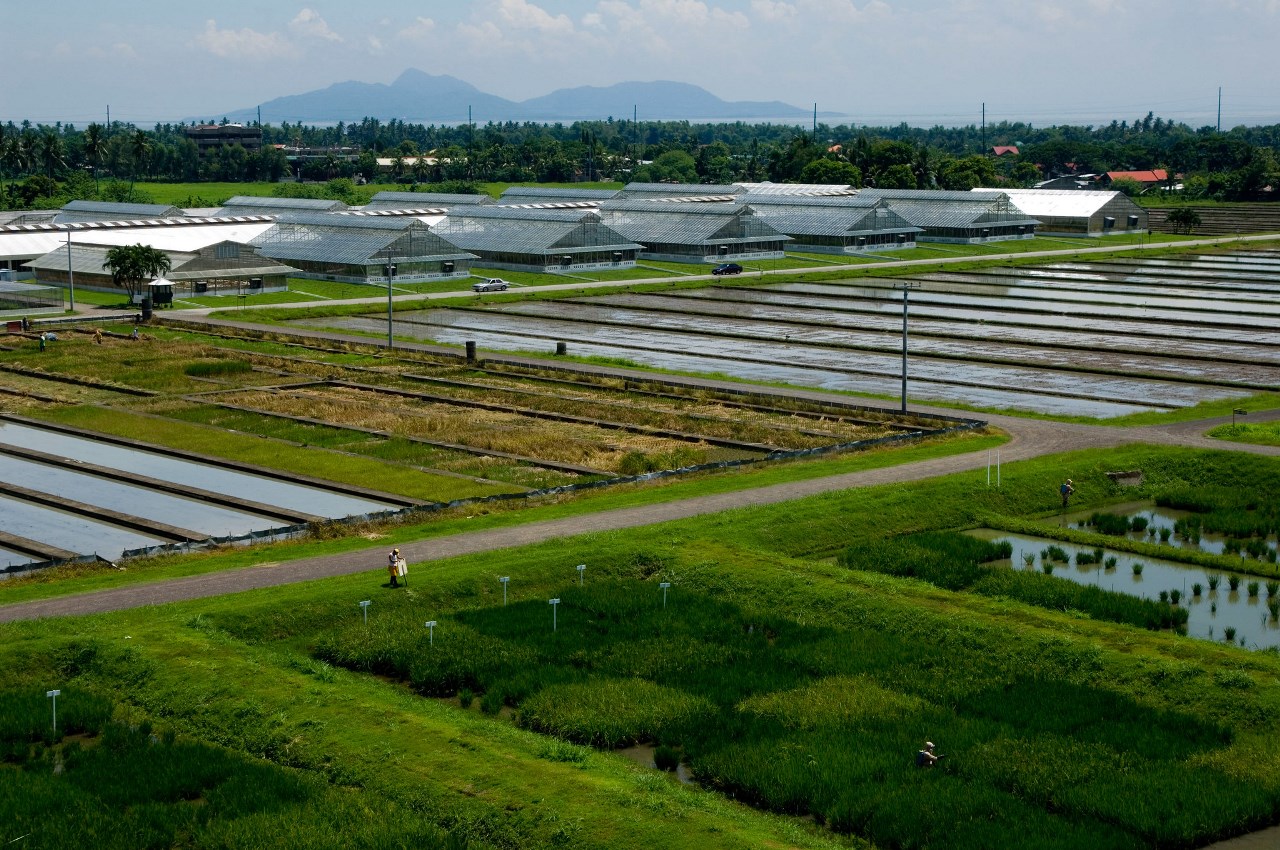
Ambitious projects such as CORIGAP (Integrated Approach to Reduce Agricultural Waste) were born, promoting precision farming practices, including fertilizers tailored to needs, efficient water use, and reduced pesticide use.
Global collaboration became a key weapon. IRRI now has a gene bank containing 132,000 rice varieties from around the world. They also engage farmers through the Participatory Varietal Selection program.
In Indonesia, the Inpari IR Nutri Zinc variety was developed specifically to address iron deficiency. Cutting-edge technologies such as rice genome mapping and paddy field monitoring drones are also common sights in Los Baños.
IRRI is also actively building research networks with over 1,000 global partners, as well as training programs for Southeast Asian researchers. Now, amid the threat of climate change, IRRI is even more vital. They are leading research projects on rice tolerant to extreme heat and high salinity.
Also read: Solar Energy Strengthens: Viet Nam Leads Southeast Asia
For more than six decades, IRRI has proven that science can be a powerful weapon against hunger. The institute is not just a "giant laboratory," but a symbol of hope, especially for smallholder farmers in Asia whose livelihoods depend on rice.
References:
- International Rice Research Institute https://www.worldfoodprize.org/en/youth_programs/borlaugruan_international_internship/international_internship_sites/philippines__irri/?preview=1/index.cfm?NodeID=87756&AudienceID=1&preview=1
- ORIGIN AND EVOLUTION OF IRRI AND ORGANIZATION OF RICE RESEARCH IN THE CGIAR. https://openknowledge.fao.org/server/api/core/bitstreams/580e8f9f-9ec4-404f-aa26-dee3fa6755b1/content/x5814e0n.html
- About IRRI. https://www.irri.org/who-we-are
- International Rice Research Institute. https://www.britannica.com/topic/International-Rice-Research-Institute
This article was created by Seasians in accordance with the writing rules on Seasia. The content of this article is entirely the responsibility of the author.