


Throughout history, empires have risen and fallen, shaping the course of civilization across continents.
While many empires are remembered for their military conquests, architectural wonders, or cultural legacies, another compelling way to understand their impact is by examining their share of the global population at their peak.
This measure gives insight into how deeply these empires influenced the human experience during their time, often governing vast and diverse populations.
Below are some of the largest empires in history when measured by the percentage of the world’s population under their control.
The British Empire
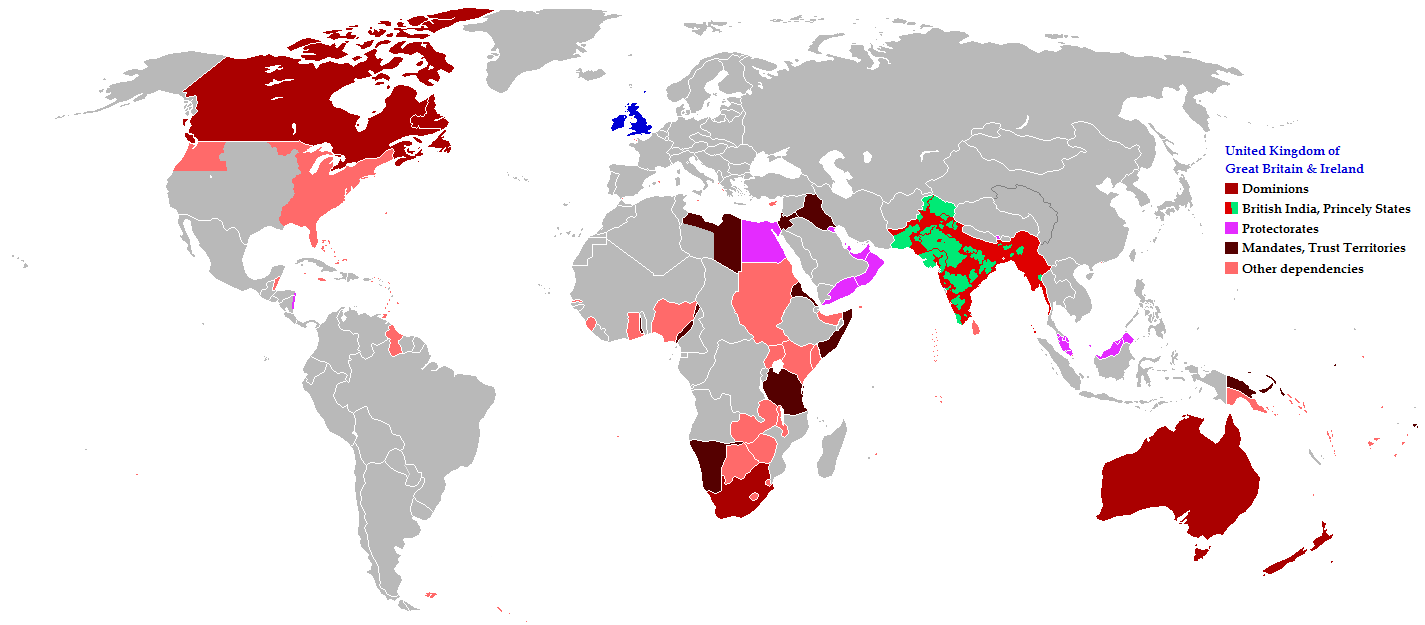
At its height in the early 20th century, the British Empire ruled over a staggering 24% of the Earth’s land area and governed more than 20% of the world’s population.
In 1913, it is estimated that around 412 million people lived under British rule out of a global population of roughly 1.8 billion.
The British Empire’s reach was truly global, stretching across North America, the Caribbean, Africa, the Indian subcontinent, Southeast Asia, and Oceania. The slogan “the sun never sets on the British Empire” wasn’t just poetic, it was geographically accurate.
This immense population share allowed the British to influence global trade, language, and politics on an unprecedented scale. English became a lingua franca, and British legal, political, and educational systems were exported across the globe.
The sheer number of people living under British rule cemented its place as the most populous empire of the modern era.
The Qing Dynasty
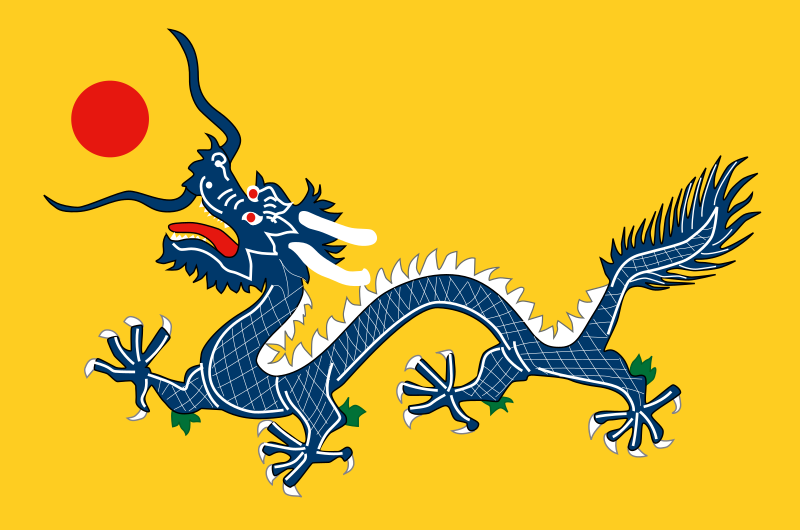
China has historically been home to some of the most populous empires, and the Qing Dynasty, which ruled from 1644 to 1912, was no exception. At its peak in the early 19th century, the Qing Empire governed approximately 36% of the world’s population.
In 1820, with the global population estimated at around 1.04 billion, the Qing ruled over more than 381 million people.
Unlike other empires that expanded aggressively through military conquest, the Qing solidified control primarily over contiguous lands with deeply integrated populations.
The dynasty managed a diverse empire that included Han Chinese, Manchus, Mongols, Tibetans, and Uighurs.
Its centralized bureaucracy and Confucian-based administration allowed it to manage an enormous demographic without fracturing, at least until the pressures of modernization and foreign interference began to erode imperial control in the 19th century.
The Mughal Empire

The Mughal Empire, which dominated the Indian subcontinent between the 16th and 18th centuries, was another demographic giant. At its peak in the late 1600s under Emperor Aurangzeb, the Mughal Empire ruled over approximately 25% of the world’s population.
With a global population estimated at around 600 million at the time, the empire’s population was around 150 million.
What made the Mughals stand out was not just the sheer size of their population, but also the administrative sophistication and relative religious tolerance they displayed, particularly under emperors like Akbar.
The empire facilitated a thriving economy and patronized art, architecture, and culture, leaving behind a legacy still visible today in monuments like the Taj Mahal.
Its demographic weight also meant that the Indian subcontinent remained one of the economic engines of the early modern world.
The Roman Empire

Though its population share was smaller compared to more modern empires, the Roman Empire was still among the largest in terms of global demographic influence in the ancient world.
At its height around 117 CE under Emperor Trajan, the Roman Empire ruled an estimated 60–70 million people, or about 25% to 30% of the global population at the time.
Stretching from Britain to Mesopotamia, the Roman Empire connected a vast network of cities, roads, and trade routes. It played a crucial role in the spread of ideas, religions, and technologies across Europe, North Africa, and the Middle East.
Its high population share for its time period speaks to its administrative capabilities and cultural cohesion despite its immense geographic scope.
The Umayyad Caliphate
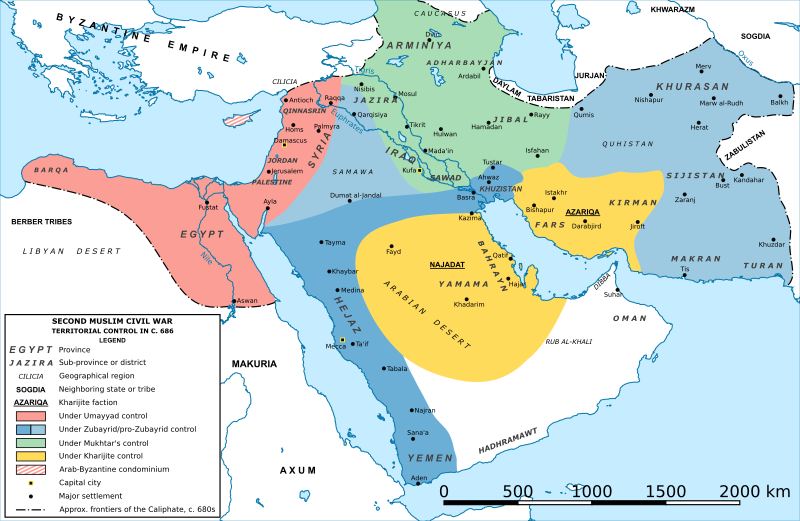
One of the fastest-expanding empires in history, the Umayyad Caliphate ruled from 661 to 750 CE and achieved control over more than 30% of the world’s population at its zenith.
This Islamic empire, headquartered in Damascus, stretched from the Iberian Peninsula in the west to the Indus River in the east.
In little more than a century, the Umayyads established an empire that bridged diverse cultures and languages, unified by religion and a sophisticated administrative system.
Its demographic size at the time was extraordinary, considering the relative speed of its expansion and the challenges of ruling over such a diverse and sprawling territory.


