Food and beverage are an essential part of any kind of major events and occasions, which is why catering services exist. Fueled by a rising demand for a varied and high-quality dining experience, the catering industry in Singapore especially shows a remarkable growth in market worth and competition.
Whether you’re a dedicated food and beverage enthusiast planning to start your own catering business or a student researching about this sector, this article will give you a deeper insight into Singapore’s catering industry scene.
Scale and market value of the catering industry in Singapore
Based on reports published by the Cognitive Market Research and Verified Market Reports, the catering industry in Singapore offers promising value and prospects for the next few years. As per 2025, Singapore’s catering industry’s market sales revenue is estimated to be worth around 2,751 billion USD. With this amount of market worth, Singapore holds a notable 4,36% share of the catering services market within the Asia Pacific region in 2025.
Driven by increasing consumer demand, tourism rebound, and evolving dining preferences, the catering industry in Singapore is forecasted to grow even bigger in years to come. This industry is expected to gain a valuation of nearly 300 billion USD by 2033, with a CAGR of approximately 4,5% from 2026 to 2033.
Latest trends in Singapore’s catering industry
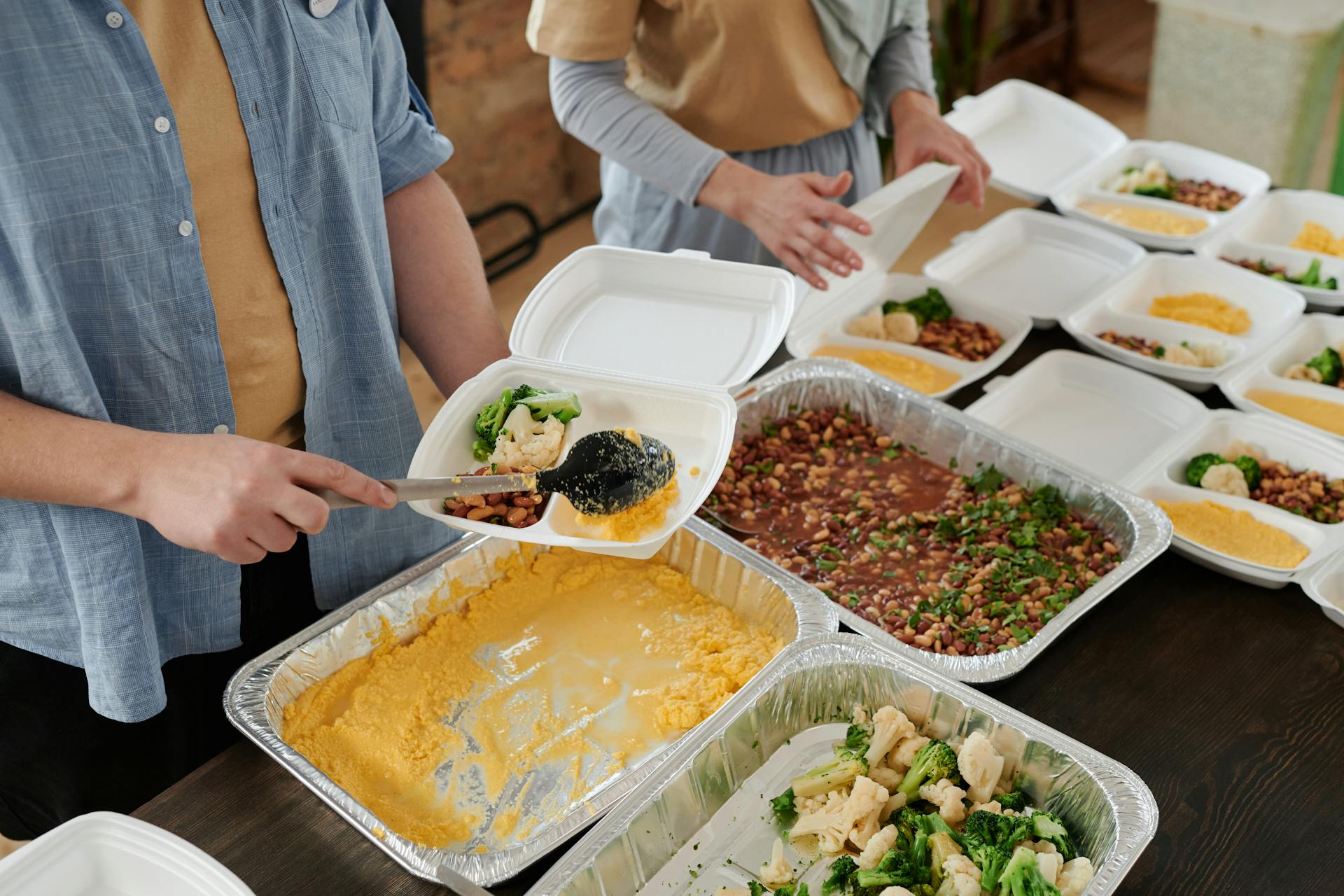
Adapting and keeping up to latest trends is one way to survive the rapidly evolving culinary sphere, including in the catering industries in Singapore. With new trends combining international influences and traditional delights, here are the current hot topics in Singapore’s catering industry according to CaterCo and Food & Hospitality Asia:
- Digitalization: Nowadays, the majority of industries around the world—including the catering industry in Singapore—utilizes digital marketing to attract users through the internet and social media. With the help of digital marketing, catering businesses can drive more leads and boost visibility and brand exposure. Moreover, there are also mobile apps that allow customers to confirm orders, track progress, make payments, and browse their favorite catering vendor’s menu from the comfort of their home.
- Eco-friendly solutions and sustainable ingredients: In response to the rising global awareness that calls for sustainability, the catering industry in Singapore is increasingly adopting environmentally friendly measures in their business, such as reducing food waste, sourcing ingredients locally, and using reusable or biodegradable tableware. Furthermore, to fulfill customers' demand for environmentally responsible dining alternatives, many caterers also partner with local farmers to ensure fresh and sustainable ingredients.
- Healthier catering options: Aside from sustainability, many consumers also opt for foods that offer more health and wellness value. Considering this demand, the Singaporean catering industry tries its best to serve tasteful yet healthy dishes for customer’s various dietary preferences by curating nutrient-rich meals and incorporating fresh ingredients in catering menu.
- Interactive dining experiences: To stir up excitement and engagement, it is mandatory for Singapore’s catering industry to provide interactive food stations and live cooking demonstrations at events. Imagine a DIY laksa bar where guests can fill up their bowls with a wide variety of fresh ingredients, or a teppanyaki grill where attendees can watch skilled chefs boasting their culinary talents. These points are what caterers can do to ensure a good impression from event attendees.
- Fusion cuisines: Singapore’s catering scene celebrates its multicultural gastronomic heritage by combining traditional and modern tastes, such as Peranakan-Italian and Japanese-Singaporean dishes. This fusion food trend not only spotlights Singapore’s rich cultural identity, but also appeals to a wide range of preferences, making the catering industry a thriving hub for culinary innovation.
Top Competitors in Singapore’s catering industry
Singapore’s catering industry is dominated by well-established names. Take for example the award-winning catering brand, Neo Garden—which has become a pivotal player in the catering market since 1992. Another prime example is Orange Clove with nearly 17 years of experience in providing unique international restaurant-quality cuisine for corporate clients. There’s also Chilli Manis—An inaugural venture of the Neo Group Company that offers an exceptional peranakan dish since 2018.
Other notable catering brands in Singapore include CaterCo, which highly focuses on serving a sustainable catering experience and Deli Hub Catering with their halal-certified menus. These catering brands distinguish themselves through diverse selection of cuisines, event customization, and innovative dining experience, catering to a wide range of customer demands and event scales.
Challenges and Opportunities within the catering industry in Singapore
According to sources like Ordersz and Harshmicro, here are several opportunities and challenges that comes with running a catering industry in Singapore:
Challenges
- Cancellation issues: Service sectors like the catering industry are prone to sudden cancellation problems. Hence why, caterers must set up an effective cancellation policy that addresses terms for refunds, cancellation fees, and rescheduling to protect both the customer and company.
- Strict food hygiene and safety standards: Catering industries in Singapore must comply with the country’s strict hygiene and safety regulations, which means they have to pay close attention to how their food is handled, stored, delivered, and disposed. Those who fail to meet these standards will face legal consequences, potential business loss, and reputation damage.
- High startup budget: While catering can be a lucrative business, starting your own catering in Singapore requires a significant amount of startup costs to hire employees, establish a commercial kitchen, as well as to acquire purchasing equipment.
- Environmental issues: Apart from cancellation issues, caterers in Singapore must also adopt an eco-conscious business practice to reduce carbon footprint by reducing food waste, sourcing sustainable ingredients, and using biodegradable packaging materials.
Opportunities
- Wide range of events: From weddings to corporate functions, Singapore’s thriving events sector brings a constant demand for catering services.
- High demand for personalized menus: In recent years, there has been an increase in consumers' demand for unique personalized menus. This gives caterers an opportunity to deliver a special personalized dish to match customers personal preferences.
- Advanced digital solutions: In accordance with the massive use of technology in businesses, the catering industry in Singapore can now promote their services to a wider scope of audience through various online platforms.
- Rich culinary preferences: Lastly, Singapore’s rich gastronomic scene allows caterers to experiment with different kinds of local and global cuisines and customers dietary constraints.
Statistics and data of the catering industry in Singapore
The table below shows the statistics and data related to the sales growth, services index and other details about the catering Industry in Singapore as compiled from the Department of Statistics Singapore:
Food Caterers Sales Growth
| Year-on-year | 14,7% |
| Month-on-month (per July 2025) | 0,25 |
Ratio, Return on Assets and Equity (2023)
| Ratio | 1.05 |
| Equality ratio | 0.27 |
| Return on assets | 10,5% |
| Return on equality | 38,9% |
Regulation and license
For those interested in establishing a catering business in Singapore, these are some of the regulation and licenses you need to obtain as compiled from Opencompanysingapore:
1. Food license
For starters, a catering business that operates in Singapore needs to submit the following documents in order to obtain the food license in 2025:
- Tenancy or rental contract for leased or rented catering business
- Approval from Singapore’s Housing and Development Board or the Urban Redevelopment Agency
- A food safety management plan
- Rental or lease agreement or other proofs showing ownership of catering vehicle
- Cleaning programs and photos showing the interior and exterior of the catering vehicle
- A contract with a pest and rodent control service company
- A food hygiene officer certificate
- A layout and cleaning program
- A food hygiene certificate for persons who prepare and handles the ingredients and final food products
- Certificate of incorporation or identification documents containing information about the business owner
For the record, in Singapore, a food and beverage license with a one year validity period costs around 200 SGD. The Singapore Food Agency (SFA) will issue your license approximately 7 days upon issuance fee payment.
2. Food safety management system
As a company specializing in food and beverage, it is necessary for catering businesses in Singapore to apply a food safety management system with a proper Hazard Analysis Critical Control Point. This system can be implemented before catering companies apply or renew their food licenses. Below are the requirements companies must adhere to when creating the food safety management system:
- Appoint at least one food hygiene officer
- A food hygiene officer must pass an exam, complete the food safety management system for food service establishments and submit a copy of the statement of attainment to the Singapore Food Agency (SFA)
- Companies must submit a copy of the food safety management system in 3 months after acquiring the license
- For companies renewing their licenses, the food safety management system must be filed 3 months before the current license expires
In addition to the system above, catering business owners in Singapore must also submit the following documents to ensure that they implement the food safety management system correctly:
- the food safety management system plan approved by SFA’s standards
- Chart data providing identification of hazards, control measures, and monitoring procedures
- Information about the company and staff as well as the description for the food products
3. Food Hygiene Officer (FHO) Certificate
As mentioned before, one of the requirements for a catering company to acquire a food license is to submit a Food Hygiene Officer (FHO) certificate. Here’s what you need to do in order to be a certified food hygiene officer:
- Enroll in the level 3 WSQ Food Safety Course (FSC)
- Complete all the courses, including learning about hygiene practices, HACCP (Hazard Analysis and Critical Control Points), and food safety principles.
- Pass the final exam
4. Other license
Other than food license, having a Fire safety certification issued by the Singapore Civil Defence Force for commercial kitchen and a Workplace Safety and Health (WSH) certificate is also necessary when establishing a catering business in Singapore.
Though it can be quite challenging to obey all the strict food and safety standards within Singapore’s catering industry, this type of business holds a promising outlook, especially for business persons who are truly invested in the Food and Beverage field. With grit, strong dedication, and an innovative mindset, it is not impossible to build a thriving catering business in the midst of the city-state’s vibrant food service landscape.
This article was created by Seasians in accordance with the writing rules on Seasia. The content of this article is entirely the responsibility of the author.