


If you stand in the middle of Kuala Lumpur and look up, you’ll see a skyline that seems to pierce the clouds. From the Petronas Twin Towers to Merdeka 118, the city is a gleaming forest of glass and steel, one of the tallest skylines in the world. Yet, beneath the modern glitter lies a question that goes beyond architecture: why did Malaysia’s capital, once known for its humble shophouses and colonial charm, become so obsessed with building vertically?
Kuala Lumpur’s rise into the sky wasn’t a coincidence. It was the outcome of ambition, necessity, and identity, three forces that pushed Malaysia from a modest developing nation into a regional powerhouse. For a country that gained independence only in 1957, skyscrapers became a symbol of how fast it could dream and how high it could climb. They weren’t just built for business; they were built to make a statement.
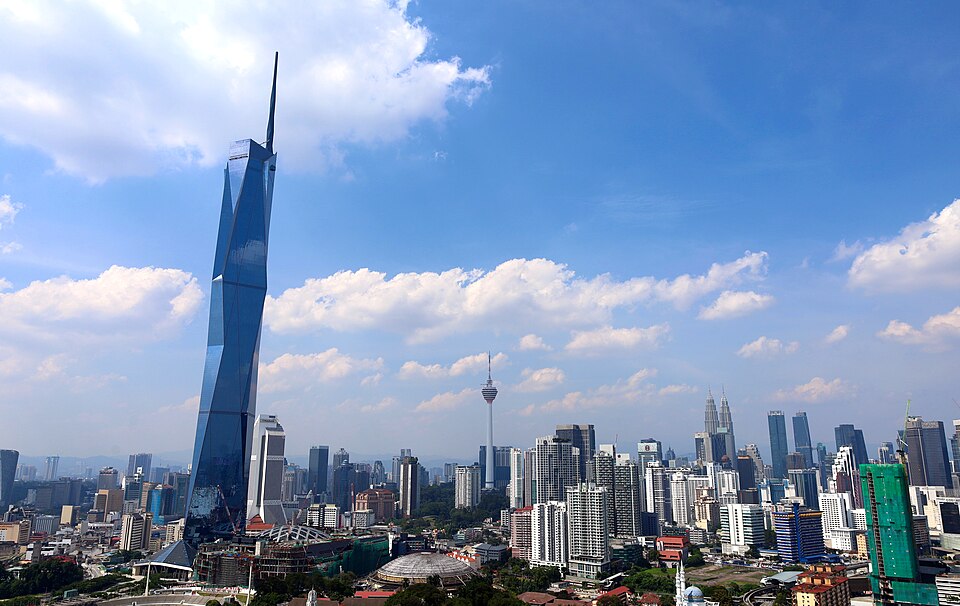
But behind every tall building is a deeper story; of economic growth, political will, and the psychological need for visibility on the global stage. Kuala Lumpur’s skyline is more than an architectural phenomenon; it’s a mirror reflecting Malaysia’s desire to be seen, respected, and remembered. To understand the towers, we need to understand the times that built them.
The Ambition to Modernize
When Malaysia entered the 1980s, it stood on the edge of transformation. The country was shifting from an agriculture-based economy to one driven by manufacturing, oil, and finance. The government under Prime Minister Mahathir Mohamad envisioned a modern Malaysia that could compete with global cities like Singapore and Tokyo. The skyline became part of that vision, a physical manifestation of progress.
The Dayabumi Complex, completed in 1984, marked the beginning of that transformation. Designed with Islamic geometric motifs yet built with cutting-edge materials, it was Malaysia’s first major modern skyscraper and a signal that the nation could merge tradition with technology. Soon after, the momentum continued with the construction of corporate towers, luxury hotels, and international banks sprouting across downtown Kuala Lumpur.
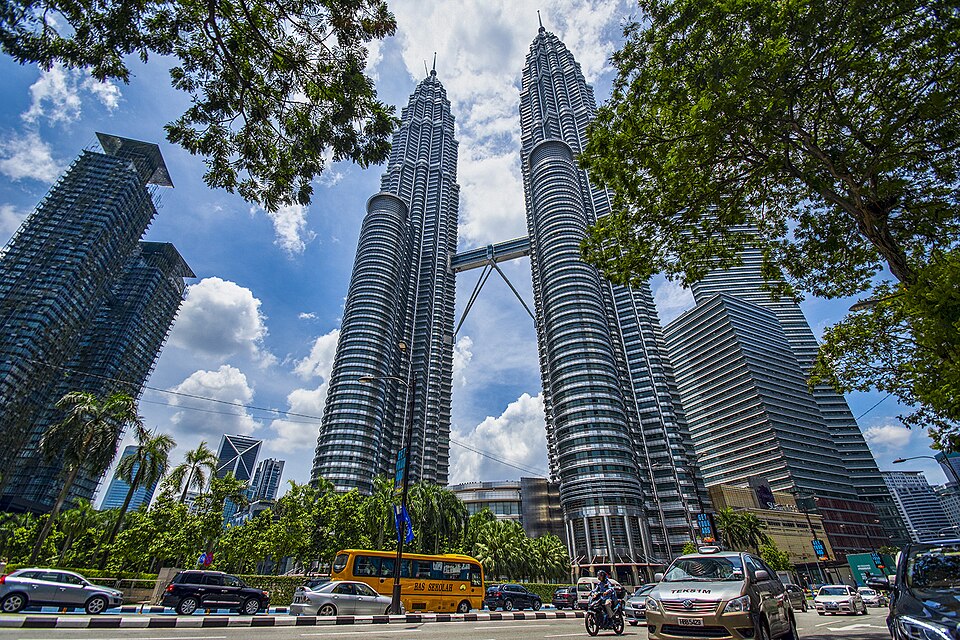
Then came the Petronas Twin Towers in 1998, a project that redefined everything. Standing at 451.9 meters, they weren’t just the tallest buildings in the world at the time; they were Malaysia’s declaration of confidence. The towers told the world that Kuala Lumpur had arrived, not as a colonial afterthought, but as a modern metropolis with its own cultural fingerprint. Their design (based on Islamic geometry) ensured the country’s identity was built into its future.
The Economics of Height
While national pride fueled ambition, economics determined the shape of Kuala Lumpur’s growth. The city’s land is limited, especially in the central business district where financial and administrative activities concentrate. As land values soared, developers looked upward rather than outward. Building vertically wasn’t just a matter of aesthetics, it was efficient economics. More floors meant more space per square meter of expensive land, and more opportunities for investment returns.
The Malaysian government and government-linked companies played a huge role in this development. Through state agencies and investment funds, they financed, approved, and sometimes directly built skyscrapers as part of urban modernization drives. The Kuala Lumpur City Centre (KLCC) project, for instance, transformed the old Selangor Turf Club into a global financial district. Each tower became part of a larger narrative, from infrastructure upgrades to tourism promotion.
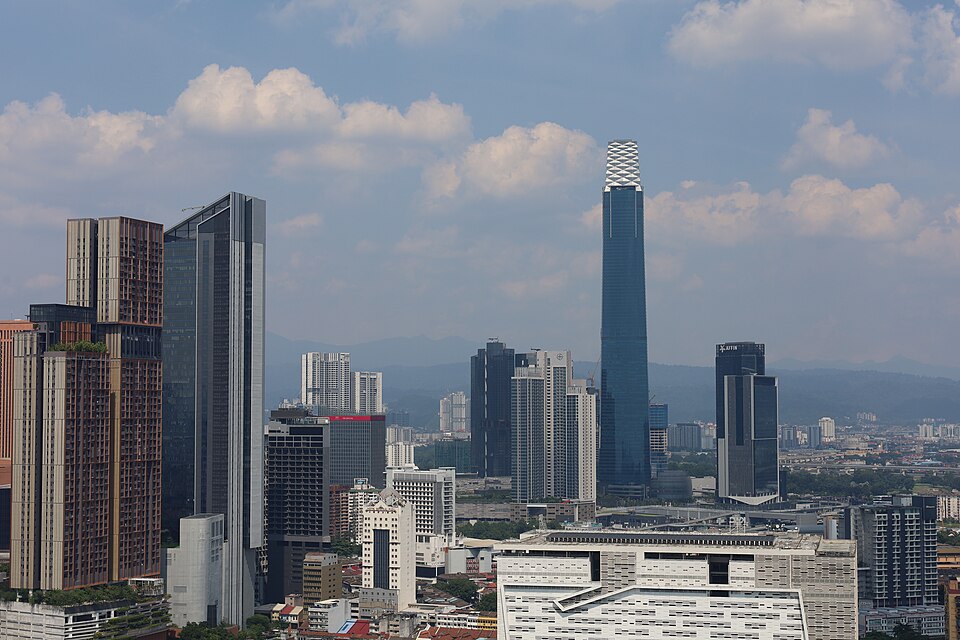
Skyscrapers also turned into a form of soft power. Cities compete for global attention, and towering skylines act like billboards visible from miles away. For Kuala Lumpur, each new high-rise was a symbol of resilience and relevance. Even after the Asian Financial Crisis of 1997, construction didn’t stop for long. Malaysia kept building, perhaps slower, but always upward. By 2024, the country had more than 360 skyscrapers, ranking among the top ten cities globally for tall structures. For a relatively young nation, that statistic alone tells a story of determination.
The Skyline as Identity
Beyond money and modernity, Kuala Lumpur’s skyscrapers represent something emotional, the evolution of national identity. Architecture became the country’s way of expressing optimism, progress, and unity. The Merdeka 118 tower, completed in 2023, rises beside Stadium Merdeka, where independence was declared in 1957. Its location isn’t accidental. The tower connects Malaysia’s past and present: from freedom won on the ground to aspirations reaching the sky.
This fusion of heritage and height reflects how Malaysia views progress, not as a rejection of the old, but as an elevation of it. In every gleaming facade, there’s a trace of cultural pride. Kuala Lumpur’s towers borrow motifs from Islamic art, Malay patterns, and local symbolism. Unlike many cities where glass boxes dominate the skyline, KL’s architecture often carries meaning, design choices that nod to identity even amid globalization.
Of course, the city’s vertical expansion isn’t without challenges. Critics warn of oversupply in the property market, rising maintenance costs, and environmental pressures such as the heat island effect. Yet, these concerns coexist with innovation. Developers are now embracing sustainability, building towers with solar panels, energy-efficient systems, and public green spaces. Projects like the Tun Razak Exchange (TRX) and Bukit Bintang City Centre are redefining what modern skyscrapers mean: not just status symbols, but living ecosystems designed for people, not prestige.


