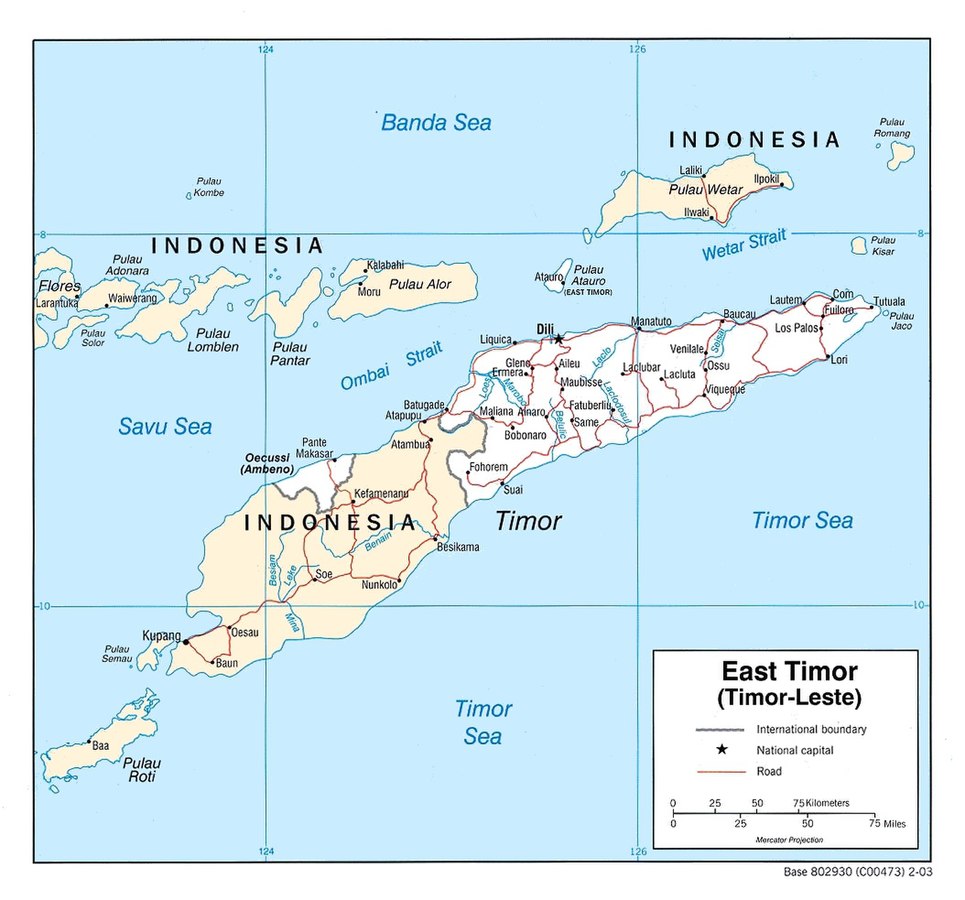
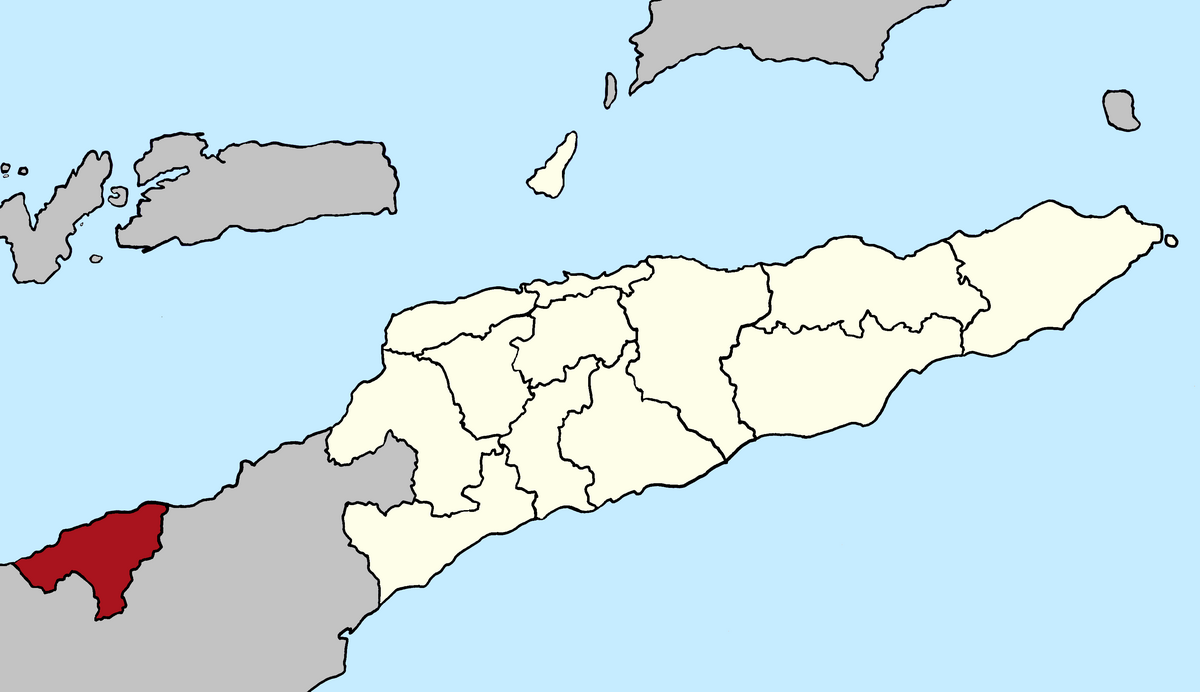
In the complex geography of Southeast Asia, few places illustrate history’s long shadow quite like Oecusse-Ambeno, a small exclave of Timor-Leste completely surrounded by Indonesia’s East Nusa Tenggara province.
This territory, separated from the rest of Timor-Leste by hundreds of kilometers, stands as a living reminder of how colonial treaties once carved up the region, leaving behind borders that continue to shape modern identity.
Geography and the Birth of an Exclave
Oecusse-Ambeno covers about 813 square kilometers and is home to roughly 69,000 people. It remains the only significant exclave in Southeast Asia, shaped by centuries of shifting colonial influence.
The Portuguese first established a settlement in Lifau, Pante Makasar, during the 16th century, marking the beginning of their presence on Timor Island. By 1702, Lifau had become the capital of Portuguese Timor, making Oecusse the earliest center of European colonial activity in the region.
Rivalries between the Portuguese and the Dutch over control of Timor eventually led to the Treaty of Lisbon (1859), which formalized territorial divisions. Although Oecusse lay within the Dutch-dominated western part of the island, Portugal retained the enclave for its historical significance. The boundary was finalized in 1916 through an agreement in The Hague, solidifying Oecusse as an isolated yet symbolic foothold of Portuguese influence.
When Timor-Leste gained independence in 2002, Oecusse remained part of the new nation, an echo of the centuries-old colonial borders that continue to define its geography today.
Cultural Identity Between Two Worlds
Despite its political ties to Dili, Oecusse’s cultural landscape reflects a deep connection with neighboring Indonesia.
The Dawan people, one of the largest ethnic groups in West Timor, have a strong cultural and linguistic presence in Oecusse. Many residents speak Dawan more fluently than Tetun, the national language of Timor-Leste.
This linguistic blend highlights how geography often outweighs politics in shaping local identity. In Oecusse, everyday life mirrors that of nearby communities in Nusa Tenggara Timur, proof that culture flows more easily across borders than power ever could.
A Region With Special Status and Economic Ambition
To address the challenges of isolation, the Timor-Leste government granted Oecusse-Ambeno Special Administrative Status, making it the only region in the country with such autonomy.
In addition, the enclave was designated as a Special Social Market Economic Zone (ZEESM), a bold initiative to attract investment and encourage self-sustaining growth. The project aims to transform Oecusse into a regional economic hub that bridges Southeast Asia’s smallest nation with its larger neighbor.
Still, the exclave’s location presents logistical hurdles. Residents traveling to mainland Timor-Leste must cross international borders, often using passports, unless they travel by air or sea. This unusual setup underscores Oecusse’s dual role: a symbol of Timor-Leste’s unity and a reminder of the historical bonds that continue to connect it with Indonesia.
A Living Legacy of History
Oecusse-Ambeno is more than just a geographical curiosity, it is a living testament to Southeast Asia’s colonial past and modern resilience.
Its people, language, and traditions embody centuries of adaptation and coexistence, while its economy and governance reflect Timor-Leste’s determination to thrive despite its fragmented geography.
As Indonesia and Timor-Leste continue to strengthen diplomatic and border cooperation, Oecusse stands as a bridge, both literal and symbolic, between two nations with intertwined histories and shared futures.