


As Indonesia continues to evolve as a dynamic democracy, one of the country’s most important institutions—the Indonesian National Police (Polri)—stands at a defining crossroads. Public expectations are rising, societal values are shifting, and the demands of the digital era are reshaping how security and law enforcement must function. Against this backdrop, the Indonesian Police Science College (STIK) launched DILIBAS – the National Literacy Dialogue, a national dialogue series designed to examine, challenge, and accelerate Polri’s transformation.
DILIBAS presents itself as more than a forum. It is a movement. The program defines its mission clearly: a space where leaders, academics, and practitioners can critically examine the direction of police transformation in the modern era. Through discussions on transparency, accountability, technological adaptation, and institutional innovation, DILIBAS encourages participants to evaluate what a modern police force should be—and how Polri can move toward that vision.
A Platform Built for Honest Conversation
At a time when public trust and institutional legitimacy are under intense scrutiny, the existence of an open forum like DILIBAS is significant. The program emphasizes candid, constructive dialogue on sensitive issues such as ethics, the growing role of technology, and the evolving societal obligations of the police. Its commitment is simple yet bold: to support the development of a police institution that is adaptive, trusted by the public, and ready to transform. Central to DILIBAS is cross-sector collaboration. By inviting voices from academia, civil society, technology experts, and police leadership, the program builds a shared understanding of challenges and solutions. It acknowledges that transformation cannot—and should not—happen in isolation.
Five Episodes Toward Institutional Transformation
DILIBAS structured its 2025 series into five thematic episodes, each examining a crucial aspect of policing in Indonesia.
The first episode, “Police Transformation: Between Image and Reality,” held on 12 November 2025, confronted the long-standing discrepancy between how Polri is perceived by the public and how it performs in everyday practice. Participants explored how media narratives, high-profile cases, and historical legacies have shaped public perception over the years. At the same time, they acknowledged that Polri has made real progress in areas such as modernization, public service improvements, and capacity-building initiatives. This episode made clear that meaningful transformation must begin with honesty about the gap between expectations and reality.
The second episode, “Moral Courage in the Midst of Bureaucracy,” held on 19 November 2025, addressed the internal dynamics of Polri. The discussion focused on the moral courage required within hierarchical systems, especially when officers must navigate bureaucratic pressures that may be resistant to change. Speakers argued that ethical leadership is essential to reform and that institutional transformation is not only administrative or procedural—it must also be rooted in moral conviction and personal integrity.
The third episode, “Digital Policing: Police or Robot?” held on 26 November 2025, examined the challenges and opportunities of policing in the digital age. Participants debated how far automation and artificial intelligence should shape policing practices. They discussed digital surveillance, the ethics of algorithmic decision-making, the rising threat of cybercrime, and the importance of building digital literacy among police personnel. While technology offers powerful tools to improve efficiency and transparency, this episode stressed that it should never replace the human qualities—fairness, empathy, and discretion—that define legitimate policing.
The fourth episode, “The Police and Generation Z: Merging or Colliding?” held on 3 December 2025, focused on Indonesia’s rapidly growing Generation Z population. Young people today expect transparency, authenticity, and open communication from institutions, and the police are no exception. The episode explored whether Polri’s culture and communication methods resonate with Gen Z’s values. It also underscored the need for youth-friendly community engagement strategies and highlighted the importance of adapting recruitment and training processes so that the next generation of officers can meet evolving societal expectations.
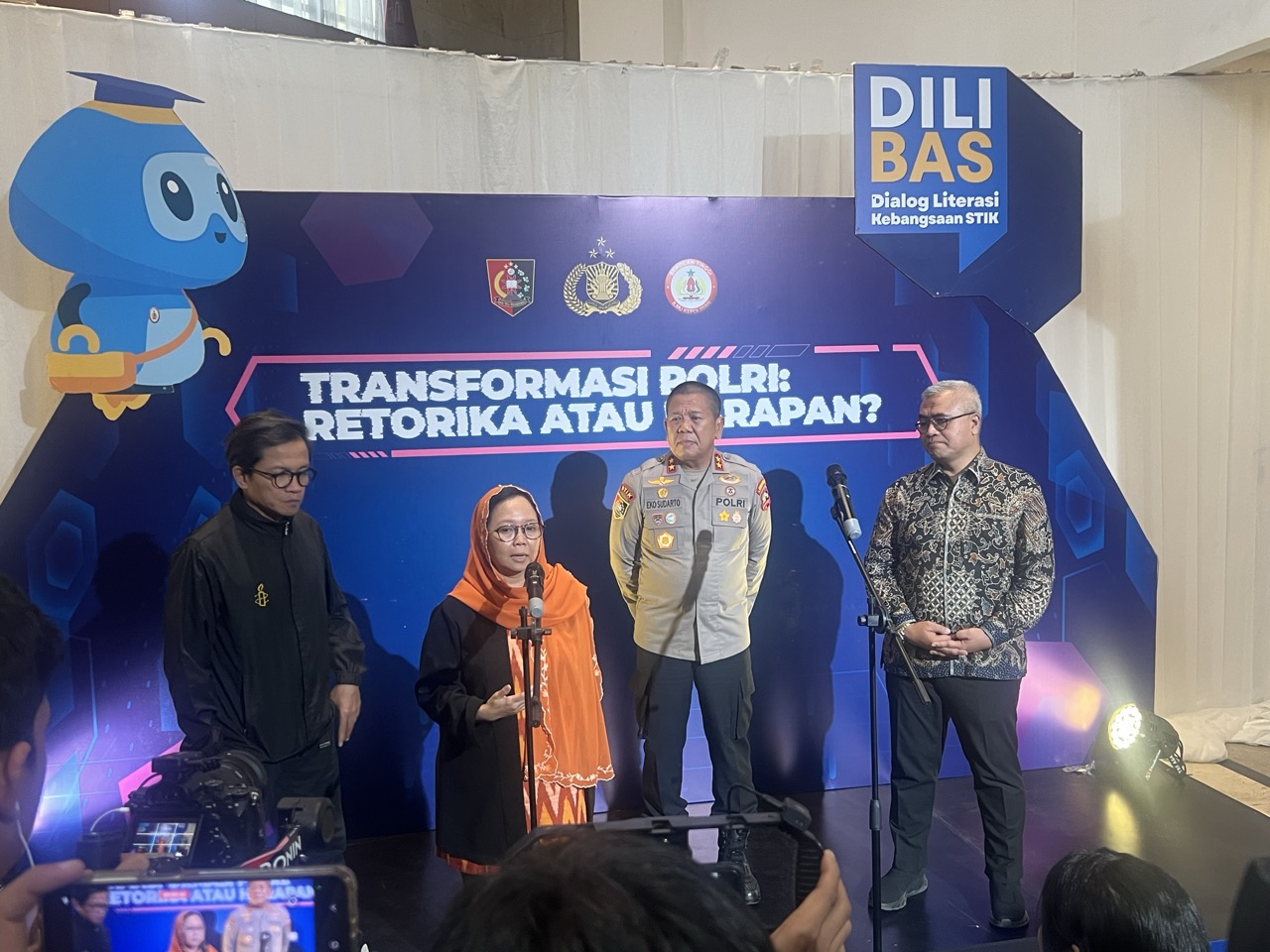
The final episode, “Police Transformation: Rhetoric or Hope?” held on 10 December 2025, posed the most fundamental question of the entire series. Participants examined whether Polri’s current reform initiatives represent genuine transformation or whether they risk being perceived as mere rhetoric. The discussion evaluated progress made to date, identified gaps that still require attention, and reflected on how transformation can be measured in meaningful ways. It emphasized that building public trust requires consistency, measurable improvement, and transparent accountability over time.
A Journey Shaped by History, Driven by Necessity
Understanding Polri’s transformation requires acknowledging its complex history. For much of the 20th century, the police operated within a military framework, shaping its organizational culture and public perception. Following the political reforms of 1998 and Polri’s formal separation from the armed forces in 1999, the institution began shifting toward civilian-oriented policing. Yet cultural, structural, and trust-related challenges still remain. DILIBAS recognizes this context and offers a space where past legacies can be understood while forward-looking reforms are developed.
Winning Public Trust: The Heart of Reform
The future of Polri hinges on whether it can win the trust and sympathy of the Indonesian public. Trust is earned when the police demonstrate fairness in their actions, consistency in their enforcement, transparency in their processes, and genuine engagement with communities. DILIBAS emphasizes that community partnership must be prioritized, accountability must be visible and measurable, and technological advances must be used ethically. It also stresses that communication with the public—especially young people—must be open and ongoing.
Toward a Modern, Trusted, and Transformative Police Force
The DILIBAS series demonstrates that Polri’s transformation is possible when approached with sincerity, courage, and collaboration. By confronting its challenges and envisioning new possibilities, Polri is taking steps toward becoming an institution that is modern, adaptive, and genuinely trusted. DILIBAS is more than a dialogue series—it is a blueprint of hope, signaling that the future of Indonesian policing can be one of integrity, professionalism, and strengthened public trust.


