


Deep within the mist-shrouded Cordillera Mountains of the Philippines lies a monumental feat of landscape engineering that has defied both gravity and time. These emerald amphitheatres, carved directly into the vertical slopes by the Ifugao people, represent a rare harmony between human survival and the natural environment. While long celebrated as the "Eighth Wonder of the World" for their sheer scale and 2,000-year-old legacy, modern science has recently uncovered a hidden truth within their walls.
New archaeological evidence suggests that these terraces were not just a product of ancient tradition, but a sophisticated 16th-century response to global colonization. As Spanish forces moved through the lowlands, the Ifugao transformed the heights into a self-sustaining food fortress, creating a hydraulic masterpiece that remains functional today. This revelation shifts the narrative of the terraces from a static relic of the past to a dynamic symbol of indigenous resilience and environmental brilliance.
The Great Age Debate
For decades, history books claimed the terraces were prehistoric. However, recent carbon dating of organic matter found deep within the terrace foundations has sparked a scientific revolution. Data indicates that while small-scale terracing may have existed earlier, the massive, mountain-spanning expansion occurred between 1570 and 1800.
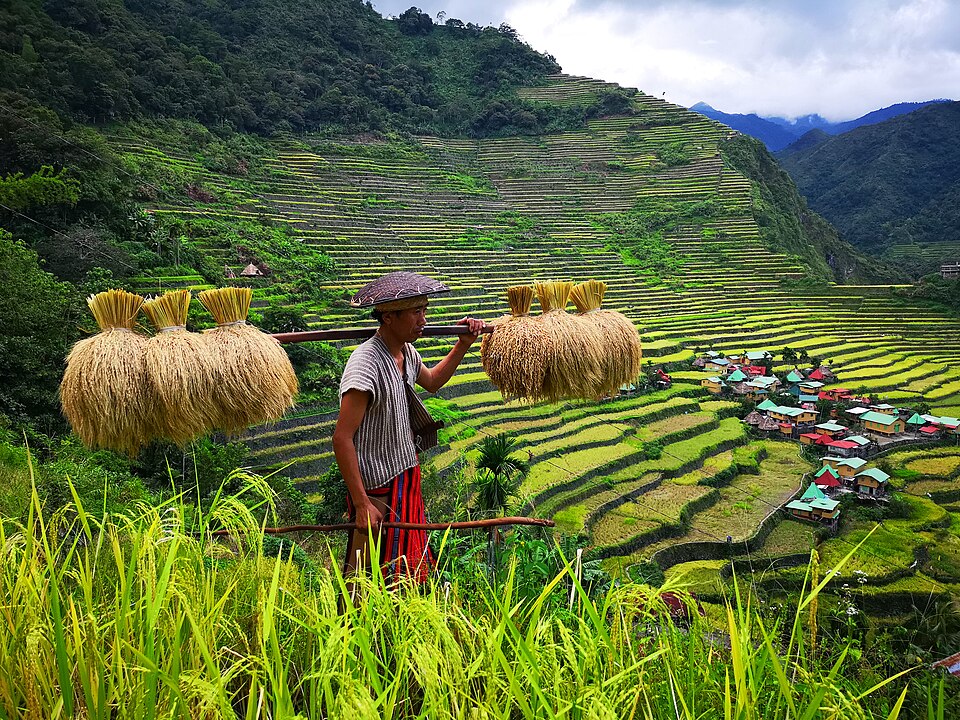
This period coincides exactly with the Spanish arrival in the Philippines. Instead of submitting to colonial rule, the Ifugao retreated to higher altitudes. They engineered a vertical agricultural system so difficult to navigate that it rendered Spanish cavalry and heavy armor useless. The terraces were, in essence, a massive, living fortification.
A Hydraulic Miracle Without Blueprints
The most "mind-blowing" aspect for modern civil engineers is the Ifugao's mastery of fluid dynamics. Without pumps, cement, or written blueprints, they created a gravity-fed irrigation system that begins at the very top of the mountains.
The Ifugao preserved "sacred forests" (muyong) at the summits to act as natural sponges that soak up rainwater. This water is then channeled through a network of bamboo pipes and hand-carved stone canals. It flows from the highest tier to the lowest, with each paddy acting as a filter and a reservoir. This ensures that even the furthest downstream farmer receives nutrient-rich water.
Environmental Resilience and the Cooling Effect
Beyond food production, the terraces function as a massive natural air-conditioning system. Scientists have found that the standing water in thousands of paddies reflects solar radiation and promotes evaporation. This process creates a microclimate that keeps the mountain air significantly cooler than the surrounding deforested slopes.
Furthermore, the system is a pioneer of regenerative agriculture. The water carrying forest silt from the summits provides all the necessary nitrogen and minerals. This "closed-loop" cycle has allowed the Ifugao to harvest rice from the same soil for centuries without ever needing chemical fertilizers or pesticides.
The Digital Preservation of a Living Museum
As the 21st century progresses, this "Green Skyscraper" faces its greatest challenge. The younger generation's migration to urban centers like Manila has led to a shortage of the specialized labor required to maintain the stone walls. When a wall collapses, it can trigger a domino effect of erosion for the tiers below.
To save this masterpiece, the Philippines has turned to cutting-edge technology. Conservationists are now using LiDAR (Light Detection and Ranging) and drone mapping to create a digital twin of the terraces. This allows engineers to identify weak points in the stone structures before they fail. It ensures that the engineering brilliance of the Ifugao will continue to thrive as a living museum for centuries to come.


