


The proboscis monkey, native to the island of Borneo, is one of the most instantly recognizable primates in the world. Known locally and colloquially as the “Dutch” monkey, it stands out because of its oversized, pendulous nose, pot-bellied appearance, and expressive face.
Beyond its unusual looks, however, this monkey has a fascinating lifestyle closely tied to the rivers, forests, and mangroves of Borneo.
The Remarkable Nose

The most striking feature of the proboscis monkey is, without question, its nose. Adult males possess extraordinarily large, fleshy noses that can hang well below the mouth. Females and juveniles also have elongated noses, though they are much smaller and more upturned.
Scientists believe the nose serves several purposes. One theory suggests it acts as a resonating chamber, amplifying vocal calls so males can signal dominance or attract mates from afar.
Another idea is that females prefer males with larger noses, making it a product of sexual selection. Whatever its precise function, the nose has become the defining symbol of the species.
Why It Is Called the “Dutch” Monkey?

The nickname “Dutch monkey” comes from comparisons made during the colonial era. European observers, particularly those from the Dutch East Indies period, noted that the monkey’s large nose and rounded belly reminded them of caricatures of Dutch colonists.
While the name is informal and not used in scientific contexts, it has persisted in popular descriptions and travel writing. Today, the term is more a cultural curiosity than an official label, but it adds to the monkey’s colorful reputation.
Life Along Rivers and Mangroves

Proboscis monkeys are uniquely adapted to life near water. They are most commonly found in mangrove forests, riverine forests, and coastal swamps. These habitats provide not only food but also safety.
The monkeys often sleep in trees overhanging rivers, which allows them to escape predators quickly by jumping into the water. Unlike many primates, proboscis monkeys are excellent swimmers.
Their partially webbed feet and hands help them move efficiently through rivers, and they can swim long distances to cross channels or escape danger.
Diet and Digestion

The diet of the proboscis monkey is another unusual aspect of its biology. It feeds mainly on leaves, unripe fruits, and seeds. To handle this tough, fibrous diet, the monkey has a complex, multi-chambered stomach similar to that of a cow.
This specialized digestive system allows bacteria to break down cellulose and neutralize toxins found in certain leaves. As a result, proboscis monkeys must be careful with what they eat.
Too much ripe fruit can upset their digestion, which is why they avoid sugary foods that many other monkeys enjoy.
Social Life and Behavior
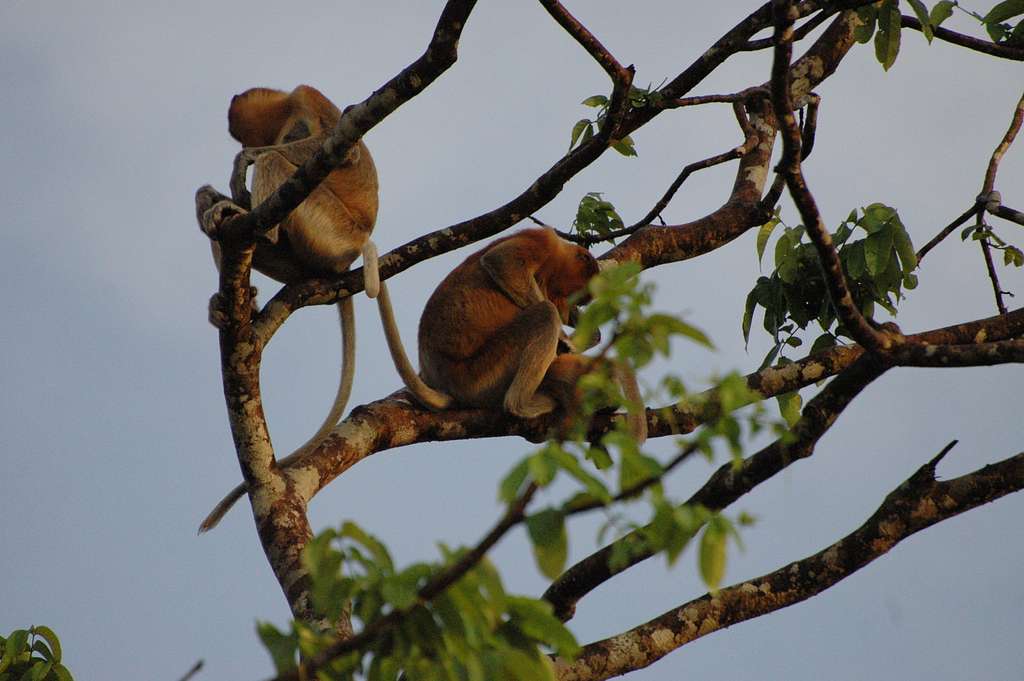
Proboscis monkeys live in groups that typically consist of one dominant male, several females, and their offspring. There are also all-male groups made up of younger or displaced males. Within these groups, communication is vital.
Besides loud honking calls produced by males, the monkeys use facial expressions, body posture, and softer vocalizations to maintain social bonds.
They are generally calm and gentle animals, spending much of their day resting, feeding, and grooming one another high in the trees.
Conservation and Future Challenges
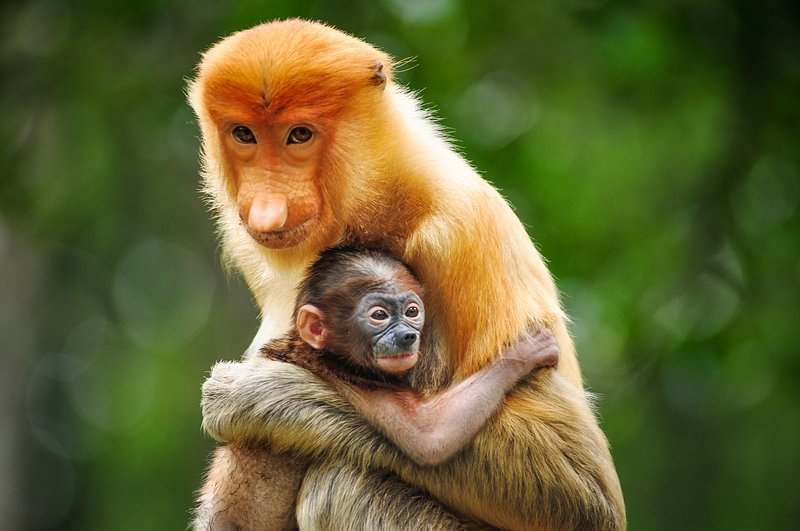
Despite their adaptability, proboscis monkeys face serious threats. Habitat loss due to logging, palm oil plantations, and human settlement has dramatically reduced their natural range.
Because they rely so heavily on specific forest types near water, even small changes to their environment can have severe consequences.
The species is currently classified as endangered, and conservation efforts focus on protecting remaining habitats and raising awareness about the monkey’s ecological importance.
Safeguarding rivers, mangroves, and coastal forests is essential not only for the proboscis monkey but for countless other species that share its home.
The proboscis monkey is far more than a curiosity with a funny nose. It is a symbol of Borneo’s rich biodiversity and a reminder of how unique and fragile island ecosystems can be.


