


Rising above the misty mountains of northern Viet Nam, Fansipan Peak has long captured the imagination of travelers. Known as the “Roof of Indochina,” it is the highest mountain in the region, standing proudly above the Hoàng Liên Sơn range near the town of Sa Pa.
What was once an arduous multi-day trek is now accessible to travelers of almost any age or fitness level, thanks to the world’s longest cable car system.
This modern marvel allows tourists to “conquer” Fansipan in comfort while still savoring the drama, beauty, and spiritual atmosphere of the journey.
From Remote Summit to Accessible Icon
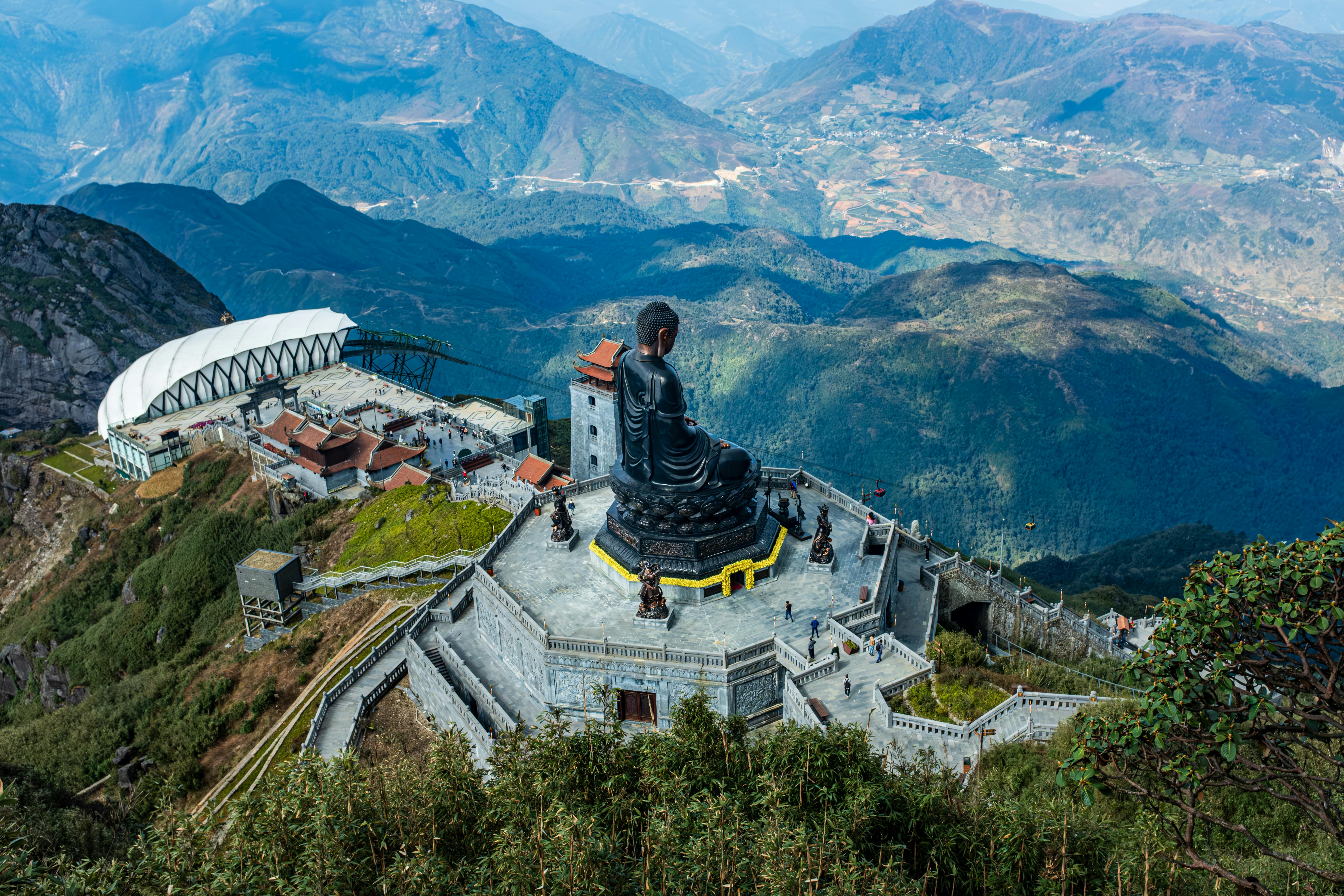
For decades, reaching Fansipan meant days of hiking through dense forests, steep ridgelines, and unpredictable weather. While this remains a rewarding option for adventure seekers, the opening of the cable car transformed Fansipan into a destination for a far wider audience.
Today, visitors can ascend from the valley floor to near the summit in under an hour, turning what was once a physical conquest into a scenic and emotional one. This shift has helped Fansipan become a symbol of how Viet Nam blends natural heritage with innovative tourism.
The World’s Longest Cable Car Experience

The highlight of the journey is undoubtedly the cable car itself. Stretching across deep valleys and rugged mountain slopes, the ride feels less like transportation and more like flight.
As the cabin glides silently above the landscape, passengers are treated to sweeping views of terraced rice fields, rolling hills, and clouds drifting at eye level.
On clear days, the scale of the Hoàng Liên Sơn range becomes breathtakingly apparent; on misty days, the experience feels mysterious and almost surreal.
The cable car’s length and elevation gain create a gradual transition through different climates and vegetation zones, making the ascent a visual lesson in mountain ecology.
A Spiritual and Cultural Ascent
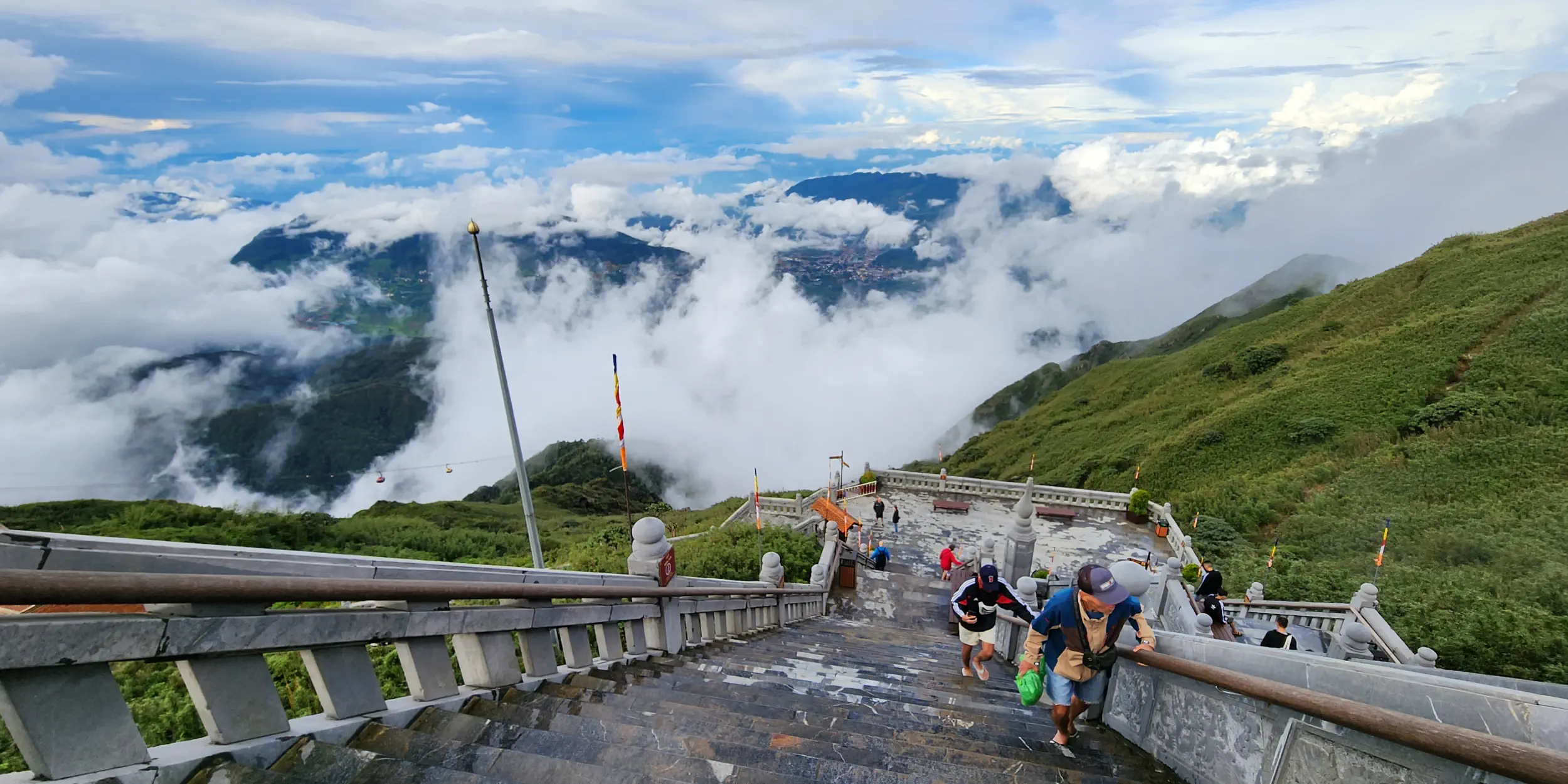
Reaching the upper station is not the end of the journey. From there, visitors continue on foot, climbing stone steps that wind through a complex of temples, statues, and viewpoints. This section adds a deeply spiritual dimension to the experience.
Pagodas dedicated to Buddhist figures sit perched on ridges, surrounded by clouds and prayer flags. Bells chime softly in the mountain air, inviting travelers to slow down and reflect.
Rather than a simple race to the summit marker, the walk becomes a pilgrimage of sorts, blending physical movement with contemplation and reverence for nature.
Standing on the Roof of Indochina

At the summit, tourists finally encounter the iconic marker that signifies the peak of Indochina. Standing here is a powerful moment, even without the exhaustion of a long trek.
The sense of achievement comes not only from reaching the highest point, but from witnessing the vastness of the landscape stretching in all directions. Mountains fade into the horizon, often partially hidden by clouds, reinforcing the feeling of being above the world.
Many visitors pause for photos, quiet reflection, or simply to absorb the crisp mountain air before beginning their descent.
Fansipan Redefines Adventure Travel

Fansipan’s cable car has redefined what it means to “conquer” a mountain. Instead of focusing solely on physical endurance, the experience emphasizes accessibility, appreciation, and connection.
Families, elderly travelers, and those with limited time can now share in the wonder of standing atop the region’s highest peak.
At the same time, the mountain retains its sense of grandeur and respect, reminding visitors that true conquest lies in understanding and honoring nature rather than overpowering it.
By combining cutting-edge engineering with cultural depth and natural beauty, Fansipan Peak offers a uniquely modern mountain experience.
The world’s longest cable car does more than carry tourists upward; it lifts them into a story where achievement, awe, and accessibility meet high above the clouds of northern Viet Nam.


