


Many people know The Bridge on the River Kwai (1957) as an Oscar-winning classic film. Yet few truly understand the reality behind the story.
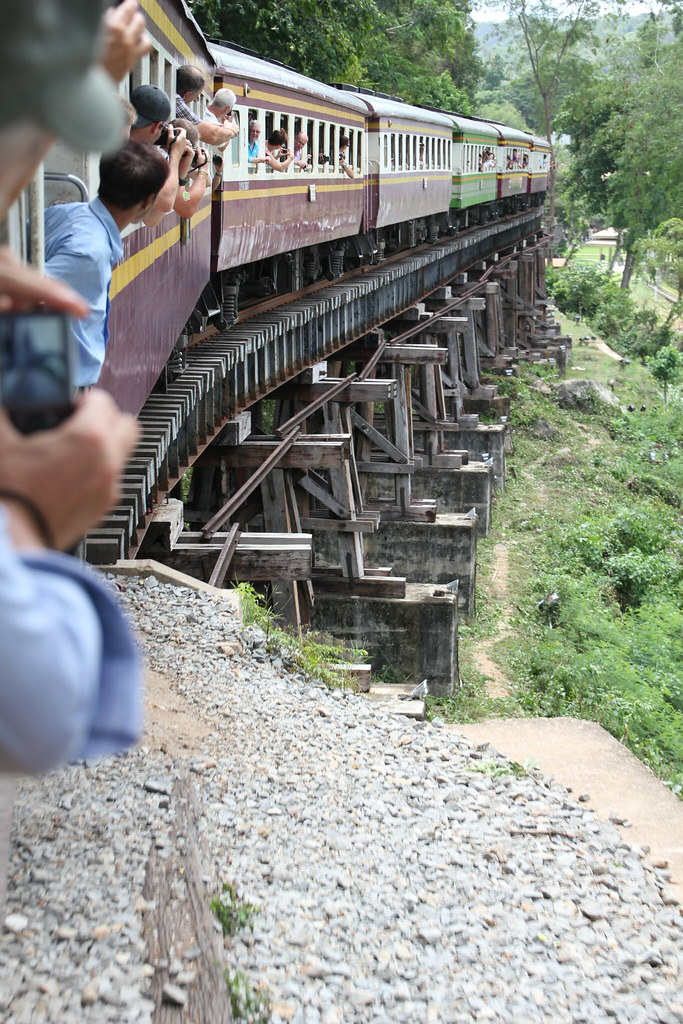
The railway line that today carries tourists with cameras and open windows was once known as the Death Railway, a Japanese military project during World War II that claimed hundreds of thousands of lives and became a symbol of wartime brutality in Southeast Asia.
The railway was built in an extremely short period, between October 1942 and October 1943. Stretching approximately 415 kilometers, it connected Nong Pladuk in Thailand with Thanbyuzayat in Burma, now known as Myanmar.
Along the route stood 62 stations, nearly 700 bridges, more than 100 forced-labor camps, and 144 cemeteries scattered along the line.
A Strategic Route Built on Human Lives
The decision to construct the Thailand–Burma Railway was made after Japan came under severe pressure in the Pacific, particularly following its defeat at the Battle of Midway in June 1942.
Sea routes became increasingly dangerous due to Allied attacks, prompting Japan to seek a land route to supply its forces in Burma and to support its planned invasion of India.
The project relied on two main sources of labor. Around 60,000 Allied prisoners of war were forced to work on the railway, including 13,000 Australian soldiers.
Far larger in number were Asian civilian laborers, an estimated 200,000 people, most of them from Burma and Malaya, as well as from Thailand, Java, and other regions.
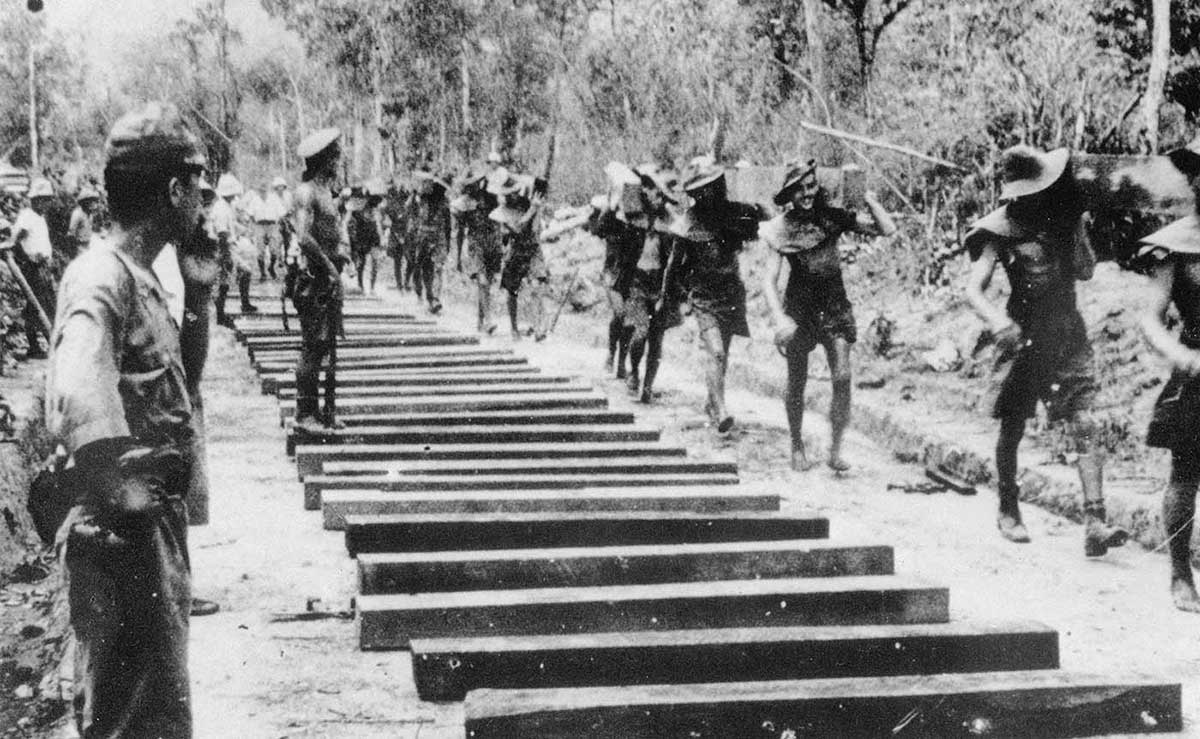
They were known as romusha, forced laborers who were promised wages but instead subjected to brutal treatment.
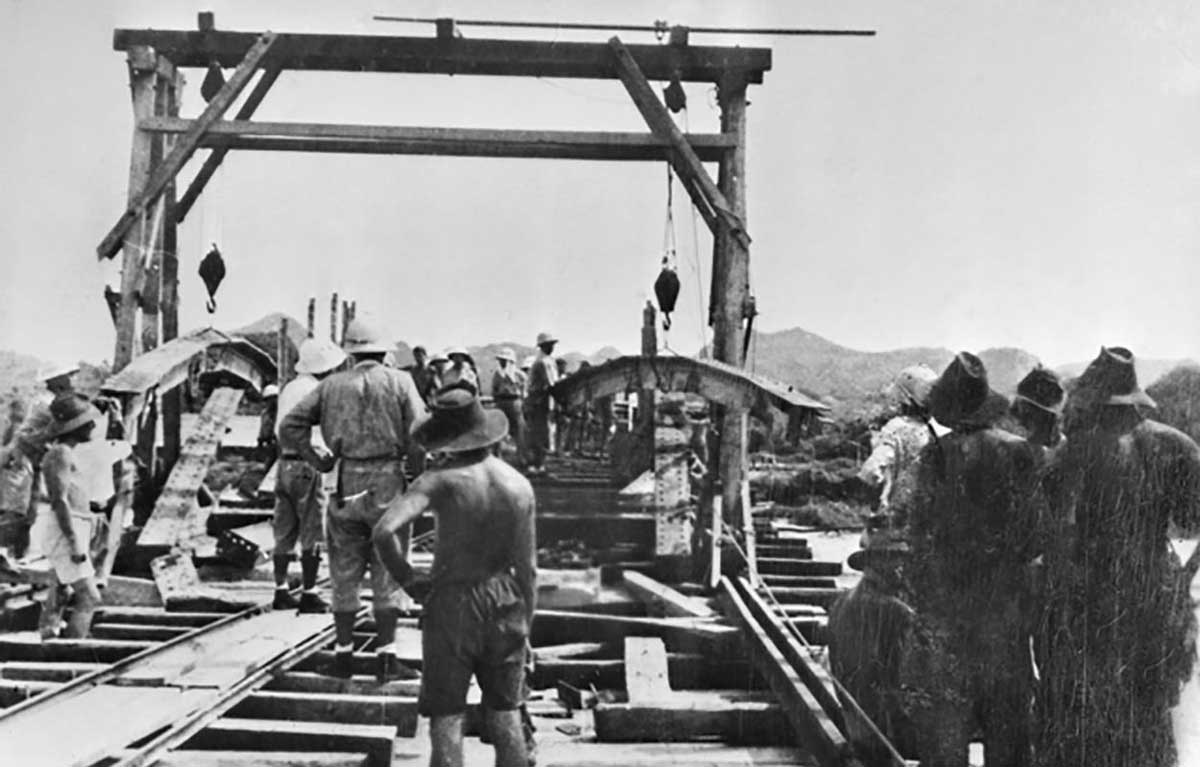
The terrain they faced was nearly impossible. Almost the entire railway cut through dense jungle plagued by malaria, crossed rivers and deep ravines, and climbed steep hills.
More than 600 bridges had to be built, in addition to viaducts, embankments, and tunnels. All of this was done with manual tools, under relentless time pressure, and in physical conditions that steadily deteriorated.
A Forced-Labor Hell in the Jungle
Conditions in the labor camps were described as utterly horrific. Workers were driven to complete exhaustion and often forced to keep working even when gravely ill. Those deemed too slow were beaten, while those too weak were frequently left to die.
Daily rations consisted of little more than watery rice porridge with a small amount of vegetables. As a result, diseases such as beriberi, cholera, malaria, dysentery, and festering tropical ulcers spread widely.
By the end of the war, more than a quarter of all Allied prisoners of war had died. The toll was even more devastating among Asian laborers: nearly half never returned.
From Australia alone, around 2,800 soldiers died on this project. The role of military doctors was crucial, even though they worked in extremely primitive makeshift hospitals with almost no medicines.
The name Lieutenant Colonel Edward “Weary” Dunlop later became widely known as a symbol of courage and humanity amid brutality. He was one of 44 Australian medical officers who served along the railway.
Amid starvation, disease outbreaks, and lethal forced labor, Dunlop and his team struggled to care for the sick and dying—a commitment that secured his legacy as a symbol of medical compassion and moral resilience in one of the most brutal projects of World War II.
From Death Railway to Tourist Route
The Thailand–Burma Railway was completed on 16 October 1943 and was used by Japan despite repeated Allied bombings. After the war ended, most of the line was abandoned or reclaimed by nature. Today, only the section between Nong Pladuk and Nam Tok remains in operation.
Ironically, the railway has become one of Thailand’s most popular tourist routes. Visitors ride non-air-conditioned third-class trains across bridges, cliffs, and rivers, including the iconic Bridge over the River Kwai.
The scars of war remain clearly visible: damaged bridge pillars, cuttings through hillsides, and sites such as Hellfire Pass, now preserved as a memorial.
The film The Bridge on the River Kwai helped immortalize this story, even though its narrative is fictional. The reality behind it was far darker. The railway was built at a horrifying cost, more than 90,000 Asian laborers and around 16,000 prisoners of war lost their lives.
Today, the train still runs. The green landscapes and flowing rivers may appear serene, but every railway sleeper holds traces of human suffering. The Death Railway is not merely a tourist attraction; it is a silent reminder of how war leaves deep and lasting wounds, even when the tracks are still in use.


