


A simple post about a traditional Filipino snack unexpectedly sparked a lengthy discussion on social media. Palitaw, a glutinous rice–based cake commonly enjoyed as an afternoon snack, went viral after being referred to as “coconut mochi” in a Threads post.
The incident began on February 4, when filmmaker Bobby Bonifacio Jr. shared a photo of palitaw served on a paper plate. In the caption, he wrote, “Chanced upon this coconut mochi at the local village eatery and it was delightful.”
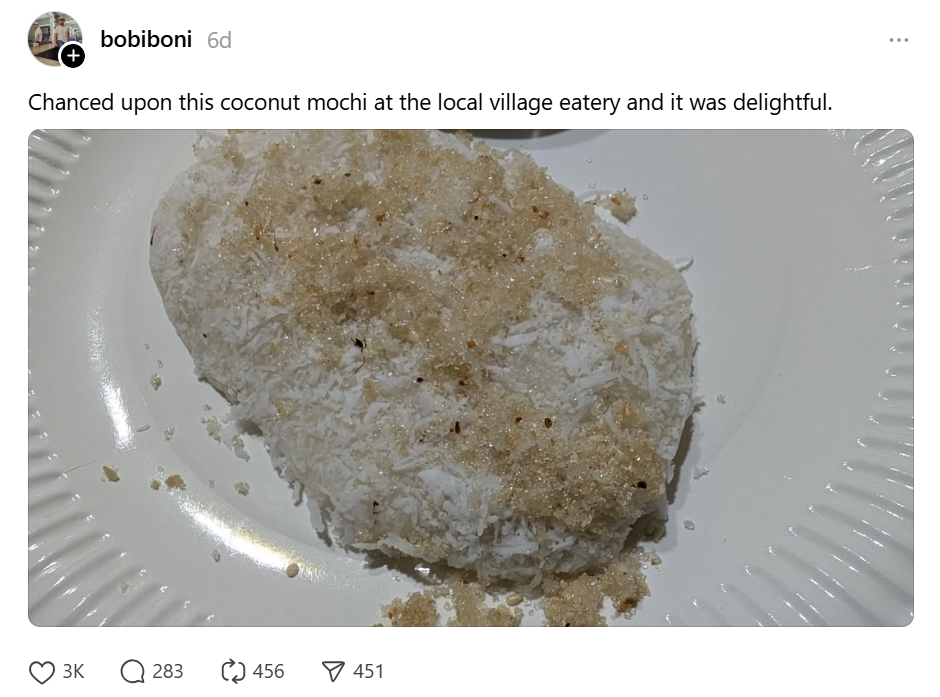
The post quickly drew widespread attention, garnering around 3,000 likes, hundreds of reposts and shares, and more than 280 replies from Threads users.
Palitaw, a Filipino Glutinous Rice Snack
From a culinary perspective, palitaw and mochi do share a basic similarity, as both are made from glutinous rice. However, they come from distinct culinary traditions. Mochi is a traditional Japanese rice cake made from mochigome, a sweet glutinous rice that is pounded until smooth and elastic.
Palitaw, on the other hand, is a soft and chewy Filipino rice cake made from a mixture of glutinous rice flour and water. Traditionally, palitaw was prepared by soaking glutinous rice overnight and then grinding it into a smooth dough.
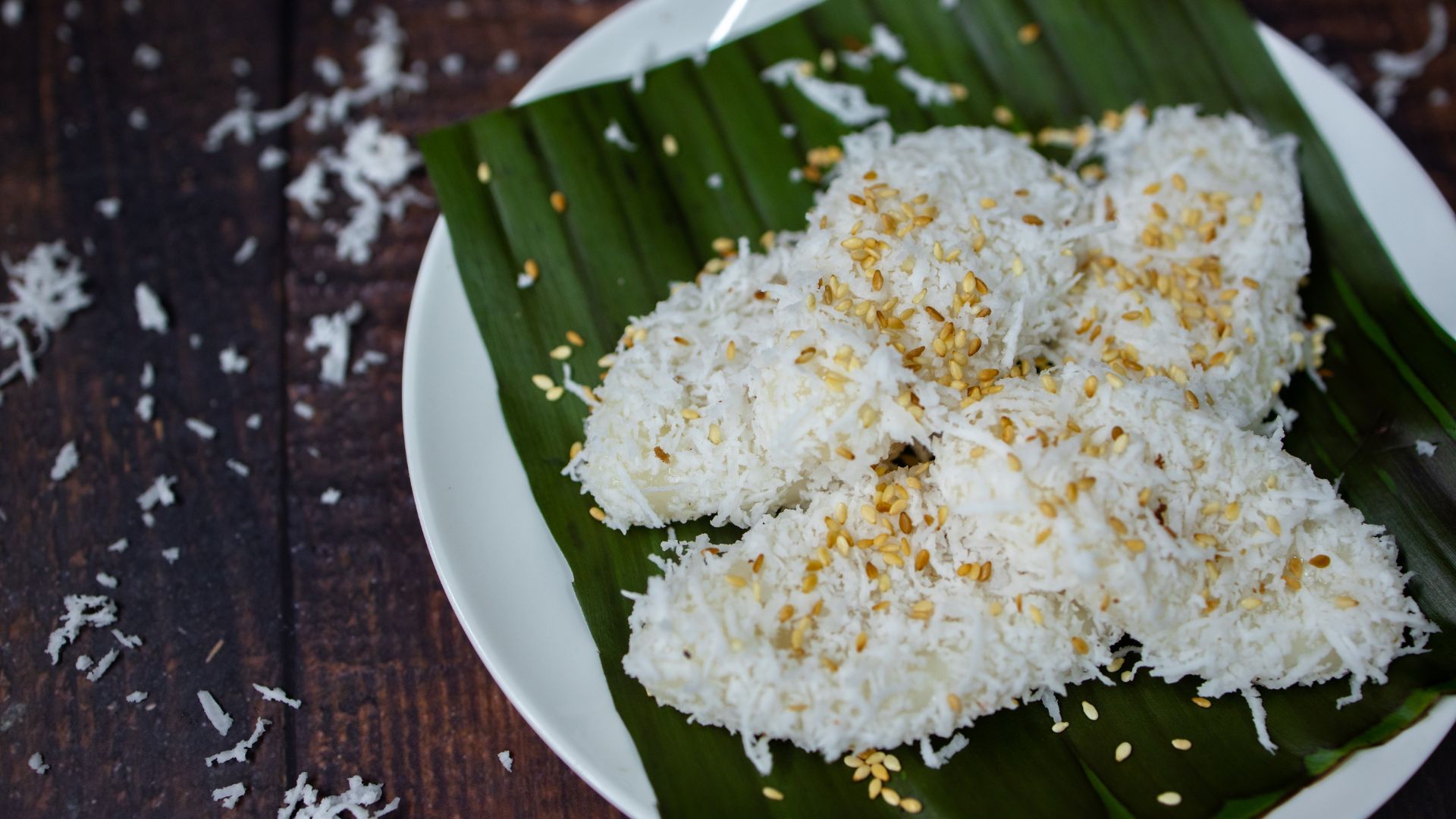
Over time, the use of commercially available glutinous rice flour has become more common for convenience. The dough is shaped into thin discs, boiled until they float, and then coated with grated coconut, sugar or muscovado, and toasted sesame seeds.
The name palitaw comes from the Filipino word “litaw,” meaning “to float” or “to surface,” referring to the cooking process in which the dough rises to the surface of the water once fully cooked. This floating process is a defining characteristic of palitaw and distinguishes it from other Filipino rice cakes.
The snack is believed to have originated in Pangasinan, a region in Northern Luzon known for its long-standing rice-farming traditions.
How to Make Palitaw
1. Prepare the dough
Mix about 2 cups of glutinous rice flour with enough water (approximately 1 cup) until it forms a soft, smooth dough that is easy to shape and not sticky.
2. Shape the palitaw
Take about 1 tablespoon of dough, roll it into a ball, then flatten it into a thin oval or round disc.
3. Boil until cooked
Cook the palitaw in boiling water, adding 2–3 pieces at a time to prevent sticking. The palitaw is done when it floats to the surface.
4. Remove and rinse
Lift the floating palitaw and briefly dip it into clean or cold water to stop the cooking process.
5. Coat and serve
Drain, then roll the palitaw in a mixture of approximately 1 cup grated coconut and 1 cup sugar until evenly coated. Serve warm.