

The Philippine national flag might be one of the most interesting symbols in the world. It is the only national flag that shows whether the country is at peace or at war just by looking at its orientation.
While most flags always stay the same, the Philippine flag is designed to be flipped upside down during times of conflict. In peaceful times, the blue stripe is on top. However, when the nation is officially at war, the red stripe is placed on top.
The Meaning of the Philippines’ National Flag
General Emilio Aguinaldo came up with the idea for the flag while in exile in Hong Kong. It was sewn by Marcela Agoncillo, her daughter Lorenza, and Delfina Herbosa de Natividad, a niece of the national hero Jose Rizal.
The flag was first raised in battle on May 28, 1898, at the Battle of Alapan. It was later formally presented during the declaration of independence on June 12, 1898.
Every part of the design has a deep meaning. The white triangle stands for equality and brotherhood, a design influenced by the Katipunan and Freemasonry.
Inside the triangle is a golden sun with eight rays, representing the first eight provinces that rose up against Spanish rule. The three stars represent the country's three main island groups: Luzon, Visayas, and Mindanao.
Interestingly, the original shade of blue was actually azul celeste (light sky blue), chosen to match the revolutionary flag of Cuba.
Why Flipping the Flag Symbolizes War
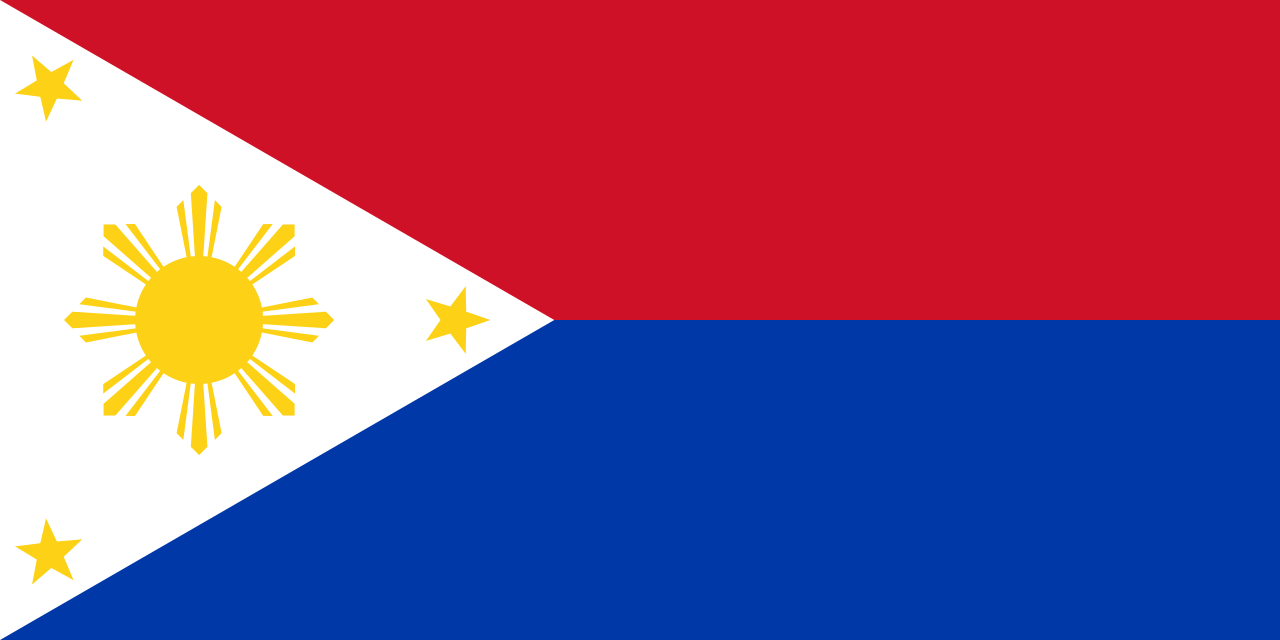
The tradition of reversing the flag dates back to the Philippine Revolution in the late 19th century. Soldiers needed a fast and clear way to communicate their status during battle without needing a separate "war flag." Turning the existing flag upside down was a practical and powerful solution.
The colors themselves carry the message. The blue stripe signifies peace, truth, and justice, while the red stripe represents patriotism, bravery, and the blood of freedom fighters.
By placing the red section on top, the nation visually declares that its people are ready to fight and sacrifice their lives for the country.
Historical Moments the Flag Was Flipped
The flag has been officially inverted during several key moments in history. It is believed to have been flipped for the first time in 1899 during the Philippine-American War after Aguinaldo declared war on the United States.
Another major instance occurred during World War II. Following the Japanese invasion in 1941, President Manuel L. Quezon issued Executive Order No. 386, which ordered the flag to be flown upside down for the duration of the conflict. In 1944, the Japanese-backed government also flipped the flag to symbolize their own declaration of war against the United States and the United Kingdom.
Strict Laws Against Misuse
According to the Flag and Heraldic Code of the Philippines (Republic Act No. 8491), this unique feature is strictly protected by law. The state dictates that the national flag must be displayed with the blue field on top during times of peace, and the red field on top only when the nation is at war.
Since the law explicitly sets this rule, ordinary citizens are not allowed to display the flag with the red stripe on top during peacetime. The law lists specific prohibited acts, including any action that brings dishonor, contempt, or ridicule to the national symbol.
Displaying the flag upside down for amusement, or due to a lack of knowledge, is viewed as a misuse and a mockery of a symbol that represents the nation's history of struggle and sacrifice. Doing so is a punishable offense.
Under Section 50 of the Act, anyone who violates these rules faces a fine of 5,000 to 20,000 pesos, up to one year in prison, or both. For a second offense, the law mandates that both the fine and jail time will be strictly imposed.



