


On December 30, 1844, the people of the Philippines went to sleep and woke up on January 1, 1845. December 31 never existed. Not because of a disaster, but because of a proclamation.
Interestingly, the Philippines was not the only place to experience this. Throughout modern history, several countries and territories have chosen to switch sides of the International Date Line (IDL), effectively deleting or repeating a day on their calendars.
The IDL itself is an imaginary line that roughly follows the 180° meridian across the Pacific Ocean and marks the change of calendar days, with countries on its western side always one day ahead of those on its eastern side. The line is not governed by any international treaty, meaning countries can shift it when their interests make it worthwhile.
And the reason behind every such shift has been the same: trade and political power, not astronomy.
The Philippines

From 1521 onward, the Philippines was positioned on the eastern side of the IDL. This was because Spain developed the colony from the Americas rather than directly from Europe.
Spanish ships regularly traveled between Manila and Acapulco, and to avoid adjusting the calendar every time they arrived, the Philippines followed the same day count as Spain's American colonies.
As a result, for more than three centuries, a Saturday in Manila was already a Sunday in Batavia (present-day Jakarta), despite the two cities being only about 2,700 kilometers apart.
When Latin American countries gained independence from Spain, Philippine trade increasingly shifted westward toward China, the Malay Peninsula, the Dutch East Indies, and Australia.
Maintaining a calendar aligned with the Americas no longer made economic sense. Governor-General Narciso Clavería therefore issued a proclamation under which Monday, December 30, 1844, was followed immediately by Wednesday, January 1, 1845.
As a result, one entire day was erased from Philippine history.
Alaska

During the Russian era, Alaska was located on the western side of the International Date Line because its settlers arrived from Siberia and followed the Julian calendar used by the Eastern Orthodox Church.
When the United States purchased Alaska from the Russian Empire for US$7.2 million in October 1867, two changes took place simultaneously: the territory switched from the Julian to the Gregorian calendar, and the International Date Line was moved to the west of Alaska.
As a result, Friday, October 6, 1867, was followed immediately by Friday, October 18. Not Saturday, but another Friday.
The 12-day shift caused by the calendar change, combined with a one-day adjustment from switching sides of the IDL and offset by the relocation of the line itself, created a unique situation. No other place in the world is known to have experienced two consecutive Fridays.
Samoa

In 1892, King Malietoa Laupepa was persuaded by American merchants to move Samoa to the eastern side of the IDL, aligning the country's calendar with that of the United States. To do so, Samoa had to repeat an entire day.
The date chosen was not arbitrary. Monday, July 4, America's Independence Day, was celebrated twice in succession as a symbolic gesture toward Samoa's new trading partner. As a result, the year 1892 lasted 367 days in Samoa.
Nearly 120 years later, the situation had reversed. Samoa's principal trading partners were now Australia and New Zealand rather than the United States.
Being on the opposite side of the IDL meant Samoa effectively lost two business days each week because its calendar was out of sync with those countries. Samoa's parliament eventually decided to move back to the western side of the line.
Thursday, December 29, 2011, was followed immediately by Saturday, December 31. As a result, Friday, December 30, 2011, never existed in Samoa.
Kiribati

Kiribati consists of 33 atolls spread across five million square kilometers of ocean, and the International Date Line once cut directly through the middle of the country. As a result, its western and eastern regions were always separated by one calendar day.
There were only four days each week when both sides of the country shared the same date and official business could be conducted simultaneously.
To end this situation, President Teburoro Tito announced that, beginning on January 1, 1995, all of Kiribati would be placed on the western side of the IDL. For residents of the eastern islands, Friday, December 30, 1994, was followed immediately by Sunday, January 1, 1995.
One side effect was that Caroline Atoll, located at the eastern edge of Kiribati, became the first inhabited territory on Earth to celebrate the arrival of the year 2000. The Kiribati government actively promoted this distinction as a tourism attraction.
Marshall Islands (Kwajalein)
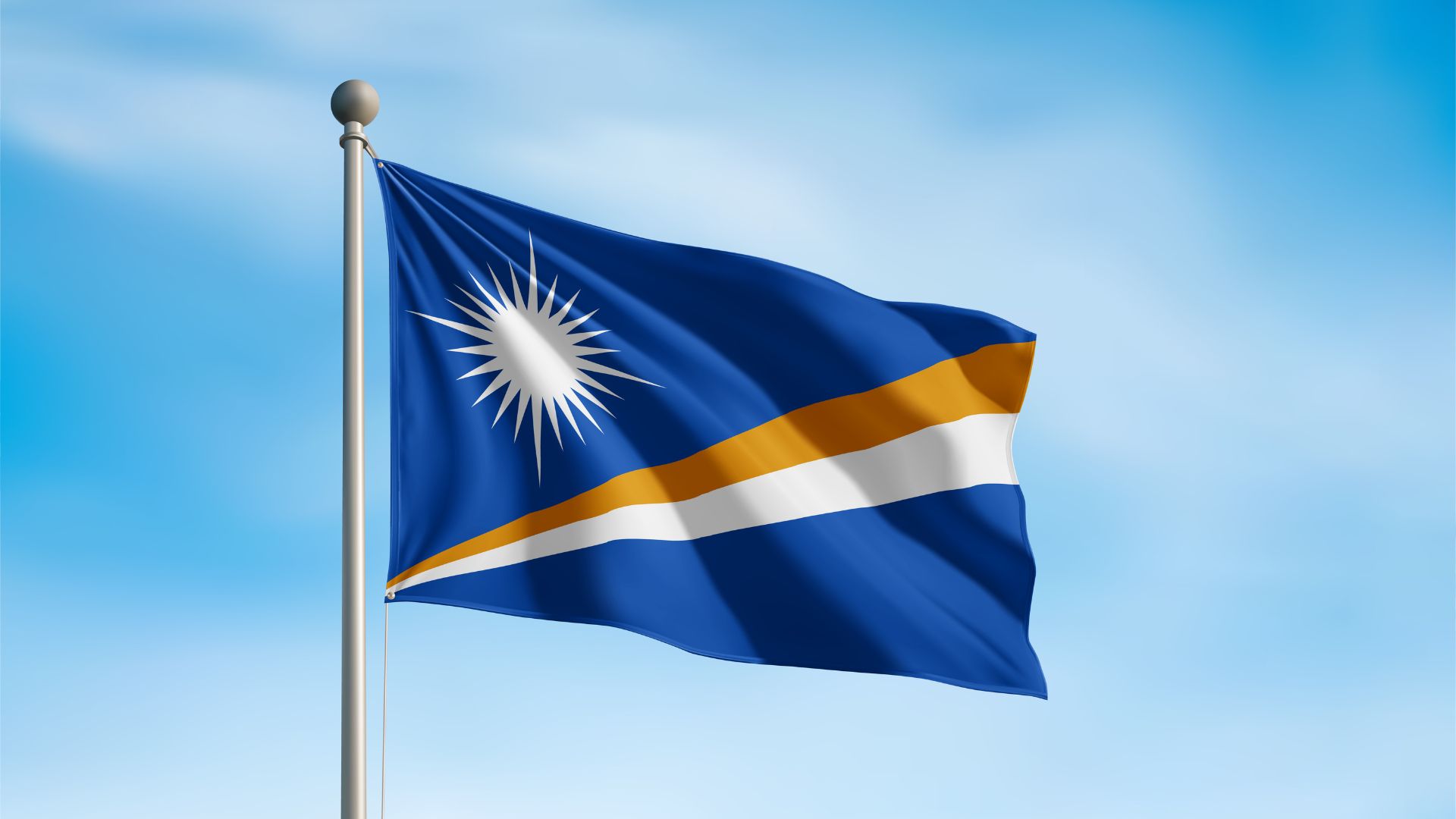
Kwajalein Atoll is part of the Marshall Islands and is geographically located west of the IDL, sharing the UTC+12 time zone with the rest of the country.
After World War II, the United States established a military base there and, in 1969, shifted its date and time reckoning to UTC−12 so that personnel schedules would align with those in Hawaii.
Only Kwajalein made the change, while the rest of the Marshall Islands remained on UTC+12. As a result, Kwajalein effectively moved to the eastern side of the IDL, one day behind its own country.
The consequence was unusual: when it was Monday in Majuro, the capital of the Marshall Islands, it was still Sunday in Kwajalein. One atoll, one country, but two different calendar days.
This arrangement remained in place for more than two decades. Kwajalein's workweek was shifted to Tuesday through Saturday so that it could continue coordinating with colleagues in Hawaii, who worked Monday through Friday.
In 1993, the government of the Marshall Islands submitted a formal request to the United States. Saturday, August 21, 1993, was removed from the calendar, and Kwajalein once again aligned itself with the rest of the country.


