In the mid 1960s, if you wanted to watch color television in Southeast Asia, there was only one country where you could do it. It wasn't Singapore, Malaysia, or Thailand.
It was the Philippines.
The breakthrough wasn't driven by government policy or by being the region's wealthiest economy. Instead, it was the product of a fiercely competitive private television industry that embraced new technology years before much of Southeast Asia caught up.
A Race Led by Private Broadcasters
Unlike many Southeast Asian countries, where television was initially operated by the state. The Philippines developed a highly competitive commercial broadcasting industry from an early stage.
The country's first television station, Alto Broadcasting System (ABS), began broadcasting in 1953, making the Philippines one of the earliest television adopters in Asia. Competition intensified after ABS merged with Chronicle Broadcasting Network (CBN), forming ABS-CBN in 1961.
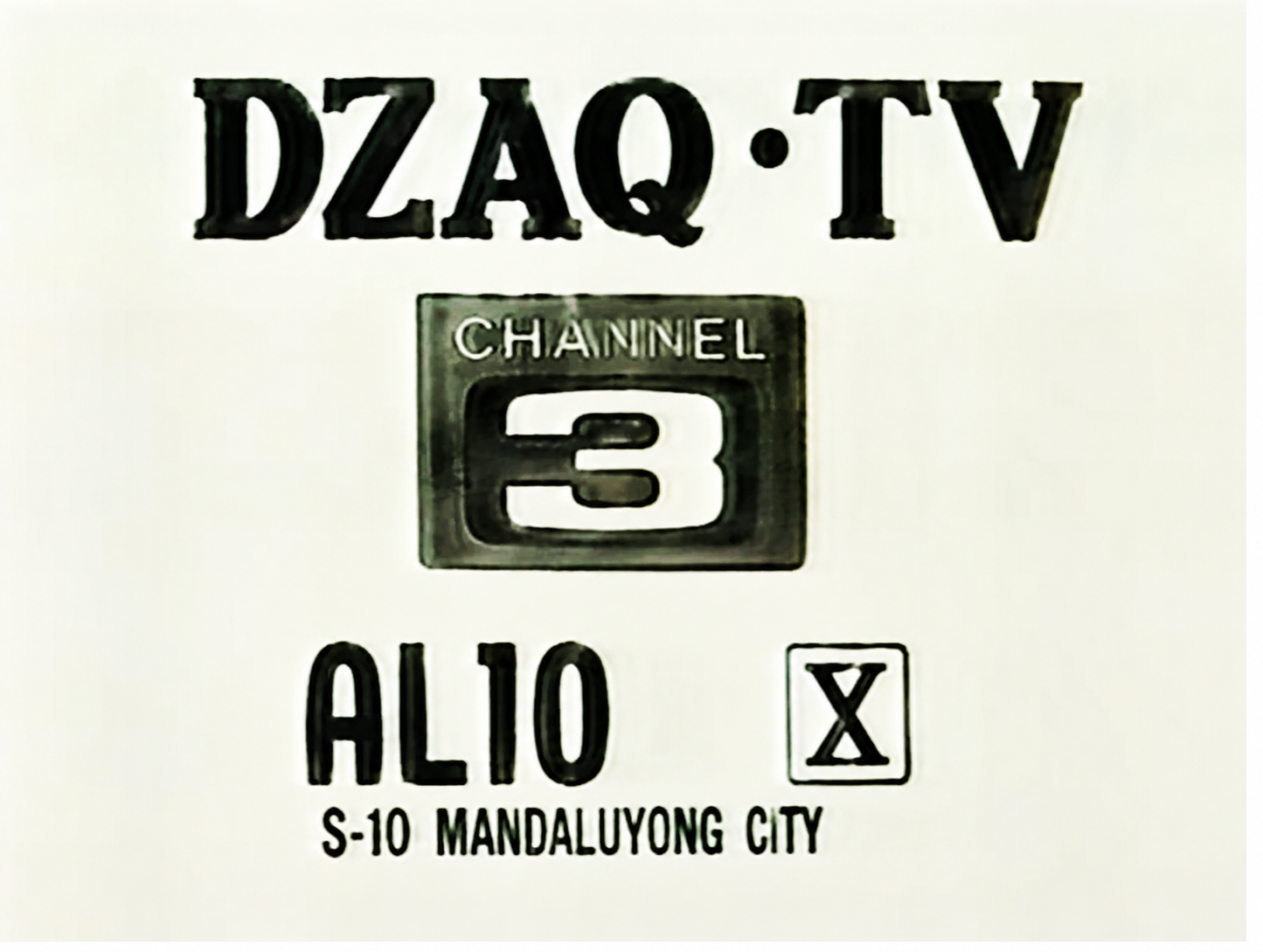
Under the leadership of Eugenio López Jr., ABS-CBN expanded beyond Manila, linked regional stations into a growing national network, and pursued new broadcasting technologies.
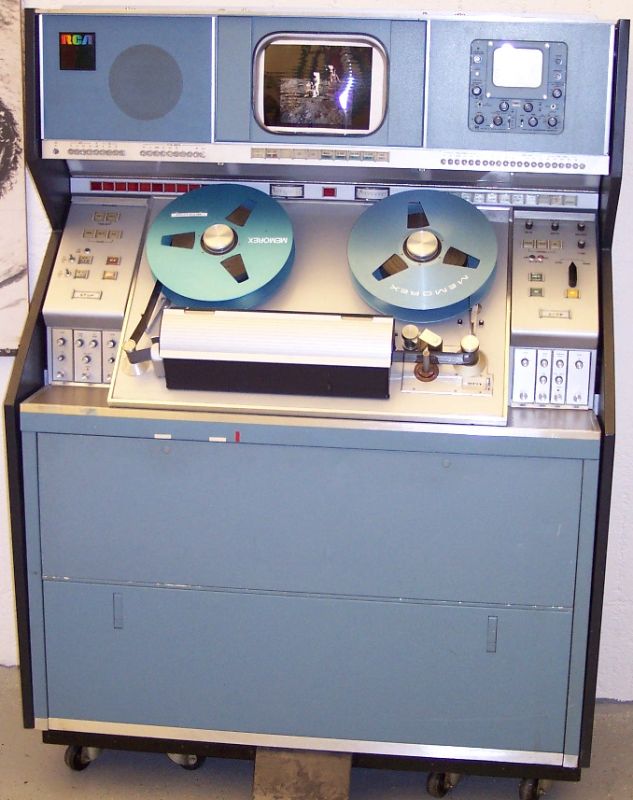
Working with the American electronics company RCA (Radio Corporation of America), ABS-CBN introduced the first color television broadcasts in both the Philippines and Southeast Asia in June 1966.
The broadcasts used the NTSC color standard and initially began as test transmissions. Full-color broadcasting was officially launched in 1971.

Although color receivers remained expensive and relatively rare, the Philippines had officially entered the color television era.
Color Arrived Before Most of the Region Was Ready
The Philippines' early adoption of color television wasn't simply a matter of wealth. It reflected how differently the country's television industry had evolved.
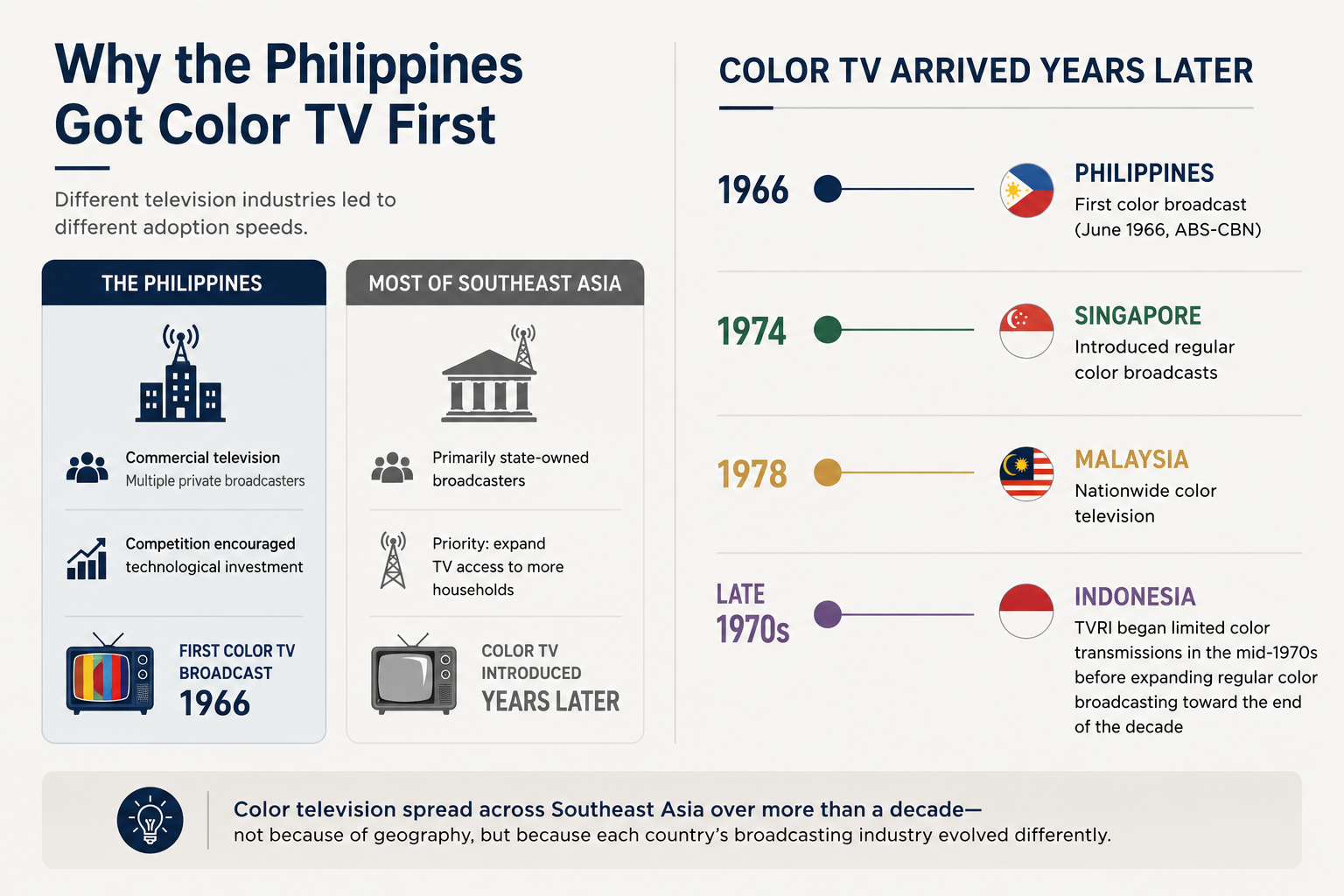
Many neighboring countries followed a different path. Television broadcasting was primarily run by state owned networks, whose early priorities were extending television coverage to more households rather than introducing costly new broadcasting technology.
As a result, color television arrived years later across much of Southeast Asia.
Singapore introduced regular color broadcasts in 1974. Malaysia followed with nationwide color television in 1978. Indonesia's TVRI began limited color transmissions in the mid 1970s before expanding regular color broadcasting toward the end of the decade.
Then Politics Changed the Picture
The Philippines' technological lead didn't last in the same political environment that had made it possible.
In September 1972, President Ferdinand Marcos placed the country under Martial Law. ABS-CBN was forced off the air, its facilities were seized by the government, and many independent media outlets were shut down.
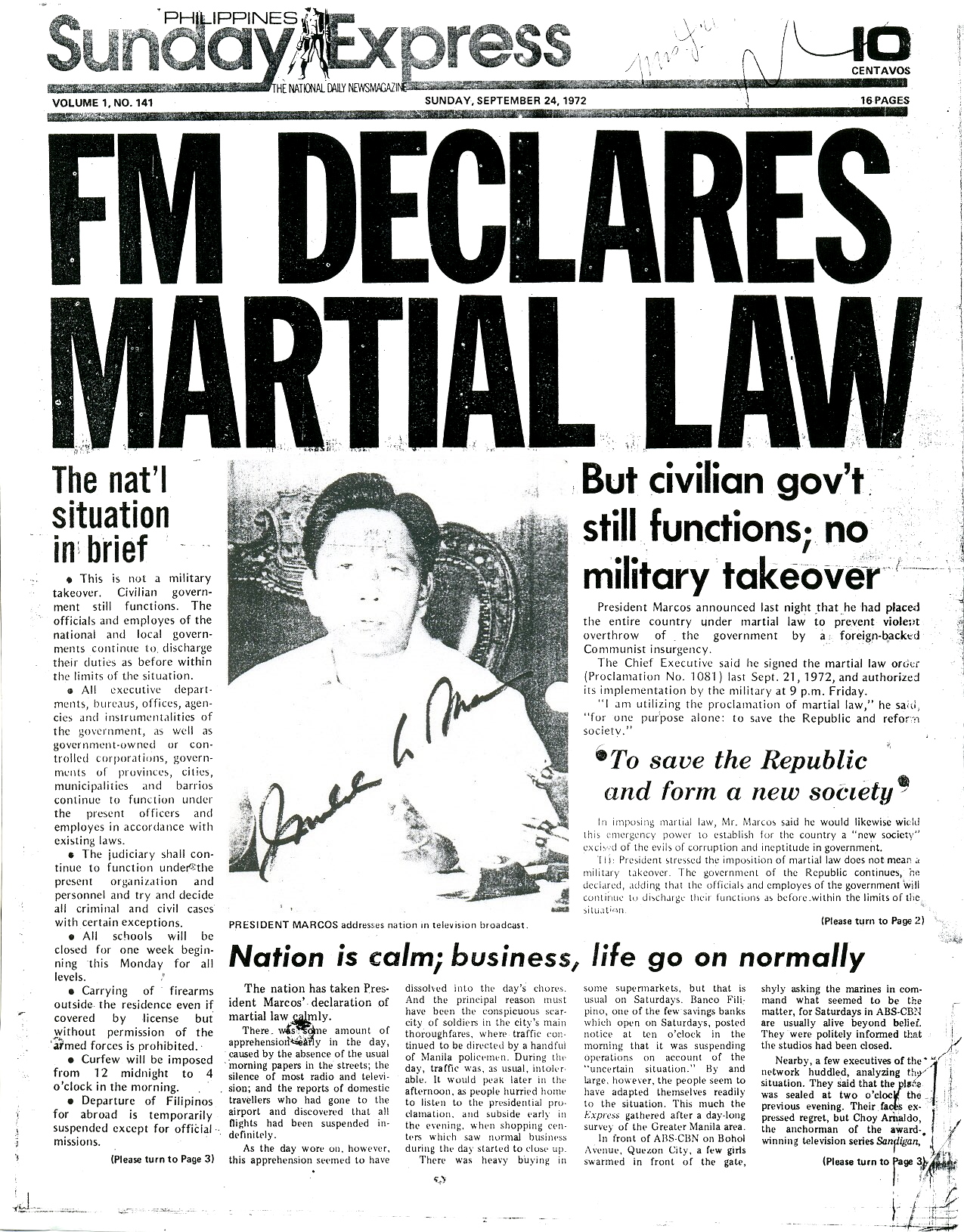
Television broadcasting continued, but under networks controlled by the Marcos administration and its allies. Color television remained on Philippine screens, yet the competitive broadcasting landscape that had helped drive early innovation had effectively disappeared.
That changed only after the People Power Revolution in 1986, when Marcos was ousted from power.
The new government returned ABS-CBN's facilities and frequencies, allowing the network to resume broadcasting on 14 September 1986, nearly fourteen years after it had been silenced.
A Legacy Beyond Television
Color television eventually became standard across Southeast Asia. But when it first arrived in the region, it didn't begin in the country many would expect.
It began in the Philippines, a milestone shaped not only by technology, but by the same competitive, contested media landscape that would make ABS-CBN a target more than once.
Decades later, this history resurfaced. In 2020, ABS-CBN was forced off the air again after its broadcast franchise was denied renewal.
A reminder that the relationship between media, technology, and political power in the Philippines is still being written.