The enforcement of the Philippines’ traffic law known as Republic Act No. 10913 once sparked a national legal debate touching upon personal faith.
The regulation was initially misunderstood by the public, which created confusion regarding the exact boundaries of driving rules.
The tension originated from a highly technical interpretation of keeping a clean space around the vehicle's windshield. The situation immediately drew widespread attention, which forced a clearer definition between road safety rules and personal spiritual spaces.
The Birth of Republic Act No. 10913
The early law enactment on the road began with legislation passed in July 2016. The Philippine government enacted a transport safety framework called the Anti-Distracted Driving Act (ADDA).
Enforcement on the streets officially commenced much later on May 18, 2017. Government agencies required the intervening months to finalize technical guidelines and conduct public education campaigns.
Republic Act No.10913 focused primarily on banning mobile phones and electronic gadgets while operating a vehicle. Section 5 of the Act contained a critical clause regarding the driver's line of sight.
Section 5 strictly prohibited any physical interference within the driver's direct viewing zone. Rules specified that hands-free gadgets or any objects must not block the windshield area.
Violations of the law carried the exact same heavy penalties as text-driving offenses. Regulations established a strict four-tier graduated financial fine system for violators.
First-time offenses resulted in a penalty of five thousand Pesos. Second-time offenses doubled the cost to ten thousand Pesos.
Third-time violations incurred a fifteen thousand Peso fine along with a three-month driver's license suspension. Fourth-time violations triggered a twenty thousand Peso fine and permanent revocation of the driver's license.
Bureaucratic Blunder Sparks Backlash
Full enforcement of the law on the streets officially commenced on May 18, 2017. Traffic personnel on the ground began strictly applying the clean-dashboard policy.
Two days later, The Land Transportation Franchising and Regulatory Board (LTFRB) executive Aileen Lizada held a press interview to address the growing public confusion. Lizada cited an older traffic regulation, which was the Joint Administrative Order No. 2014-01.
The older 2014 rule explicitly prohibited drivers from placing unauthorized accessorie on dashboards or windshields.

Consequently, long hanging rosaries that swung freely while driving were suddenly targeted for apprehension. The sudden enforcement triggered immediate backlash from various sectors.
The Catholic Bishops' Conference of the Philippines criticized the rigid enforcement. Father Jerome Secillano stated that rosaries had never been a proven cause of traffic accidents.
Several Philippine senators also condemned the implementing rules. The senators slammed the transport agency's execution and called the sudden crackdown on analog religious items an act of "overacting."
Clarification from the LTFRB
The criticism forced transport authorities to re-evaluate the enforcement guidelines. The authority eventually suspended the strict crackdown to conduct a proper public information campaign.
The LTFRB later issued an official clarification to the public. The LTFRB chairman Martin Degra III emphasized that the government never banned the possession of rosaries inside vehicles.
Religious symbols and dashboard ornaments remain completely legal to carry. The sole requirement is that the placement of these items must not obstruct the driver's clear view of the road.
Officials provided practical technical guidelines for maintaining a safe visual space. Drivers simply need to wrap the rosary tightly around the rearview mirror so it does not swing freely.
Securing the items tightly eliminates the risk of a temporary blind spot on the windshield. Drivers are also permitted to relocate their prayer beads to the lower dashboard area near the gear shift.
Transition to the Electronic Ticketing System
The Republic Act. No. 101913 dispute later altered traffic monitoring methods. Traffic authorities no longer inspect vehicle interiors manually.
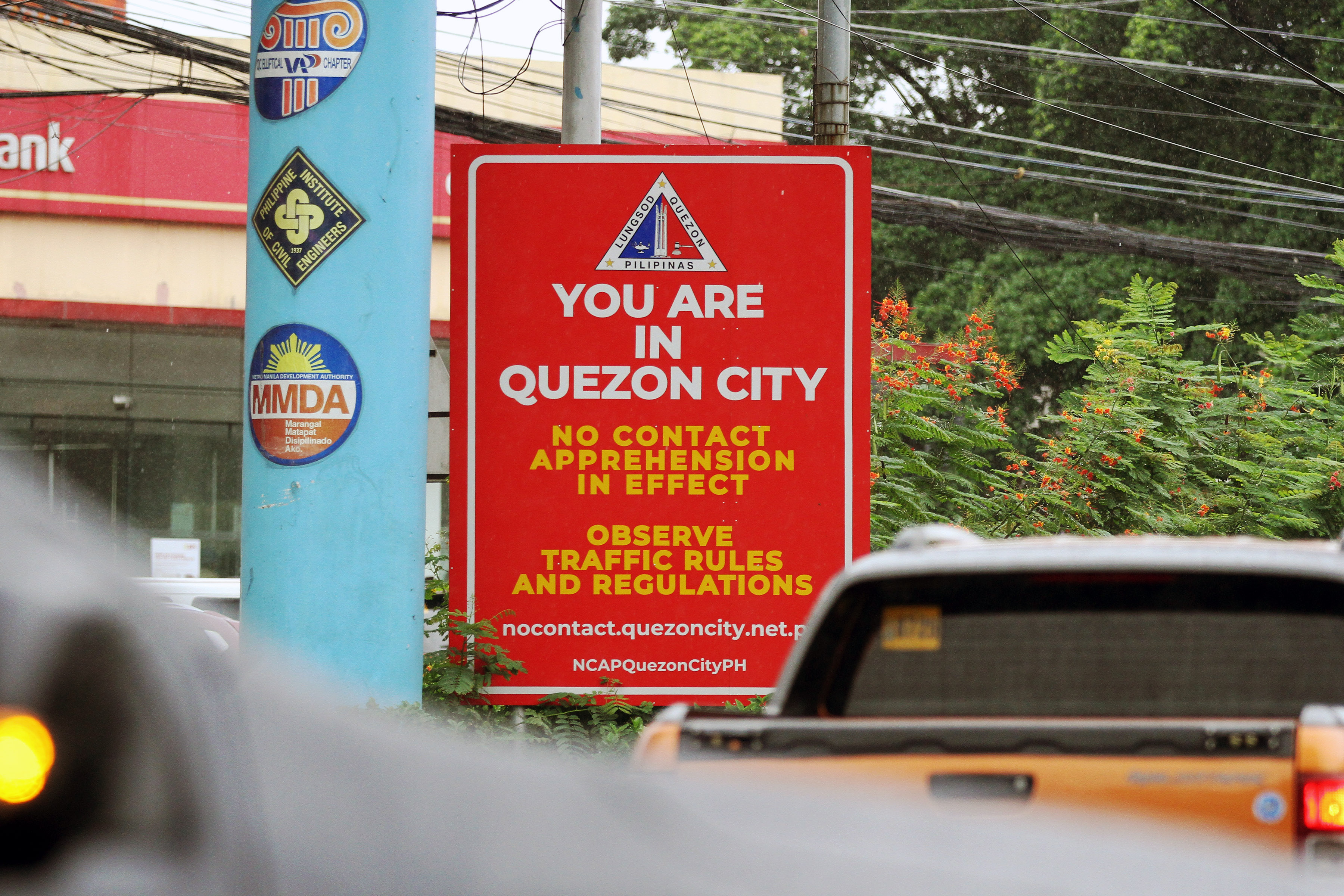
The Philippine government launched the No Contact Apprehension Policy (NCAP) in 2020. High-tech monitoring cameras replaced traffic personnel at major Manila intersections.
The automated system scans vehicle cabins to detect line-of-sight violations. Digital recordings serve as the basis for issuing electronic traffic citations.
Unpaid electronic fines trigger an automatic block on annual vehicle registration renewals. Owners cannot update their vehicle documents until all recorded violations are cleared.
The Supreme Court suspended NCAP in 2022 following petitions against sensor accuracy and fine structures. The legal battle concluded after the government introduced the Metro Manila Traffic Code to unify visual compliance standards across all cities.
The Supreme Court of the Philippines officially lifted the NCAP suspension in June 2026. Enforcement of vehicle line-of-sight regulations now relies entirely on the centralized digital system.