A road tunnel isn't usually the first thing that comes to mind when talking about flood control. But in Kuala Lumpur, one tunnel does both.
During normal days, the SMART Tunnel helps thousands of vehicles bypass city traffic. When heavy rain arrives, it can shut down completely and turn into a massive flood diversion channel beneath the Malaysian capital.
One Tunnel, With Two Jobs
Officially known as the Stormwater Management and Road Tunnel (SMART), the project was conceived after repeated flash floods and worsening traffic congestion plagued Kuala Lumpur throughout the 1990s.
Construction began in 2003, and the tunnel officially entered service in 2007 after approximately 54 months of construction. The project cost around RM1.93 billion and remains the world's first dual purpose stormwater tunnel and motorway.
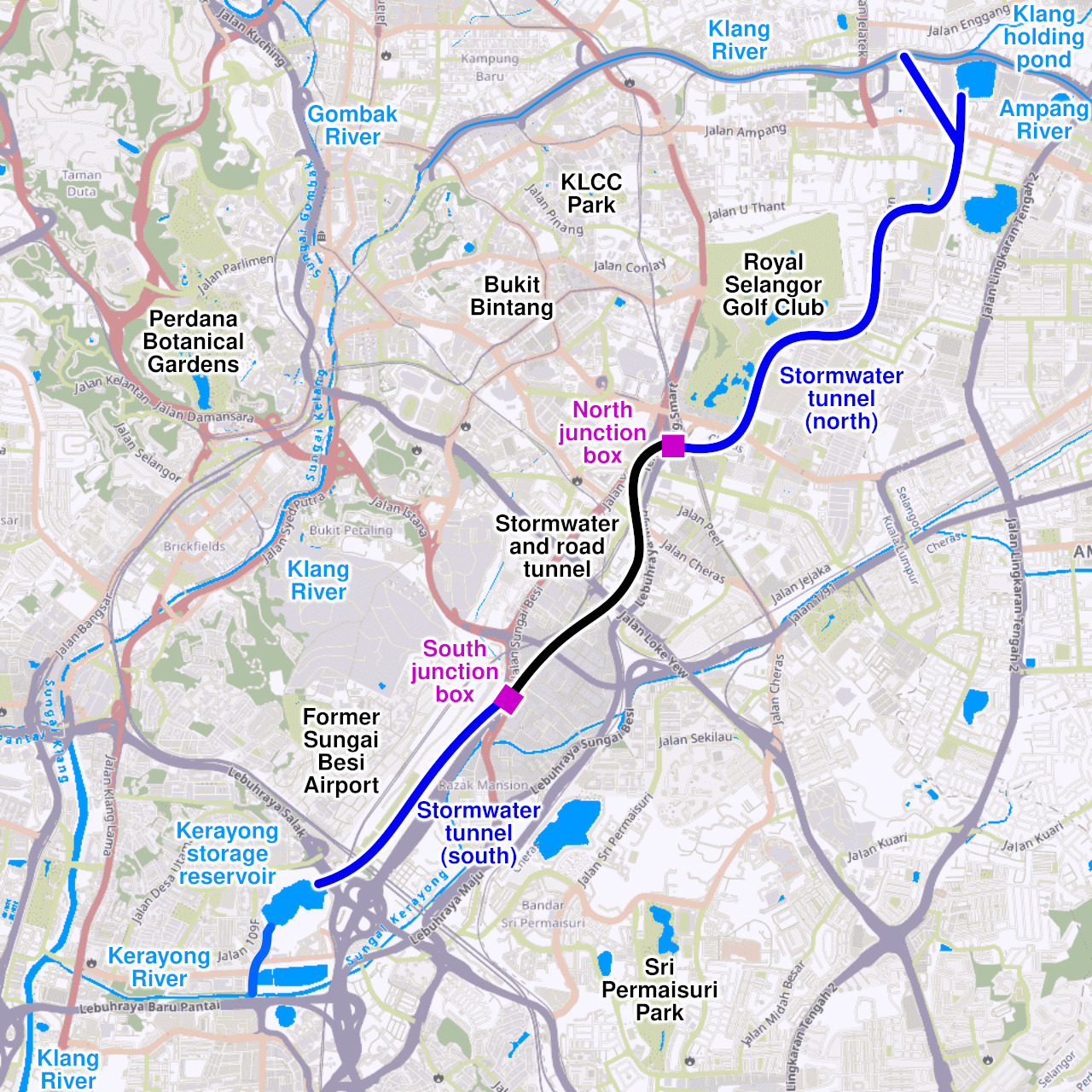
The entire tunnel stretches 9.7 kilometers, although only the central 3 kilometer section carries road traffic. The remaining sections function solely as flood diversion channels. Measuring 13.2 meters in diameter, the tunnel is also capable of storing and diverting enormous volumes of stormwater beneath the city.
How Does It Work?
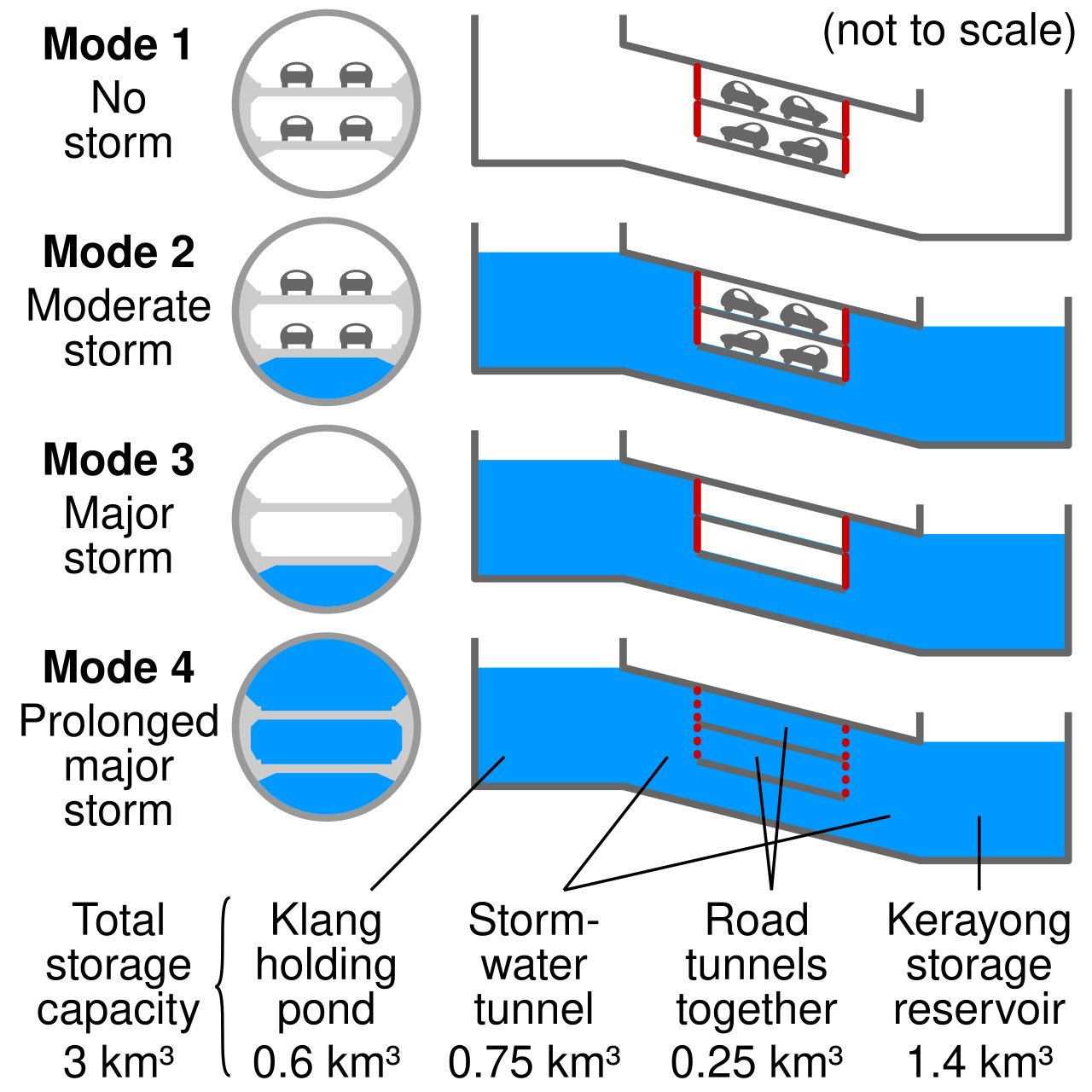
Unlike a conventional road tunnel, SMART operates under four different modes, depending on weather conditions and river flow.
During normal weather (Mode 1), the motorway remains fully open to traffic.
When moderate rainfall pushes river flow between 70 and 150 cubic meters per second, the tunnel switches to Mode 2, diverting excess floodwater through a lower drainage channel while vehicles continue using the motorway above.
If forecasts indicate severe flooding of 150 cubic meters per second or more, the system enters Mode 3. Traffic is evacuated typically within about one hour, so the tunnel can prepare for possible full flood operation.
Should heavy rainfall persist, Mode 4 is activated.
At this point, the motorway disappears entirely beneath floodwater as the whole tunnel becomes a giant bypass channel, diverting water away from Kuala Lumpur's city center. Once conditions improve, the tunnel is cleaned, inspected, and reopened to traffic within several days.
Not Just a Typical Road
The SMART Tunnel isn't famous because it's the longest or the biggest. What makes it remarkable is the idea behind it.

Instead of building one tunnel for traffic and another for flood control, Malaysian engineers combined both into a single system that adapts to the city's needs. On a dry day, it keeps Kuala Lumpur moving. During a storm, it helps keep parts of the city above it from going underwater.
More than a decade after opening, the SMART Tunnel remains one of the clearest examples of how infrastructure doesn't always have to be larger to be better, it just has to solve the right problem.