In 2023, astronomy research in Southeast Asia reached a new milestone when Thailand officially began operating the Thai National Radio Telescope (TNRT), the region's largest radio telescope.
Located in Chiang Mai Province, the facility is designed to observe the universe through radio waves, enabling scientists to study celestial objects that cannot be seen with optical telescopes.

With a 40-meter-diameter dish, the telescope is operated by the National Astronomical Research Institute of Thailand (NARIT) at the Thai National Radio Astronomy Observatory (TNRO) in Doi Saket District. The site is located about 40 kilometers northeast of Chiang Mai.
According to NARIT, the observatory occupies approximately 80,000 square meters and sits 390 meters above sea level.
Built to Expand Southeast Asia’s Astronomy Capabilities
Construction of the 40 meter telescope began in 2018, while scientific commissioning started in 2022. The observatory officially entered operation in 2023.
The Thai National Radio Telescope was developed as part of Thailand's Radio Astronomy and Geodesy Network Development Project. The national flagship initiative was launched in 2017 to strengthen the country's scientific infrastructure and engineering capabilities.
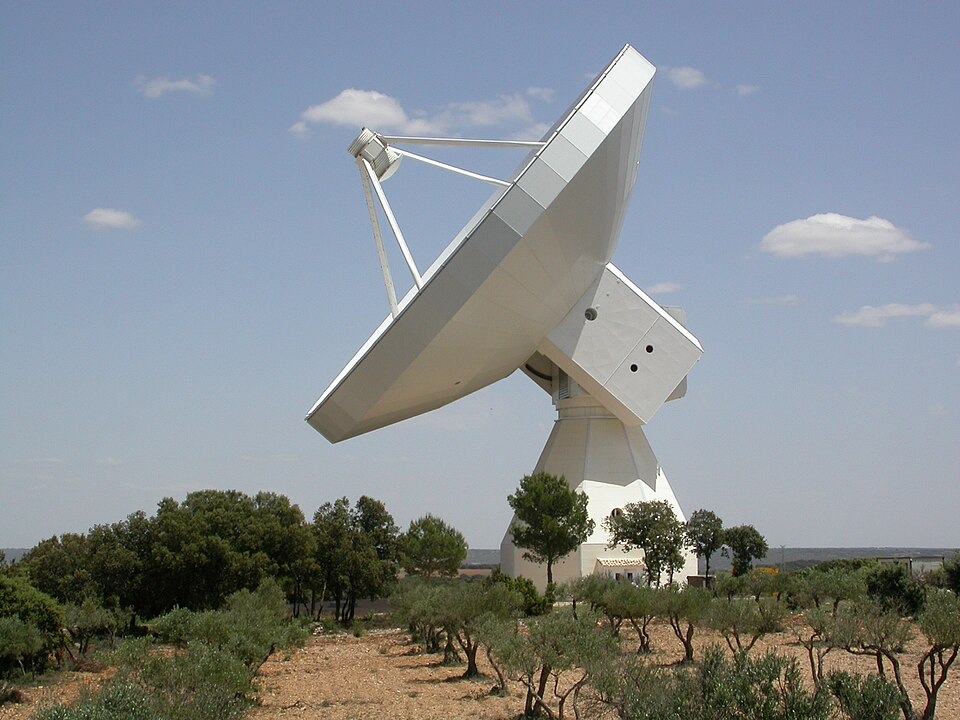
According to NARIT and a scientific paper published by Cambridge University Press, the TNRT is currently the largest radio telescope in Southeast Asia. It was developed in collaboration with Spain's Yebes Observatory. Its design is based on the 40-meter Yebes radio telescope, while incorporating several technical upgrades.
Why a Radio Telescope?
Unlike conventional telescopes that collect visible light, radio telescopes detect radio waves emitted by objects in space. These signals allow astronomers to study planets, comets, pulsars, neutron stars, black holes, active galaxies, and clouds of gas where new stars are forming.
Radio observations can also continue during daylight and under cloudy conditions, unlike optical observations that depend on clear skies.
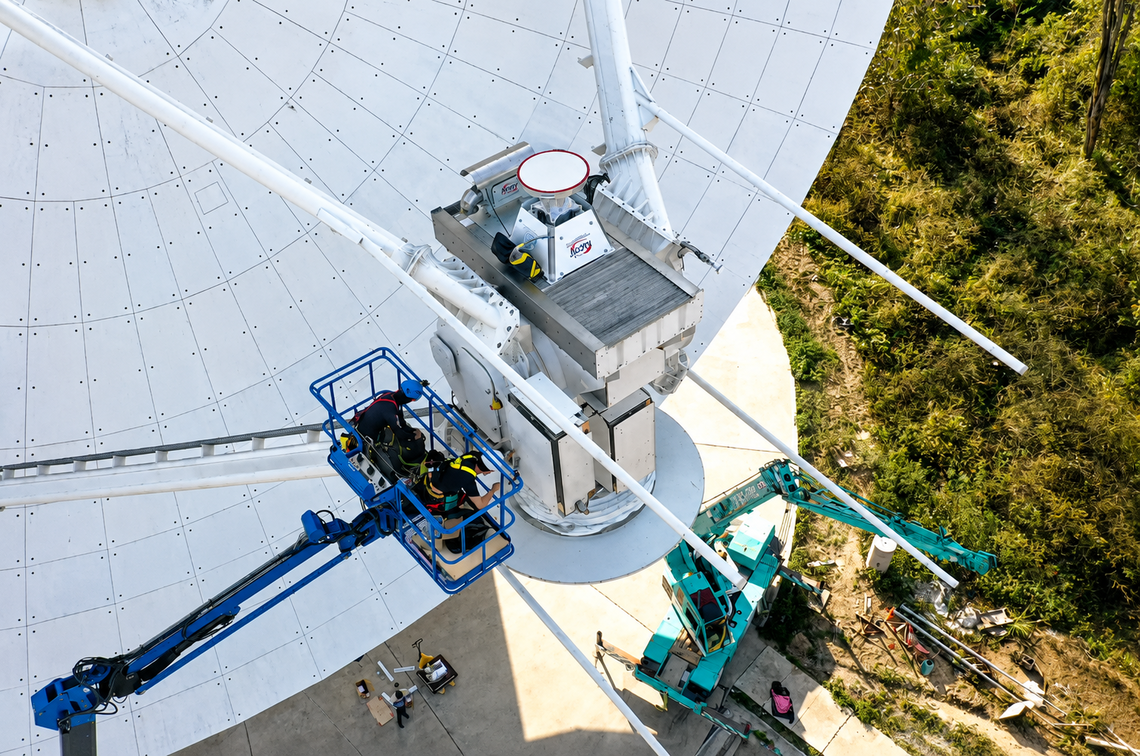
The TNRT is capable of rotating 360 degrees horizontally and 180 degrees vertically, allowing it to rapidly track astronomical objects across the sky. NARIT plans for the telescope to eventually support receivers covering frequencies from 300 MHz to 115 GHz, enabling research across a broad range of radio wavelengths.
Its Location Offers Scientific Advantages
The observatory’s location in northern Thailand provides an important geographical benefit.
Situated relatively close to the equator, the TNRT has access to both much of the Northern Hemisphere and a significant portion of the Southern Hemisphere sky. According to NARIT, this wide sky coverage allows the telescope to observe a larger number of astronomical targets than many observatories located farther north or south.
Its location also strengthens Very Long Baseline Interferometry (VLBI), a technique in which radio telescopes across different countries observe the same object simultaneously.
Combining observations from multiple telescopes greatly increases the effective resolution, allowing astronomers to study distant objects in far greater detail than any single telescope could achieve alone.
Supporting International Research
The Thai National Radio Telescope is designed to work alongside major international radio astronomy networks.
Scientific papers prepared by NARIT identify key research areas including pulsars, fast radio bursts (FRBs), star forming regions, active galactic nuclei, evolved stars, and radio geodesy.
The telescope is also expected to contribute observations to international VLBI networks such as the East Asian VLBI Network (EAVN), Australia’s Long Baseline Array (LBA), and the European VLBI Network (EVN).
Thailand has already begun expanding these collaborations.
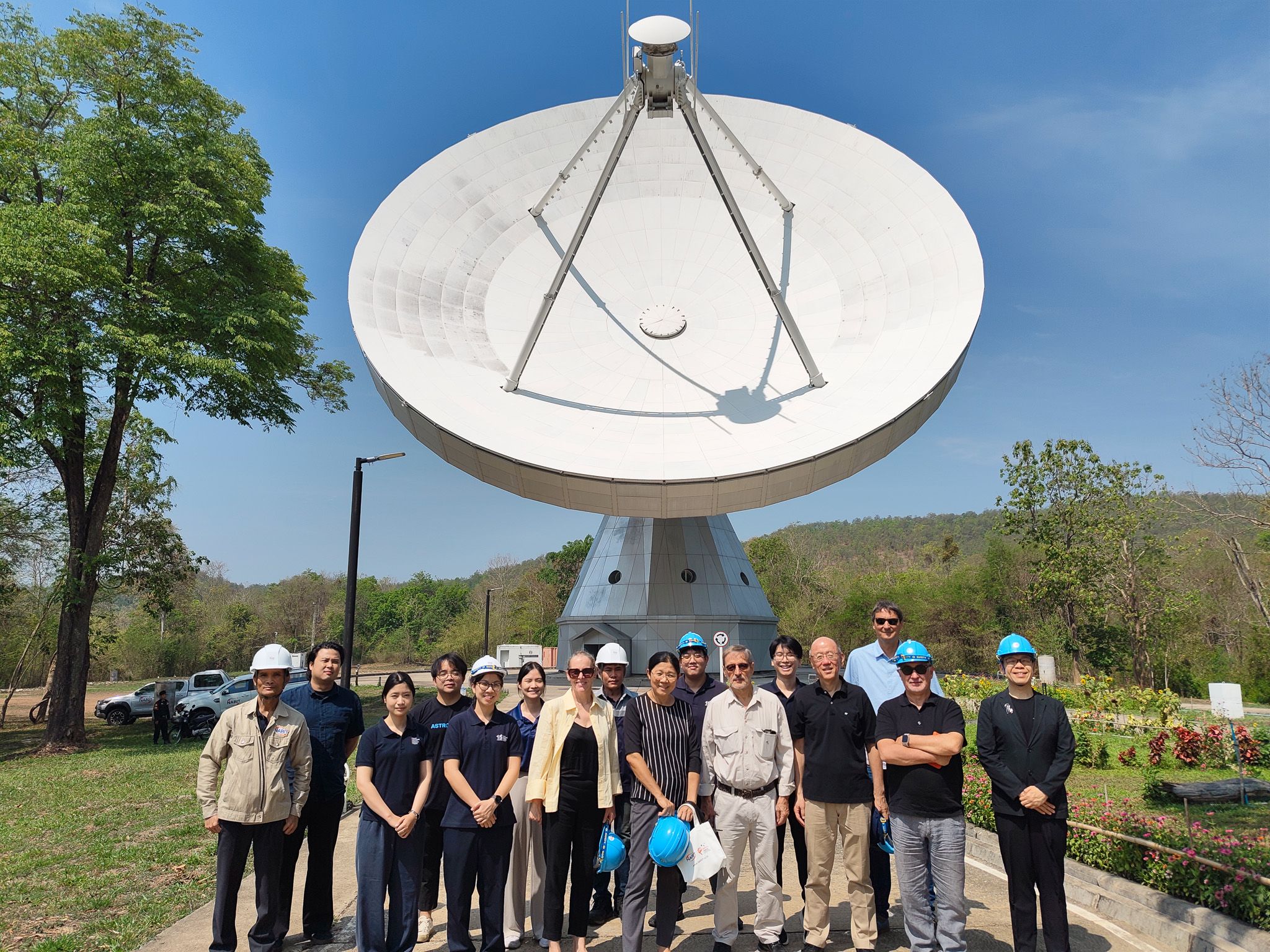
In 2026, NARIT hosted the International Technical Advisory Committee for the Thai National Radio Observatory. The meeting brought together experts from institutions in Japan, Australia, Germany, China, South Korea, Spain, the United Kingdom, India, and the Netherlands.
They reviewed ongoing developments and discussed future scientific programs.
The observatory has also started producing scientific results.
In 2024, astronomers used the 40-meter telescope to detect hydroxyl (OH) maser emissions from Comet 12P/Pons-Brooks. The observation demonstrated the facility's ability to conduct high-precision radio observations and contribute to international astronomical research.