Thailand has 76 provinces, but Bangkok is not one of them.
The capital has a different administrative structure from the rest of the country. According to Thailand's National Statistical Office, the country's provincial administration consists of 76 provinces, excluding Bangkok. Bangkok is instead classified as a special form of local administration, alongside Pattaya.
The distinction is administrative. Bangkok occupies a province-level position in Thailand's statistical and administrative system, but it is not governed under the same provincial structure as the 76 changwat (province).
Bangkok Has Its Own Government
Instead of a provincial governor appointed through the central government system, Bangkok is administered by the Bangkok Metropolitan Administration (BMA).
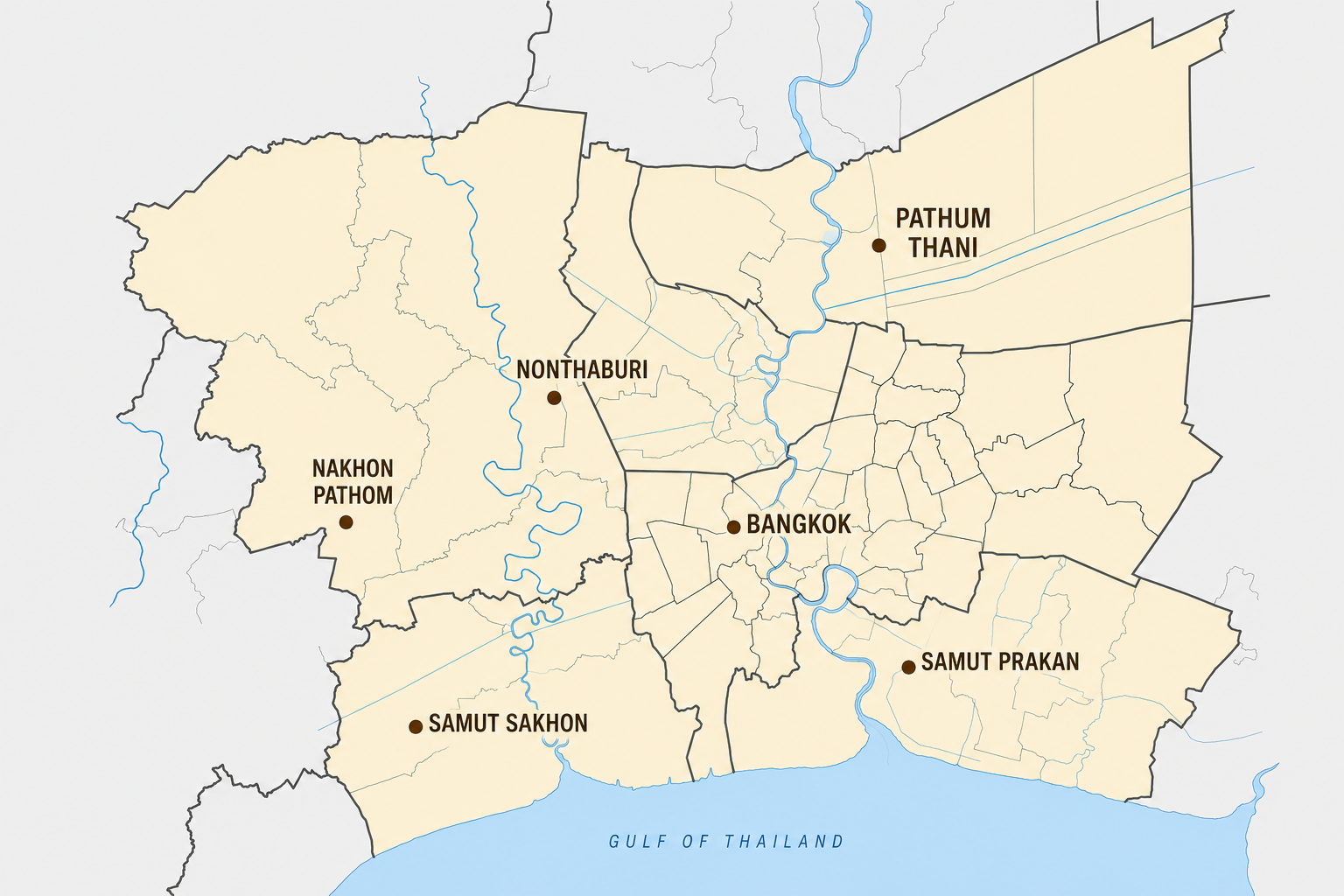
The current framework comes from the Bangkok Metropolitan Administration Act B.E. 2528 (1985). The law established Bangkok as a local administrative government and provides for an elected governor and a Bangkok Metropolitan Council. The arrangement differs from Thailand's ordinary provinces, where provincial administration is part of the country's regional government structure.
Bangkok's governor is elected directly by residents. The first Bangkok governor was appointed in 1973, and direct elections were introduced in 1975, though suspended between 1977 and 1985. The 1985 law restored the elected-governor system and remains the basis of Bangkok's administration today.
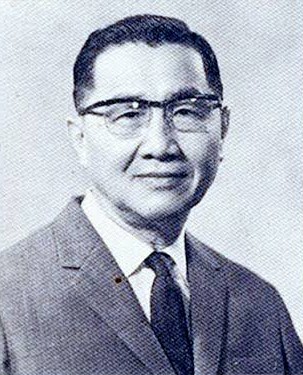
The governor serves four year terms, limited to two consecutive terms before a mandatory gap. The current governor, Chadchart Sittipunt, has held the office since May 2022.
Alongside the governor sits the Bangkok Metropolitan Council, a 50 seat legislative body with one member elected from each of Bangkok's districts. According to the Bangkok Metropolitan Council, the body approved a city budget of over 90.8 billion baht (roughly US$2.74 billion) for fiscal year 2025, set independently of the central government's provincial budgeting process.
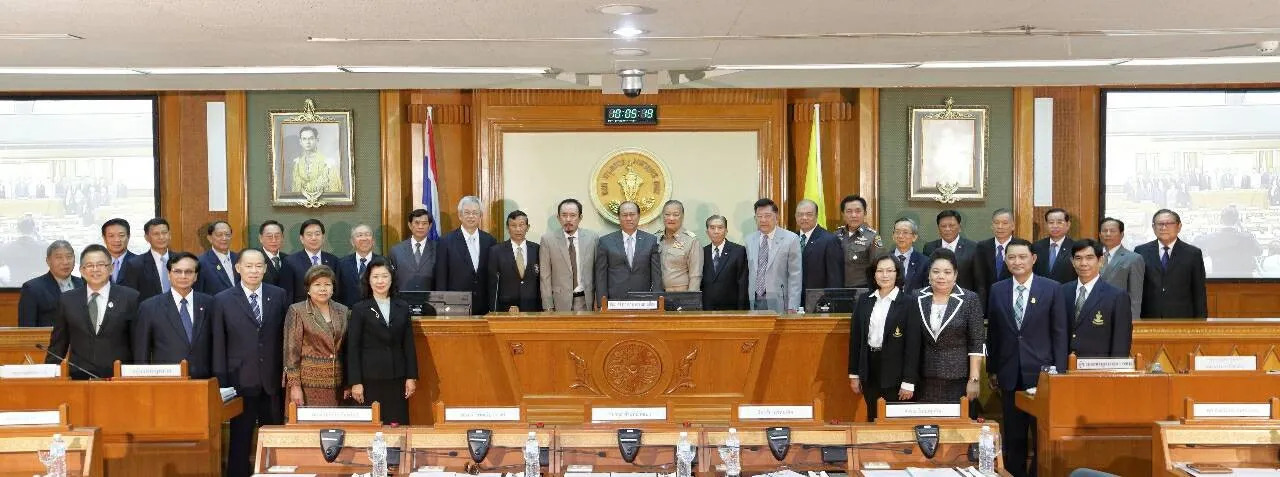
The scale of the administration reflects this autonomy. According to the Thailand Future Foundation, the BMA employs a workforce of around 97,000 people across its departments and district offices, a bureaucracy closer in size to a national government agency than a typical municipal government.
Why Was Bangkok Given a Different System?
The arrangement developed as Bangkok expanded beyond its original administrative boundaries.
Bangkok and Thonburi, located on opposite sides of the Chao Phraya River, were administered separately until the two municipalities were merged in 1971. In 1972, the new metropolitan administration was reorganized under the name Bangkok.
The city subsequently received its own metropolitan government structure through legislation in the 1970s and 1980s, culminating in the 1985 Bangkok Metropolitan Administration Act.
The result was a capital governed through a metropolitan authority rather than an ordinary provincial administration.
A Province Sized Capital With 50 Districts
Bangkok covers 1,568.74 square kilometres and is divided into 50 districts, known as khet. Thailand's National Statistical Office recorded 180 subdistricts, or khwaeng, within Bangkok as of the end of 2024.
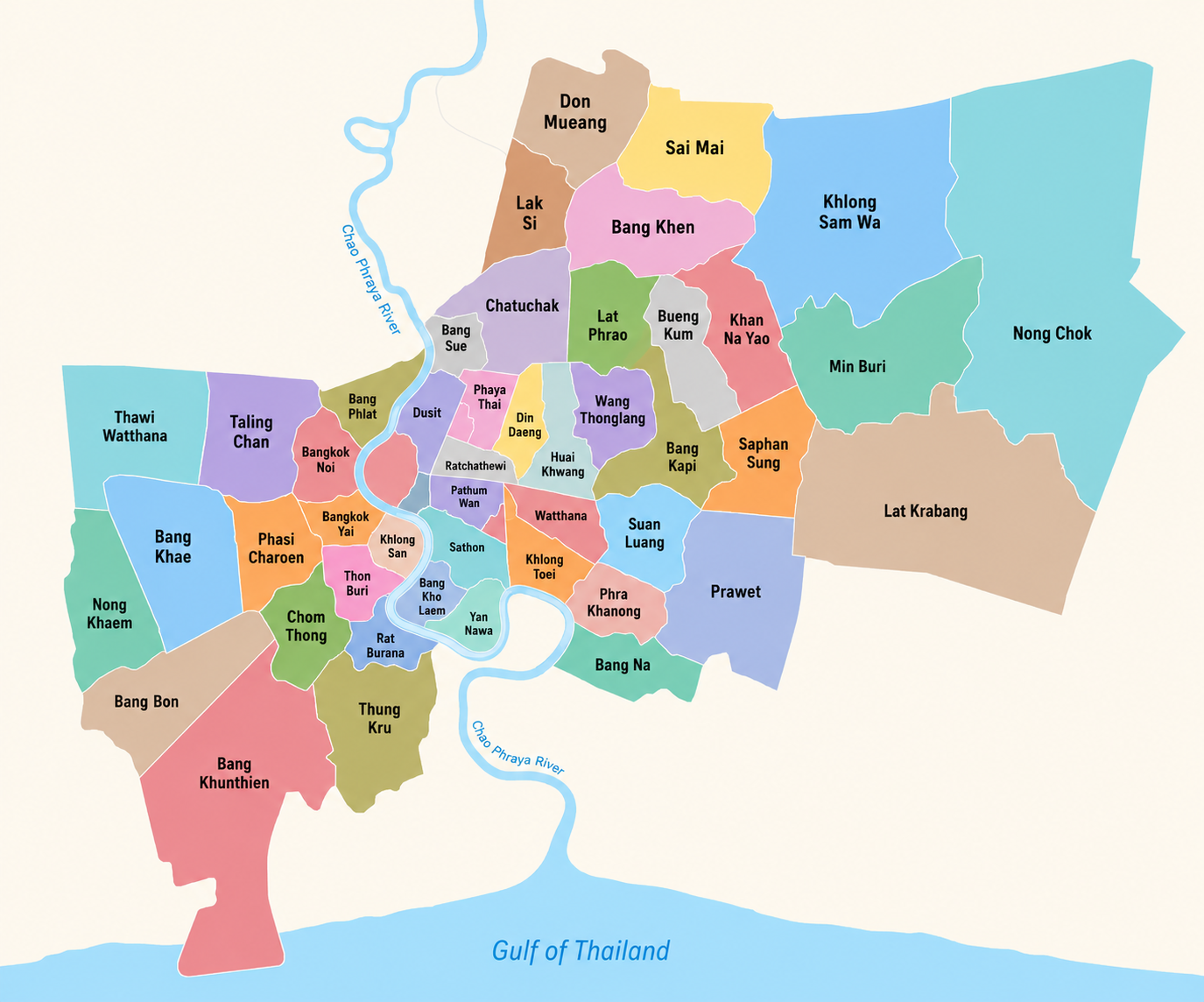
The capital also has a large registered population. According to the National Statistical Office, Bangkok had 5,455,020 registered residents in 2024, giving it a population density of about 3,477 people per square kilometre.
Bangkok's metropolitan government therefore operates across a large urban area while using an administrative structure separate from Thailand's ordinary provincial governments.
One Country, Two Administrative Models
Thailand's system can be divided into two broad arrangements.
There are 76 ordinary provinces, each operating under the country's provincial administration. Bangkok, together with Pattaya, has a special local government structure instead.
Bangkok has its own elected governor, metropolitan council and 50 districts. Its administrative framework developed through a series of reforms that brought Bangkok and Thonburi together and eventually established the Bangkok Metropolitan Administration.
So Bangkok is not one of Thailand's ordinary changwat, or provinces. It occupies a comparable level in the country's administrative structure but operates under a separate metropolitan government designed specifically for the capital.