


Malaysia’s character emerges through contrast. Across 330,534 square kilometres divided between the peninsula and northern Borneo, futuristic skylines rise near historic trading districts, while tropical islands and ancient forests remain within reach of fast-growing cities.
Ambition Written Across the Skyline
Kuala Lumpur displays Malaysia’s modern confidence in steel, glass and motion. The 451.9-metre Petronas Twin Towers continue to frame the capital’s identity, while Merdeka 118 rises 678.9 metres above the city as one of the world’s tallest buildings.
Below them, monorails pass mosques, commercial districts and tropical greenery. Digital businesses operate beside traditional markets, while food stalls remain as important to the city’s rhythm as shopping centres and office towers. Kuala Lumpur’s modernity has not erased its earlier layers; it has grown around them.
Five Centuries Meet at Street Level
In George Town and Melaka, Malaysia’s history becomes more intimate. Inscribed together on UNESCO’s World Heritage List in 2008, the two cities reflect more than 500 years of trade and cultural exchange between the Malay Archipelago, China, India, the Middle East and Europe.
Their streets contain Chinese shophouses, Malay mosques, Hindu temples, churches and colonial administrative buildings. This heritage remains active through family businesses, religious celebrations, workshops and kitchens serving char kway teow, nasi kandar, cendol and Nyonya cuisine.
The multicultural experience extends beyond the historic port cities. Indian traditions animate Brickfields in Kuala Lumpur, while the cultures of Sabah and Sarawak introduce distinct Indigenous languages, textiles, music and foodways to the national story.
Prime Minister Anwar Ibrahim has said that Malaysians should view ethnic and cultural differences as a strength because “diversity makes our beloved Malaysia great.” That diversity is most convincing at street level, where traditions continually meet, influence one another and create something recognisably Malaysian.
From Island Geology to Borneo’s Forests
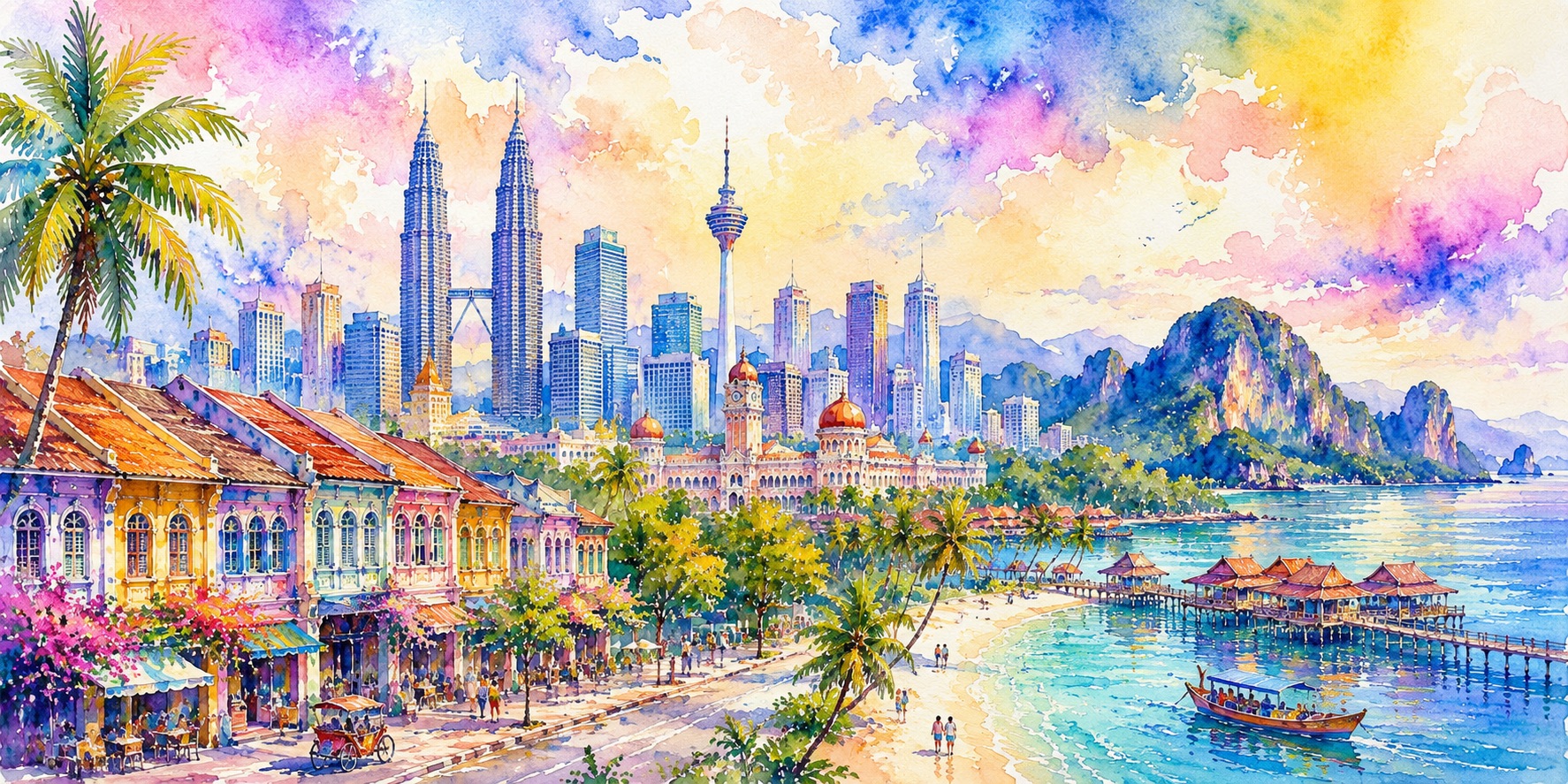
Beyond its cities, Malaysia’s geography changes dramatically. Langkawi consists of 99 islands shaped by limestone formations, caves, mangroves and forested hills. Recognised in 2007 as Southeast Asia’s first UNESCO Global Geopark, the archipelago connects geological conservation with tourism and community livelihoods.
In Peninsular Malaysia, Taman Negara protects an extensive tropical forest ecosystem crossed by rivers and canopy trails. Across the South China Sea, Sabah and Sarawak contain some of the region’s richest habitats, supporting orangutans, pygmy elephants, hornbills and countless plant species.
Malaysia reported that forests and tree cover represented approximately 54.6 percent of its land area, or 18.04 million hectares, in 2023. Sabah alone reports that about 65 percent of its territory remains forested.
“The best way forward for the forestry sector in Sabah is forest conservation,” Chief Conservator of Forests Datuk Zulkifli Suara has said. His words underline the challenge of balancing economic development with biodiversity protection and community interests.
Progress Through Balance
Malaysia’s modern identity depends on keeping these different worlds connected. An artisan painting floral patterns onto batik and a technology worker building software from a Kuala Lumpur office both participate in a country shaped by creativity, adaptation and exchange.
As Malaysia promotes itself through Visit Malaysia 2026, responsible tourism will be essential to ensuring that heritage districts remain lived-in communities and natural destinations retain their ecological value.
From Kuala Lumpur’s ascending skyline to George Town’s shophouses and Borneo’s rainforest canopy, Malaysia demonstrates that progress need not mean abandoning the past. Its strength lies in carrying heritage, diversity and nature forward together.


