


In 1933, King Kong introduced audiences to a giant gorilla captured from a remote island and brought to New York. Yet the film's early concept was connected to a real expedition to Komodo Island several years earlier.
In 1926, William Douglas Burden, a trustee of the American Museum of Natural History (AMNH) in New York, led an expedition to Komodo Island. He came to document Komodo dragons and bring both live and dead specimens back to the United States. He later recounted the journey in Dragon Lizards of Komodo, published in 1927.
According to the American Film Institute (AFI), filmmaker Merian C. Cooper read Burden's book, which helped spark the idea that would eventually become King Kong.
From Komodo Island to New York
Burden's expedition spent about five weeks on Komodo Island. The team included Burden, herpetologist Emmett Reid Dunn of Smith College, a hunter, a cameraman, and Burden's wife, Katharine Curtin White. They were also assisted by 15 Malay men during their time on the island.
The Dutch East Indies government provided the official government yacht S.S. Dog to transport the expedition party. The expedition brought back 12 dead Komodo dragons for the museum's collection.
Two others were taken alive to the United States for the Bronx Zoo. Unfortunately, one died shortly afterward, while the other died about two months later.
For Burden, the experience also left a strong impression. He wrote about the sadness of seeing Komodo dragons that had once lived freely in the wild lose their spirit after being taken away from their natural environment.
Burden also brought back film footage and published scientific findings from the expedition. In 1927, he wrote about the Komodo dragons for National Geographic Magazine and published Dragon Lizards of Komodo.
The Komodo Book That Sparked the Idea for King Kong
This is where the real expedition began to intersect with film history. Burden was a friend of Merian C. Cooper, a pilot, adventurer, and filmmaker known as one of the pioneers of natural drama, a form of filmmaking that combined real footage with specially staged scenes.
In a letter written in 1964, Cooper recalled that after speaking with Burden, he came up with the idea of making a film about a gorilla he had long imagined living on a prehistoric island alongside giant creatures.
The original idea was even more closely tied to the Komodo expedition. According to film historian Ray Morton, Cooper wanted to film a gorilla in Africa, capture it, and then bring it to Komodo to fight a Komodo dragon.
In Cooper's early concept, the Komodo dragon was not merely part of the film's atmosphere or inspiration. It was actually intended to be the opponent of the gorilla that would eventually become Kong.
The plan later changed when Cooper struggled to secure funding during the Great Depression, preventing the project from being made immediately. As the idea developed into King Kong, the Komodo dragon was eventually replaced by dinosaurs.
King Kong Draws Closer to the Komodo Expedition
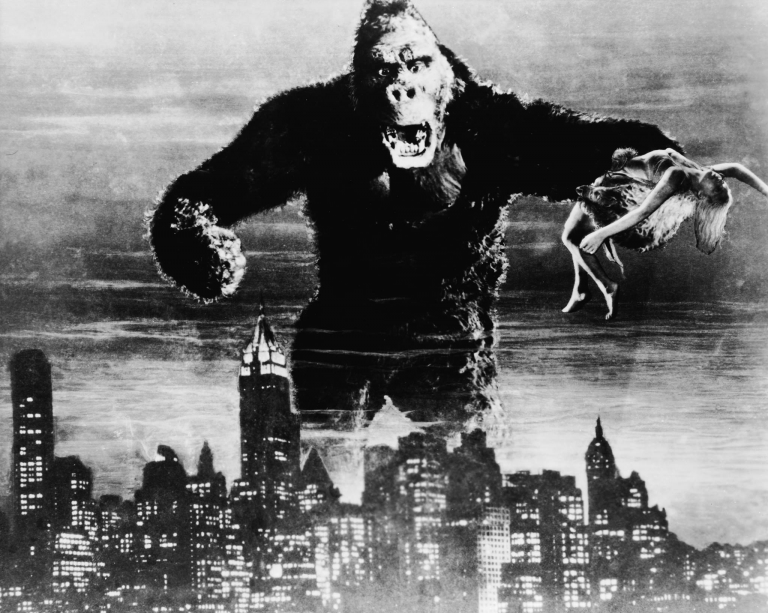
King Kong was released in 1933 and directed by Cooper and Ernest B. Schoedsack. The film follows a group of explorers who travel to a remote island, encounter a giant creature, capture it, and bring it back to New York.
The storyline bears similarities to Burden's expedition. Cooper biographer Mark Cotta Vaz suggested that several elements of the film may have been influenced by the journey, including the presence of a woman in the expedition and the journey of a creature from a remote island to New York.
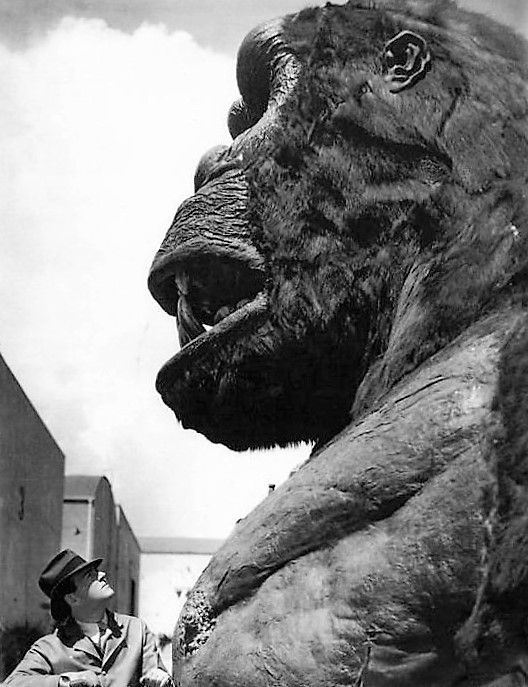
The name "Kong" has also been suggested to reflect Cooper's interest in the strong K sound in "Komodo". These details, however, remain speculative. What is clearer is Cooper's own account that his conversation with Burden prompted the idea of a gorilla living on a prehistoric island.
The connection between Komodo and King Kong, therefore, goes beyond a resemblance between the two stories.
The Komodo Expeditions Continued
Interest in Komodo dragons did not end with Burden's expedition. In 1933, two young Harvard researchers, Lawrence Griswold and William Harkness, captured 43 Komodo dragons on Komodo Island using box traps baited with deer carcasses.
Only four of the captured dragons survived the journey. Three eventually reached the Bronx Zoo in 1934, while the fourth died of seasickness before arriving.
For the Komodo dragons, such journeys took them far from their natural habitat. But from Komodo Island to New York, these expeditions helped turn an animal known to relatively few scientists into a creature that captured the public imagination, eventually becoming part of the imagination behind Kong.


