In Enrekang, South Sulawesi, people make Dangke, a traditional Indonesian soft cheese made from fresh buffalo or cow milk. This white, springy dairy delicacy features a mild milky flavor and resembles a block of tofu in appearance.
The Massenrempulu people of South Sulawesi pass down this unique culinary heritage across generations. Communities in the region value this local cheese as a nutritious food source and a symbol of hospitality.
Traditional cheesemakers coagulate the milk using natural enzymes from papaya sap instead of animal rennet. Fresh banana leaf wrapping preserves the delicate texture and adds a subtle herbal aroma to each piece.
Local residents serve Dangke fresh or cook it using simple kitchen techniques like pan-frying. Centuries of local tradition and colonial encounters shape the fascinating story behind this regional specialty.
Origin and Colonial History
Ancestors of the Massenrempulu ethnic community first created Dangke in the Curio district of Enrekang during the eighteenth century. Local farmers initially processed surplus buffalo milk using leaves from the native "passe" tree to avoid food waste.
Historical accounts attribute the name "Dangke" to an interaction with Dutch colonial officers visiting the area. Dutch soldiers expressed their gratitude by saying "dank u well" after tasting the cheese, which local hosts adopted as the official name.
The twentieth century brought Friesian Holstein dairy cows to Enrekang, expanding production beyond buffalo milk. Today, small-scale home industries maintain this historical heritage as a major economic staple and cultural identity.
The Traditional Cheesemaking Process
Artisans heat fresh cow or buffalo milk over medium flame to prepare the base liquid. Workers then extract fresh sap from unripe papayas and stir it into the warm milk.
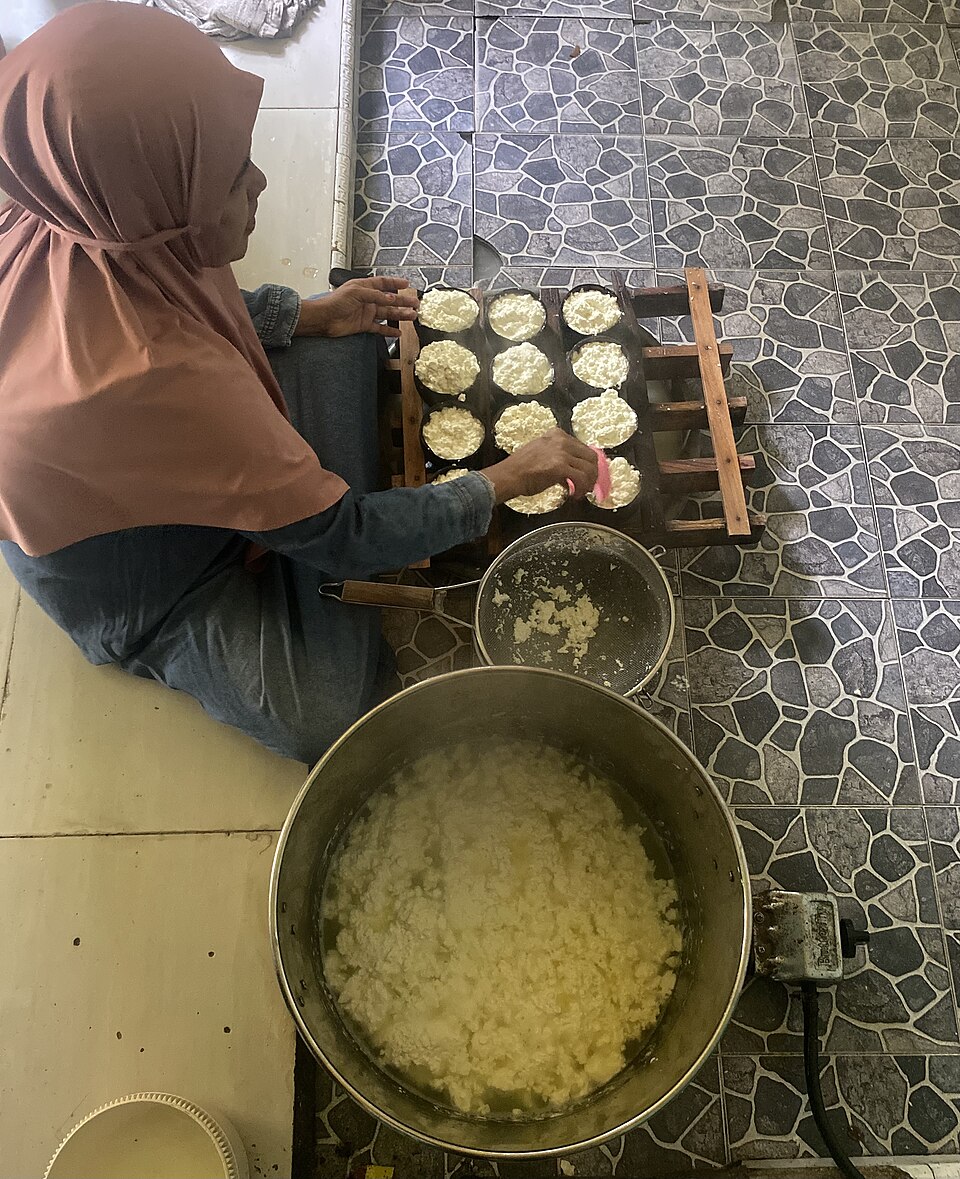
The papain enzyme in papaya sap cleaves milk proteins to form soft, solid curds separate from liquid whey. Cheesemakers transfer these warm curds into halved coconut shells with drainage holes at the bottom.
Hand pressing removes excess moisture and shapes the cheese into its iconic dome form. Artisans wrap the pressed cheese in fresh banana leaves, which provide natural protection and a distinct earthy fragrance.
Unlike conventional European cheeses, Dangke relies entirely on plant-based papain instead of animal rennet or commercial starters. This natural production method creates a firm yet springy texture that withstands high cooking heat without melting away.
How to Enjoy Dangke
Fresh Dangke offers a mild, creamy taste with a slightly salty flavor profile. Local families routinely fry slices in a hot pan with a drop of oil to achieve a crispy golden crust while keeping the center soft.
Cooks also grill the cheese over open charcoal flames to impart a rich smoky aroma. People in Enrekang serve grilled or fried Dangke alongside warm Pulo Mandoti sticky rice and spicy sambal chili sauce.
Modern Indonesian chefs incorporate Dangke into creative dishes like pizzas, sandwiches, and savory fried rice. Local food producers even transform the cheese into crispy crackers, chips, and nuggets for broader distribution.