


On January 25, 1942, Thailand declared war on the United States and Britain. However, M.R. Seni Pramoj, Thailand’s envoy in Washington, refused to deliver the declaration to US Secretary of State Cordell Hull.
Seni’s refusal did not mean Thailand had never declared war. The declaration had been issued by Prime Minister Phibun Songkhram’s government. But Seni opposed his government’s cooperation with Japan and did not want his actions in Washington to legitimize the decision.
To understand Seni’s position, it is necessary to examine how Thailand entered World War II and why several Thai figures took a different stance from their own government.
When Thailand Cooperated with Japan
On December 8, 1941, Japanese forces entered Thailand. In Chumphon, Thai troops fought back briefly before surrendering to Japan’s demand to cross Thai territory on the way to Burma and Malaya.
Several weeks later, on December 21, Phibun signed a defense pact with Japan. However, not all Thai political figures supported the agreement.
One of them was Pridi Phanomyong, a politician who opposed the alliance. He resigned from the cabinet in protest.
Pridi later accepted the position of regent for King Ananda Mahidol, who was still abroad. In this role, he carried out the king’s duties until the monarch returned to Thailand.
Meanwhile, Seni faced a similar dilemma from a different position. As Thailand’s envoy to the United States, he represented a country whose government was growing closer to Japan, despite his own opposition to that policy.
A Declaration of War Rejected by Its Own Envoy
On January 25, 1942, the Thai government formally declared war on the United States and Britain. Britain considered itself at war with Thailand from 05:00 GMT that day.
Seni, however, refused to deliver Thailand’s declaration to Cordell Hull.
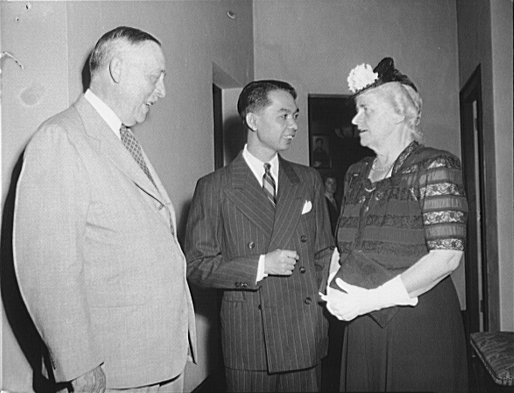
His opposition to the government was also evident in his meeting with Hull. Rather than submit the declaration, Seni proposed establishing a Thai government composed of patriotic, freedom-loving people to replace the government operating under Japanese control.
Six days before the declaration, the US State Department had already taken a distinct position on Seni’s diplomatic role. On January 19, 1942, it stated that it would not recognize him as a representative of “the free people of Thailand,” although it would continue to recognize him as “Minister of Thailand.” In this document, the term Minister referred to the head of Thailand’s legation in the United States.
This distinction showed that Washington recognized Seni’s diplomatic status without accepting that he represented the will of the Thai people. After Thailand declared war, the United States also took a different position from Britain.
On February 7, 1942, the US State Department stated that Thai troops would be treated as enemies only if they actively assisted Japanese operations against US or Allied forces, or threatened those forces. For economic warfare, Thailand would be treated as enemy-occupied territory.
Resistance to Japan Continued
Seni’s refusal was not the only form of opposition to the Thai government’s cooperation with Japan. In 1942, he worked with the Office of Strategic Services (OSS), the US intelligence agency at the time, to train Thai volunteers in the United States.
The first group of 13 volunteers began training on June 12, 1942. Some were later sent to Thailand in 1944 and 1945.
Pridi also took part in the resistance inside Thailand. From his office as regent, he led an underground network opposing Japanese control. According to the Library of Congress, the network had armed more than 50,000 Thai people by the end of the war.
Although both men opposed Japanese control, Seni and Pridi did not always agree on the political steps Thailand should take. On December 12, 1944, Seni rejected Pridi’s request to establish a free Thai government in the United States under Seni’s leadership. The proposal had been sent through Stockholm, but Seni considered it contrary to his principles.
The difference between American and British positions on Thailand remained evident in 1944. In a letter dated September 4, Britain’s foreign secretary stated that the United States did not consider itself at war with Siam, the name then used for Thailand.
The British government, however, continued to regard itself as being at war with Thailand.
In other words, although Thailand had declared war on both countries in January 1942, the United States did not consider the declaration sufficient to establish a state of war between the two countries. Britain took a different position and maintained that a state of war existed.
After Japan’s Surrender, the State of War Was Disputed
After Japan surrendered in August 1945, Thailand sought to withdraw its declaration of war. On August 16, Seni delivered a message from Thai Foreign Minister Phya Sisena Sombatsiri to Abbot Low Moffat, a US State Department official.
The message announced Thailand’s withdrawal of its declaration of war against the United States and Britain, as well as its repudiation of agreements made between Phibun’s government and Japan.
Pridi also declared the war declaration void after Japan’s surrender. The United States accepted Thailand’s position, but Britain did not. The two countries therefore followed different paths to resolve their wartime relations with Thailand.
On December 31, 1945, US diplomat Yost reaffirmed that Washington did not recognize Thailand’s 1942 declaration of war because it “did not represent the will of the Siamese people”.
Thailand consequently had to settle the issue with Britain through separate negotiations. The Anglo-Thai Treaty was signed in Singapore and announced on January 1, 1946. The United States welcomed the agreement.


