


A wayang puppet can introduce a heroic journey, a craft tradition or a question about contemporary life. At Museum Wayang Jakarta on October 19, 2026, a workshop on museum outreach and collection information explored how these stories could reach wider audiences and encourage younger generations to participate in preserving them.
Organised by the Jakarta Culture Agency’s Art Museum Management Unit, the programme brought together students, lecturers and cultural practitioners to explore education, research and media storytelling in support of a more inclusive museum.
A Cultural Welcome in Kota Tua
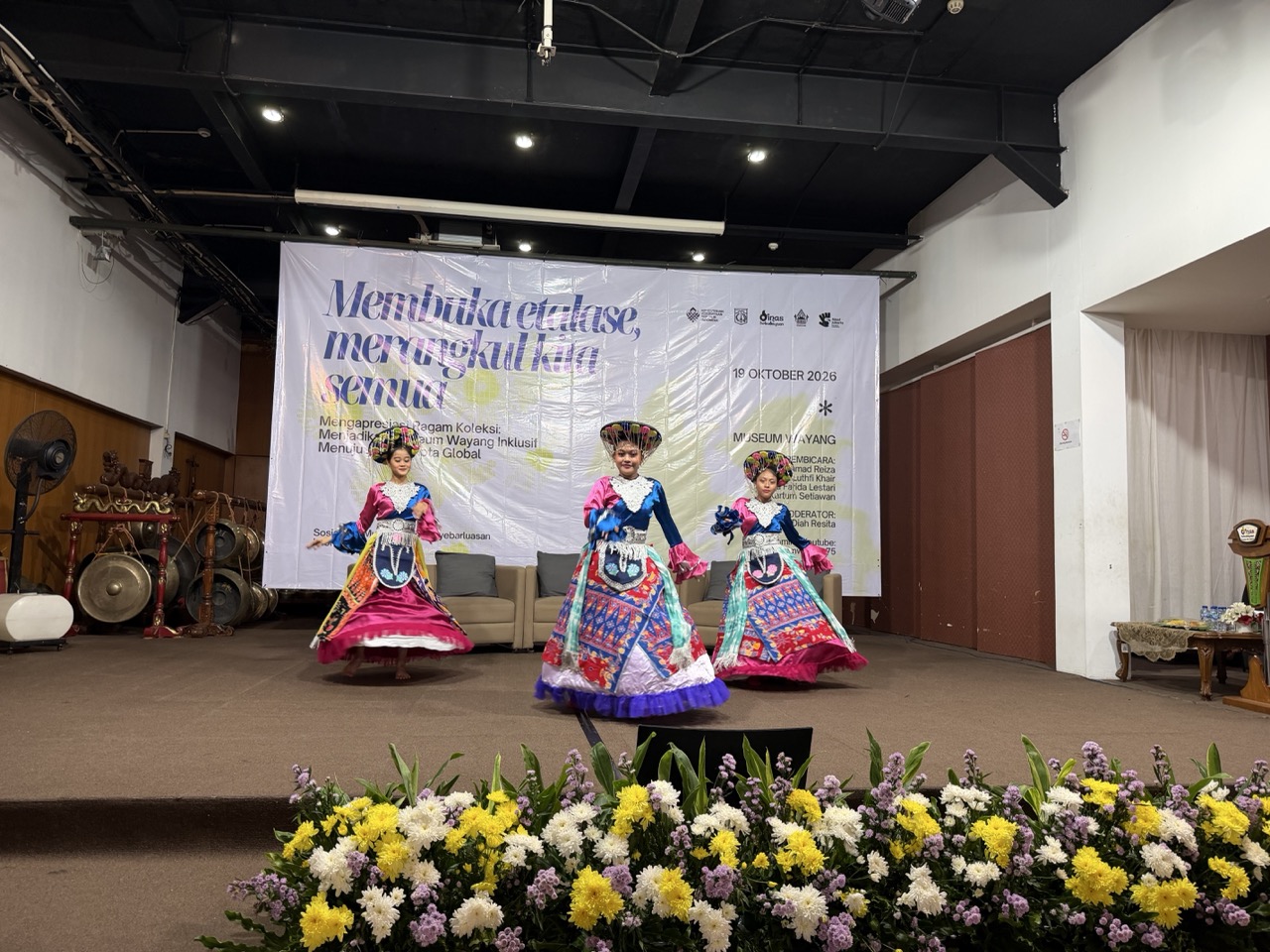
The workshop began with participants singing Indonesia’s national anthem, Indonesia Raya, followed by a Pesona Rancak Betawi dance performance. The opening connected the gathering with Jakarta’s own performing traditions before turning attention to the diversity of wayang.
Opening remarks were delivered by Sri Kusumawati, Head of the Art Museum Management Unit under the Jakarta Provincial Culture Office, and Suwandi, Head of the Wayang Museum Unit. Their welcome introduced a programme focused on making museum collections more accessible and meaningful to the public.
For the students and lecturers attending, the workshop offered an opportunity to consider how classroom learning, cultural interpretation and digital communication could reinforce one another.
Opening the Display, Discovering the Story
The setting offered a compelling starting point. Inaugurated by Governor Ali Sadikin on August 13, 1975, Museum Wayang has spent more than five decades introducing visitors to Indonesia’s puppetry traditions. Its location on a former Dutch church site adds another layer to the history surrounding Fatahillah Square.
Jakarta’s official reporting put the museum’s holdings at more than 6,800 collection items in 2025, encompassing Indonesian and overseas traditions. Its renewed displays opened on January 24 that year, featuring bilingual information, immersive experiences and interactive learning.
Kartum Setiawan, chair of Komunitas Jelajah Budaya, encouraged audiences to look beyond an object’s name. His presentation connected collections with their makers, materials, uses and supporting communities.
Who made a puppet? Where was it performed? How was it used? Which sources support its story? These questions provide students and content creators with a practical foundation for turning a museum label into an engaging, reliable account.
Bringing Pergiwa into Gen Z’s World
Nofa Farida Lestari, executive director of Musee ID and an ICOM CECA board member, approached contemporary relevance through Pergiwa, a female figure in wayang narratives.
Her presentation used the character to explore personal boundaries, resilience, consent and young people’s ability to make decisions. These contemporary educational interpretations connected a traditional narrative with pressures familiar to students today.
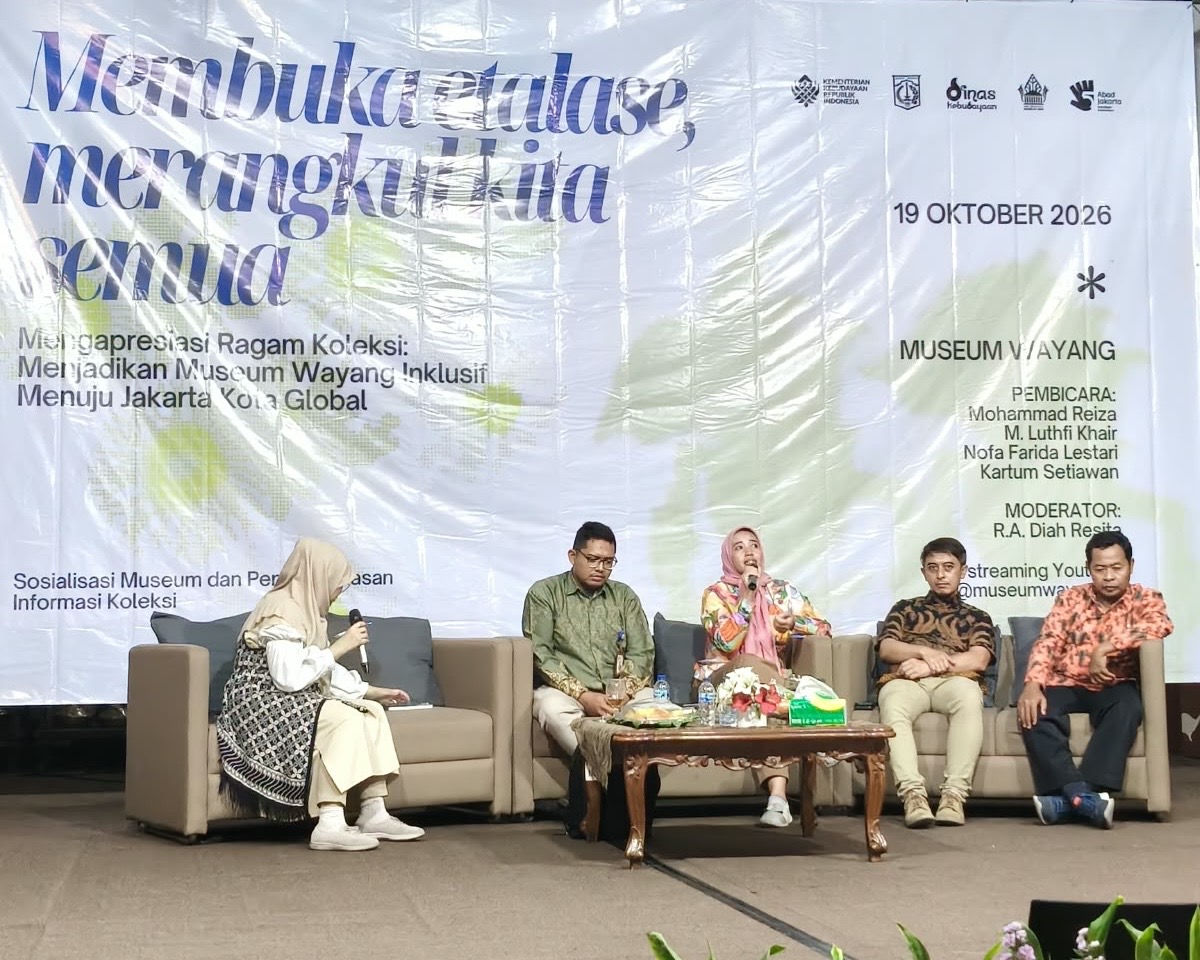
“Wayang always speaks about the values of life today and in the future,” Nofa said during the workshop.
Her approach invited educators to use wayang as a starting point for discussion. A character’s journey could help students examine expectations, relationships and responsibility while recognising that stories have different versions and interpretations.
From the Performance Screen to the Phone Screen
For Mohammad Reiza, Seasia Academy Program Coordinator at Good News from Southeast Asia, the communication challenge began with curiosity: what could make someone stop scrolling?
His presentation, Dari Wayang ke Layar, showed how one verified collection story could become a short video, a carousel or an article. Each format offers a different way to attract attention, explain context and introduce the people behind the tradition.
“I believe stories that connect people grow from a willingness to learn, listen and experience,” Reiza said.
Accuracy and accessibility ran together throughout the presentation. Checking identities and sources, involving curators and practitioners, and distinguishing evidence from interpretation support trustworthy storytelling. Captions, transcripts, image descriptions, readable contrast and straightforward language help more people access it.
A proposed 30-second headline exercise made the principle practical: write an engaging title of no more than ten words, using supplied facts without adding unsupported claims.
Connecting Museums, Supporting Future Practitioners
BRIN researcher M. Luthfi Khair looked beyond the renovated galleries toward a wider cultural network. His presentation explored how museums could connect universities, community groups, puppeteers and artisans to support future practitioners.
His proposed Akademi Muda Pewayangan Nusantara outlined five stages: identifying young talent, introducing traditions, providing mentorship, developing practical skills and creating performance opportunities. The proposal offered a pathway for turning public interest into sustained learning.
He also highlighted regional institutions, including Museum Wayang Kekayon, Museum Sendang Mas, Museum Wayang Indonesia and Rumah Topeng dan Wayang Setia Darma. Collaboration should respect each institution’s distinctive collections and local traditions.
Banyumas illustrates that diversity. Its wayang museum preserves Banyumasan puppetry alongside other forms, with collections including gamelan, calung and grass puppets. Such institutions help explain how performance traditions develop within particular communities.
Taking the Conversation into the Galleries
The workshop concluded with a guided museum tour for the participating students and lecturers. Moving from presentations to the galleries, they explored the collections and experienced the museum’s renewed appearance following its renovation.
The visit connected the day’s ideas with actual objects and displays. Questions about craftsmanship, storytelling and accessibility could now be considered alongside the collections themselves, giving participants material for further learning and discussion.
UNESCO proclaimed Indonesian wayang puppet theatre a Masterpiece of the Oral and Intangible Heritage of Humanity on November 7, 2003, before inscribing it on the Representative List in 2008. Sustaining that living tradition depends on people continuing to learn, practise and share its knowledge.
At Museum Wayang, the workshop offered a practical beginning: look closely, ask thoughtful questions and tell accurate stories. The next chapter belongs partly to the visitors who carry those stories beyond the museum’s walls.


