The most trusted scouts on some of Cambodia’s most dangerous ground are not soldiers or engineers, but rats. Trained to detect the scent of explosives, they mark where the danger is so that human deminers can deal with it safely.
These are African giant pouched rats, and they have been part of Cambodia’s demining effort since 2015. Working alongside human teams, they search suspicious areas before any deminer steps in, covering ground that would otherwise demand slow, painstaking work by people on foot.
The partnership continues for 2026, as part of a wider effort to make land contaminated by decades of conflict safe for communities to use again.
Detection Without Metal
The rats are trained by APOPO, a humanitarian organization that develops animal-based detection methods. Whereas conventional detectors respond to metal, the rats are trained to identify explosive compounds such as TNT, which means scrap metal in the soil does not interfere with their work.
Each animal operates in a harness and crosses a designated search area under the direction of its handler. Upon detecting the scent, the rat scratches the ground, and the team marks the location.
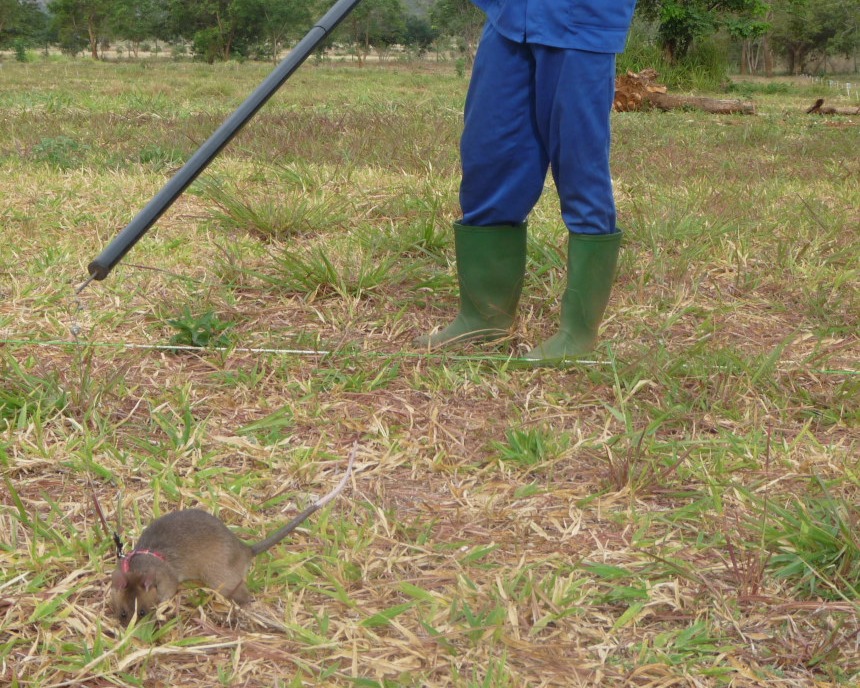
Their body weight is an advantage. At approximately 1 to 1.5 kilograms, the rats are too light to trigger typical pressure-activated antipersonnel mines under normal operating conditions.
APOPO states that a trained rat can search an area the size of a tennis court in about 30 minutes. A deminer using a metal detector may require up to four days for the same area, depending on the quantity of scrap metal present. Actual performance varies according to field conditions and the level of contamination.
The rats do not excavate or disarm explosives. Trained deminers verify each marked location and dispose of any ordnance found.
Progress and Its Limits
Explosive remnants remain hazardous long after hostilities end, and those most at risk are people farming, building homes or travelling through areas yet to be cleared.
According to a report by Cambodia’s Agence Kampuchea Presse (AKP), Cambodia cleared 3,439 square kilometres of contaminated land between 1992 and July 2025. Clearance teams found and destroyed more than 1.2 million anti-personnel mines, approximately 26,700 anti-tank mines and over 3.22 million explosive remnants of war.
The AKP adds that, by July 2025, this work had benefited more than 10 million people by making land available for agriculture and infrastructure.
Casualty figures reflect both the progress made and its limitations. Cambodia recorded 49 casualties from landmines and explosive remnants of war in 2024, compared with 4,320 in 1996. Data published by the United Nations Development Programme (UNDP) recorded 32 casualties in 2023, indicating that the long-term decline has not been uniform.
The Rats’ Role in 2026
Cambodia’s rat-detection programme has operated since 2015.
According to the Cambodian Mine Action Centre (CMAC), the national demining organization, the first 15 mine-detection rats arrived on April 27 of that year. Following training, they were integrated into clearance operations alongside human teams.
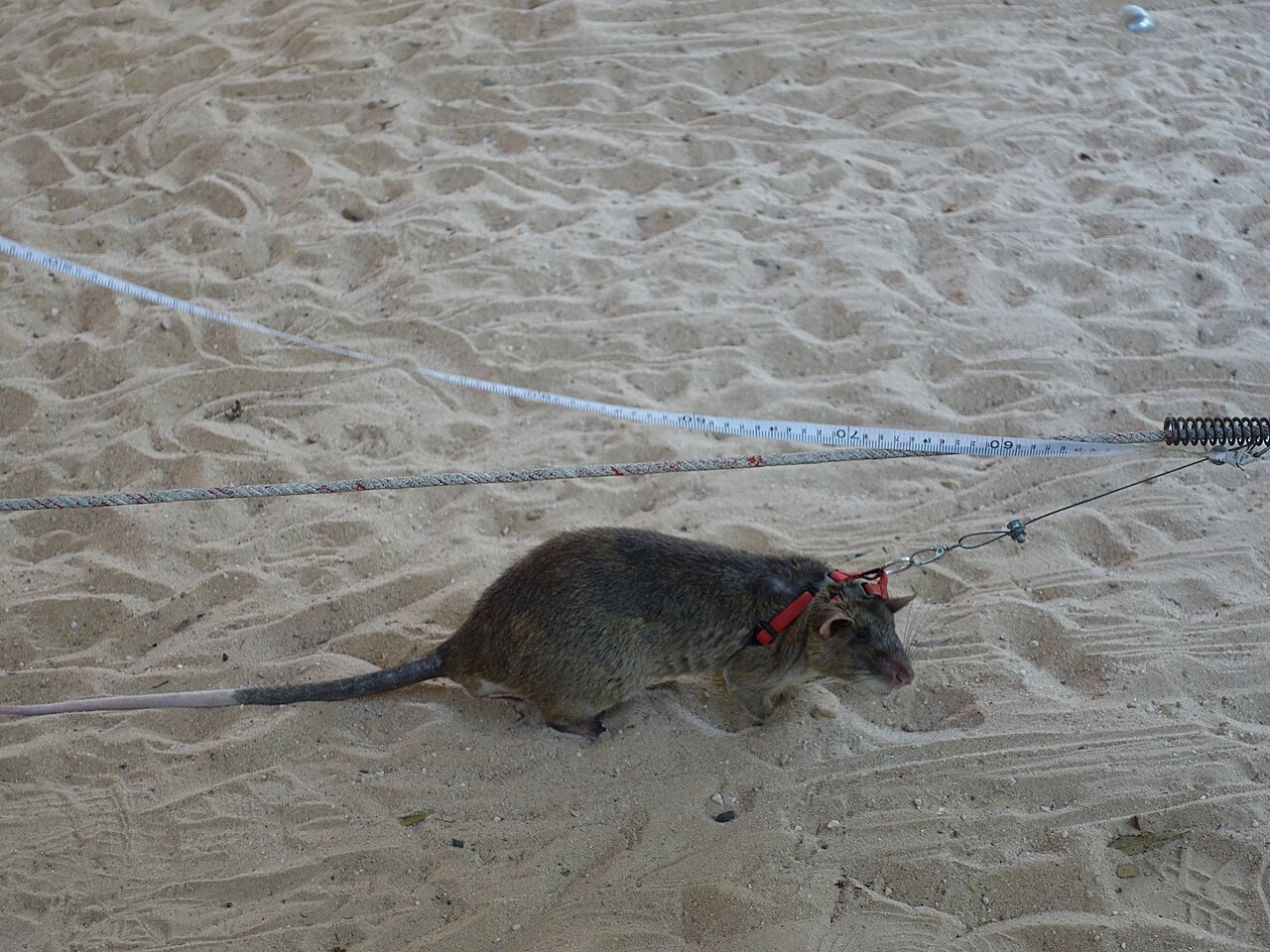
The partnership continues. On December 4, 2025, CMAC and APOPO signed a one year agreement covering January to December 2026. Valued at approximately US$281,490, the project aims to clear 7.56 million square metres in Siem Reap and Preah Vihear provinces, using mine-detection rats together with technical survey dogs.
This figure is a planned target and not a record of land already cleared.
The most prominent rat in the programme was Magawa. Between 2016 and 2020, he detected more than 100 landmines and other explosive remnants across 141,000 square metres, and in 2020 he was awarded the PDSA Gold Medal. In April 2026, Cambodia’s mine-action authority inaugurated a statue in his honour.
This work does not replace the need for trained personnel, equipment or sustained funding. Nevertheless, each area the rats help to clear is land that communities can return to productive use.