In Myanmar, tea is not only for drinking. You will find a dish that uses tea leaves as its main ingredient.
The famous Burmese dish laphet thoke uses real tea leaves as its main edible ingredient. In the local language, laphet means fermented tea leaves and thoke means tossed salad.
Myanmar is famous as one of the few places globally where people regularly eat tea leaves instead of only drinking them. Locals usually enjoy this unique dish both as an everyday light meal and as a special treat for household guests.
Local communities prepare the salad by combining soft fermented tea leaves with a crunchy mix of fried nuts and seeds. A quick splash of peanut oil, fresh lemon juice, garlic, and chili gives the dish its signature savory and sour taste.
People across Myanmar love this dish because it delivers a rich umami flavor alongside vibrant textures. An old popular Burmese saying even declares laphet as the single best item among all edible leaves.
Traditional Tea Leaf Fermentation
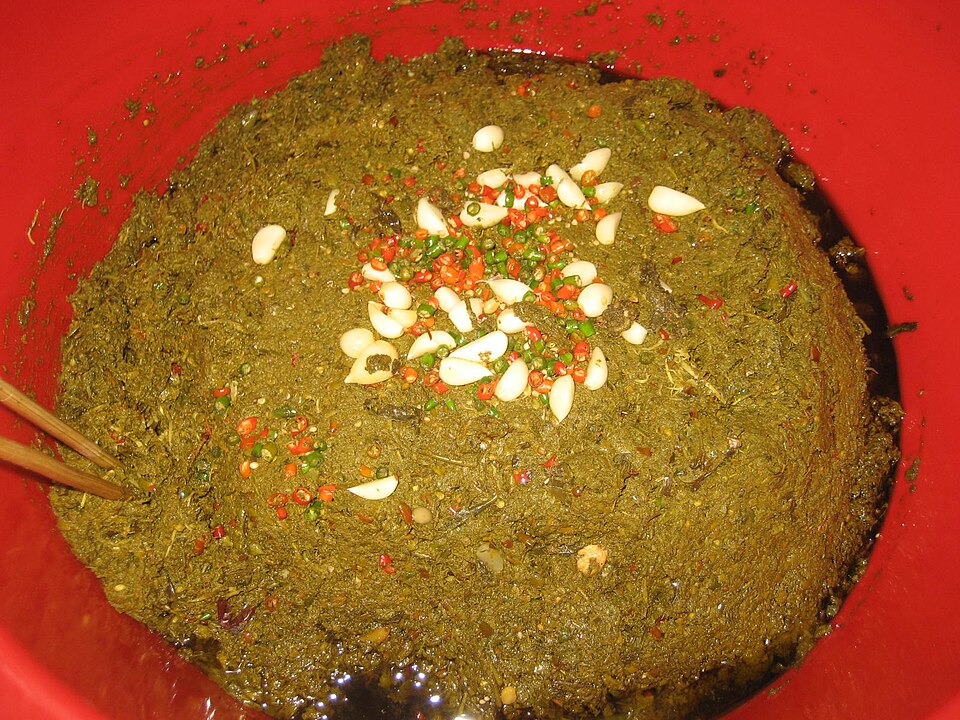
Mountain farmers in Shan State gather fresh tea leaves from Camellia sinensis plants during the spring harvest season. Workers select tender young leaf buds because these top buds hold the richest flavor and highest nutrient content.
Producers steam the freshly picked leaves for several minutes before pressing them inside heavy vats. Natural lactic acid bacteria then ferment the packed leaves underground over a period of three to four months.
This long natural fermentation process softens the tough leaves and reduces their natural bitterness. Ancient indigenous tribes originally developed this preservation technique by packing tea leaves inside bamboo tubes and clay pots.
Historical records show that King Alaungsithu introduced tea cultivation during the Pagan Dynasty in the twelfth century. Ancient Burmese kings and warring kingdoms shared fermented tea leaves to finalize peace treaties and settle legal disputes.
Key Ingredients of the Salad
Home cooks wash and squeeze the fermented tea leaves thoroughly to prepare them for mixing. Cooks then blend the softened tea leaves with minced garlic, chopped green chilies, salt, and pure peanut oil.
A traditional batch of laphet thoke includes a crispy mixture of fried yellow chickpeas, lima beans, toasted sesame seeds, and peanuts. Thinly sliced golden garlic chips add extra crunch and a deep aromatic punch to every bite.
Freshly sliced tomatoes and finely shredded green cabbage contribute crispness and moisture to the overall salad texture. Seasonings like fresh lime juice, fish sauce, and a pinch of salt balance the rich oil and earthy tea leaves.
Some regional variations also feature pickled ginger, dried prawns, or star fruit for additional flavor layers. Modern grocery stores now sell ready-made kits of twice-fried beans and spiced tea paste for easy kitchen prep.
Cultural Value and Health Benefits
Host families display the ceremonial version, called ahlu-laphet, in compartmentalized lacquerware trays called laphet ohk. Ceremonial hosts keep the fermented tea in the center partition while surrounding it with separate portions of crunchy beans and fried garlic.
Burmese people share this special tray at religious donation ceremonies, weddings, and formal family gatherings. Offering laphet to visitors represents a warm gesture of traditional Burmese hospitality across all social classes.
The fermented leaves retain natural antioxidants, including powerful polyphenols and catechins that support cardiovascular health. The leaves also hold a significant amount of natural caffeine that provides a steady energy boost.
Students frequently eat laphet thoke late at night to stay alert while studying for important exams.
Would you like to try this unique dish?