


At a floating market in Kalimantan, a boat carries produce to its next customer. In Bangkok, another carries passengers through the city. Across Southeast Asia, rivers connect everyday journeys with larger stories of food production, commerce and cultural identity. Their future depends on keeping those connections healthy.
Feeding a Region, One Floodplain at a Time
The Mekong illustrates the scale of this dependence. Stretching approximately 4,900 kilometres, it flows from the Tibetan Plateau through or along six countries: China, Myanmar, Laos, Thailand, Cambodia and Vietnam. Its tributaries, wetlands and floodplains form a connected system whose seasonal rhythms sustain livelihoods far beyond the riverbank.
In Vietnam, that relationship reaches dinner tables around the world. A 2022 World Bank assessment attributed half the country’s rice production and 95 percent of its rice exports to the Mekong Delta. These figures show how water management in one region can influence food supplies and farming incomes across international markets.
Cambodia’s Tonle Sap demonstrates why timing matters as much as water volume. During the wet season, rising Mekong waters push the Tonle Sap River backwards into the lake, expanding its flooded habitats. When water levels fall, the river drains towards the Mekong again. This seasonal exchange supports fisheries and the communities that depend on them.
The economic value is substantial. In its 2024 State of the Mekong assessment, the Mekong River Commission described annual wild fisheries production of approximately 1.5–1.7 million tonnes, valued at US$8.4 billion. Those are basin-wide figures, rather than the catch from Tonle Sap alone.
Generating Power While Sustaining the River
Rivers also connect Southeast Asia through electricity. In June 2022, the Lao PDR–Thailand–Malaysia–Singapore Power Integration Project began importing up to 100 megawatts of Lao hydropower into Singapore through existing regional connections.
In September 2024, Singapore announced a second phase allowing electricity trading of up to 200 megawatts, with additional supply from Malaysia. The initiative demonstrated how national grids could cooperate across four countries.
Hydropower’s benefits, however, require careful management of its wider effects. Reservoirs can trap sediment and alter flows, affecting downstream habitats and agriculture. Riverbed mining adds pressure by removing material that helps maintain channels and deltas.
“Enhanced collaboration among key actors at the national and regional levels for sustainable sediment management is strongly recommended,” Thai water researcher Thanapon Piman said when presenting a UNESCO–Stockholm Environment Institute study in 2017.
Sediment is part of a river’s productive system. It carries nutrients and helps replenish floodplains and stabilise deltas. Decisions about dams and extraction therefore need to consider the farmers, fishers and settlements downstream alongside electricity revenues.
Keeping People and Goods Moving
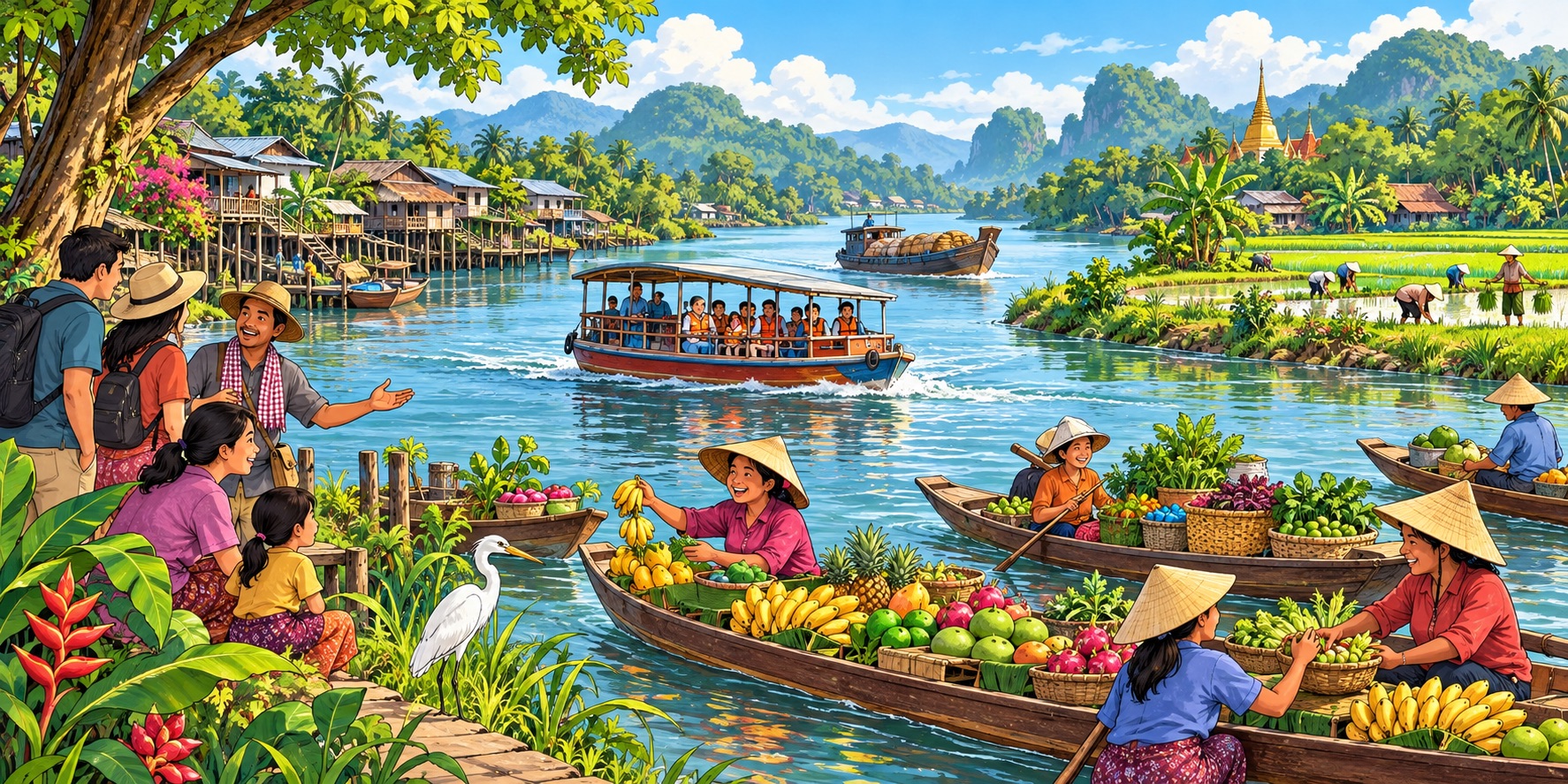
Southeast Asia’s waterways remain working transport routes. Bangkok’s Chao Phraya Express Boat connects riverside communities and brings passengers from Nonthaburi towards the capital’s centre, keeping water transport part of metropolitan life.
In Vietnam, investment is strengthening the role of inland shipping. The World Bank approved US$107 million in financing in June 2024 to improve southern waterways, navigation safety and logistics connections.
Planned improvements to the east–west corridor were expected to shorten the water transport distance between Can Tho and Ho Chi Minh City’s ports by about 30 percent. Other works would improve access from the Mekong Delta to deep-sea shipping facilities. These are projected benefits, dependent on implementation.
Indonesia offers another perspective on river geography. The Kapuas, approximately 1,143 kilometres long, is the country’s longest river, extending through West Kalimantan from the interior towards the coast. Its scale helps explain why waterways occupy such a prominent place in the island’s settlement patterns and regional identity.
Discovering Heritage on the Water
At Lok Baintan in South Kalimantan, the Martapura River becomes a marketplace. Trading from boats connects local livelihoods with an experience that draws visitors to the region’s river culture. The attraction is rooted in an activity that remains useful to the people practising it.
Thailand’s Chao Phraya similarly connects travel with history, linking Bangkok’s riverside attractions with journeys towards Ayutthaya. From the water, visitors encounter a landscape shaped by settlement, commerce and religious life.
The opportunity for tourism is to support these relationships. Local boat operators, guides, food sellers and artisans can benefit when visitor spending stays within riverside communities. Respectful photography, responsible waste disposal and attention to residents’ daily routines help ensure that tourism supports the places it celebrates.
Building a Shared Future Downstream
“Compared to 5–10 years ago, the Mekong has changed dramatically, for better and worse,” Lao specialist Anoulak Kittikhoun, then chief executive of the Mekong River Commission Secretariat, said in April 2024. His assessment recognised economic and social gains alongside pressures from disrupted flows, declining sediment and pollution.
Practical responses already offer useful lessons. The World Bank has documented farmers in Vietnam’s delta growing rice during the freshwater wet season and raising shrimp when conditions become more saline. Such approaches work with local conditions rather than assuming the same farming model will suit every place.
Southeast Asia’s rivers carry food, passengers, energy and memory. Protecting their future means treating those functions together—and ensuring that the communities living along their banks help shape the decisions flowing downstream.


