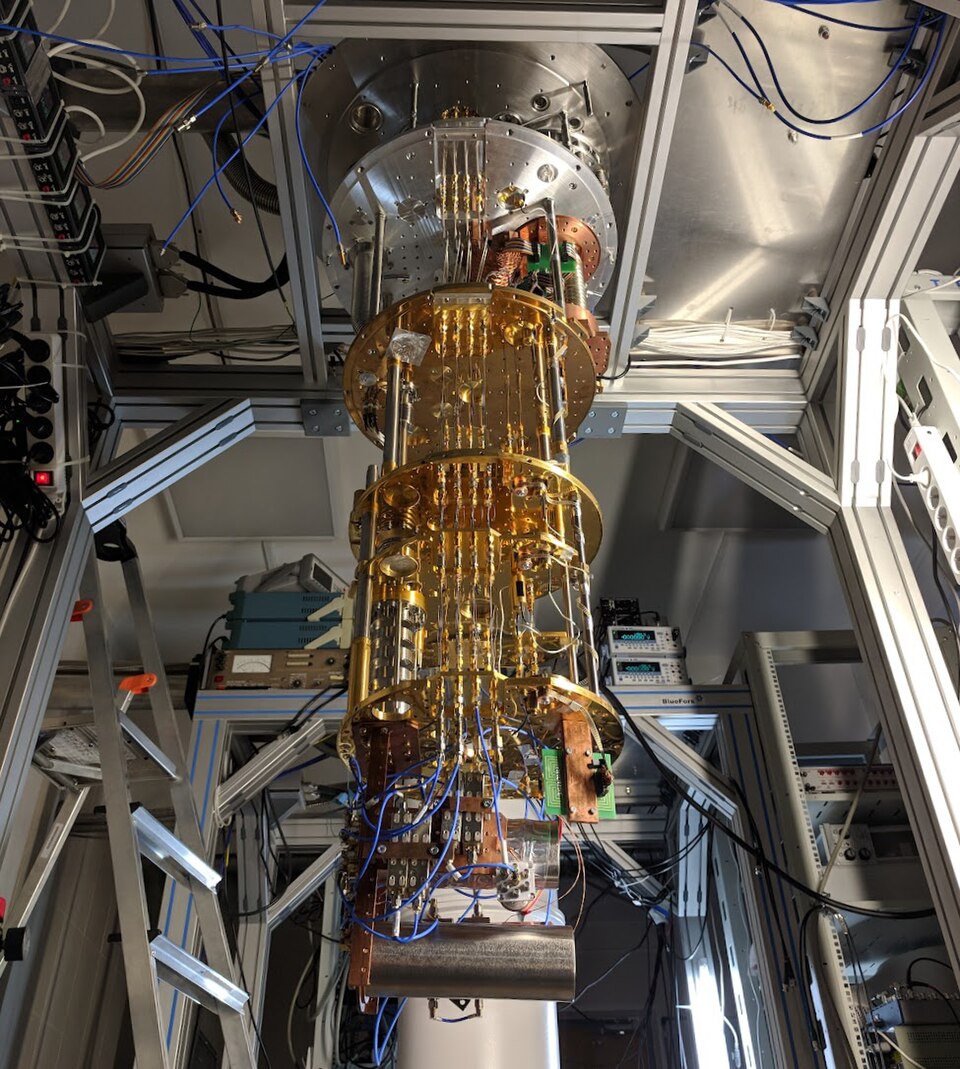
Singapore is set to become the first country outside the United States to host Quantinuum’s Helios quantum computer, with installation expected to be completed in 2026, according to the National Quantum Computing Hub.
The agreement with Quantinuum, announced in November 2025, also gives researchers cloud access to the system and aims to build local expertise in quantum hardware, software, and applications.
So what sets a quantum computer apart from an ordinary one, and how prepared is Southeast Asia for the technology?
How Is a Quantum Computer Different?
Classical computers store information in bits, each set to either 0 or 1. Quantum computers use qubits, which can hold a combination of 0 and 1 through superposition. Qubits can also be entangled, which links their states in ways ordinary bits cannot replicate.
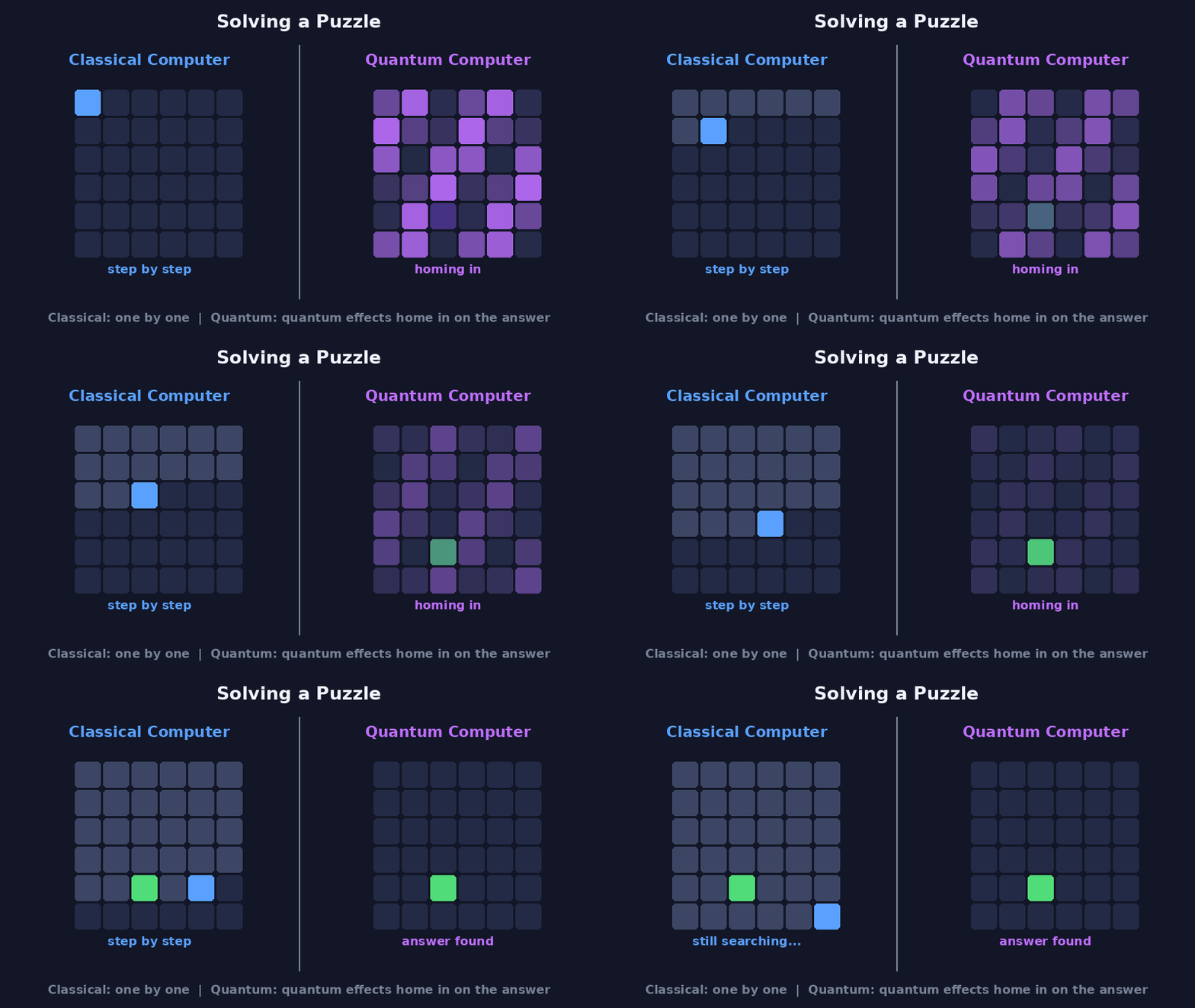
Imagine solving a puzzle with millions of possible combinations. A conventional computer works through the problem using standard step-by-step instructions. A quantum computer instead uses the rules of quantum physics to handle certain problems in a different way. It does not simply try every answer at once and pick the right one.
Its calculations must be carefully designed so that they lead to a useful result.
In a 2019 study published in Nature, titled “Quantum Supremacy Using a Programmable Superconducting Processor” Google researchers reported that their Sycamore quantum processor completed a random circuit sampling task in about 200 seconds.
They estimated that a state-of-the-art classical supercomputer would need around 10,000 years to perform the same task using the methods considered in their study.
IBM later proposed a classical method it estimated at about 2.5 days. The result applies to that specific task and does not show that quantum computers outperform classical ones in general.
Potential applications include simulating molecules to study drug candidates, developing battery materials, modelling industrial chemical reactions, and exploring certain logistics problems. All of these remain under development.
Current quantum computers are prone to errors and must become more reliable before they can outperform conventional computers on many practical tasks. They are expected to work alongside conventional computers on specialised calculations rather than replace them.
Singapore’s National Quantum Strategy
Singapore’s National Quantum Strategy commits nearly S$300 million over five years to strengthen research, develop talent, and support the development and use of quantum technologies. The government announced it in May 2024.
The strategy extends beyond quantum computers to areas such as quantum sensing, devices, and secure communications. It also aims to build local engineering capabilities and encourage collaboration between researchers and industry.
US based Quantinuum, which built Helios, established an R&D and Operations Centre in Singapore in March 2026 to work with local researchers and businesses on potential applications.
Singapore is also developing hybrid computing systems that combine conventional supercomputers with quantum resources. Launched in March 2025, its Hybrid Quantum-Classical Computing initiative aims to build the expertise and infrastructure needed to integrate both technologies.
Where ASEAN Members Stand on Quantum
Most ASEAN member states still lack the local expertise, infrastructure, and research capabilities needed to develop their own quantum technologies, according to a 2025 study titled “Can ASEAN Secure a Quantum Future?” published by the S. Rajaratnam School of International Studies (RSIS).
The ASEAN Digital Masterplan 2025 makes no mention of quantum across its 140 pages, the study notes, while the global quantum industry is projected to reach around US$97 billion by 2035. Some countries are moving individually. Singapore has built Southeast Asia’s first quantum-safe network infrastructure, and Thailand has introduced a national quantum roadmap.
Indonesia’s National Research and Innovation Agency (BRIN) established its Research Center for Quantum Physics in 2022, covering quantum information and computation, quantum devices, and quantum simulation. Malaysia accesses quantum computing infrastructure through partnerships with vendors rather than domestic capability building.
At the regional level, the ad hoc ASEAN Quantum Committee and the SEA Quantum Network are in place.
On security, the study says the region needs to adopt post-quantum cryptography (PQC) and quantum key distribution to protect critical systems such as banking. PQC uses encryption algorithms designed to resist attacks from quantum computers.
What Comes Next for the Region?
Singapore is set to become the first country outside the United States to host Quantinuum’s Helios quantum computer, with installation expected in 2026.
Most other ASEAN member states still lack the expertise, infrastructure, and research capabilities to develop their own quantum technologies, while the regional level has so far relied on the ad hoc ASEAN Quantum Committee and the SEA Quantum Network.
The RSIS study points to coordinated standards, wider investment in education and local talent, and the inclusion of quantum in the next ASEAN Digital Masterplan as areas to address. It cites disaster early warning as a possible first application, given the region’s exposure to natural hazards, with agriculture, genomics, and data security as later uses.
References
Arute, F., et al. (2019). Quantum supremacy using a programmable superconducting processor. Nature, 574, 505-510. https://doi.org/10.1038/s41586-019-1666-5
Trajano, K. K. S. (2025, November 24). Can ASEAN secure a quantum future? S. Rajaratnam School of International Studies. https://rsis.edu.sg/rsis-publication/rsis/can-asean-secure-a-quantum-future/