Yosemite National Park in California, United States, features an annual natural phenomenon on the cliffs of El Capitan. One of the waterfalls in the area, Horsetail Fall, emits a bright glow resembling flowing lava during late afternoon.
The glowing stream of water is widely known as the Firefall phenomenon. The visual effect is purely a natural optical illusion, formed without any volcanic activity.
The appearance of the phenomenon occurs for a limited period each year. The moment lasts for two to three weeks from mid- to late February.
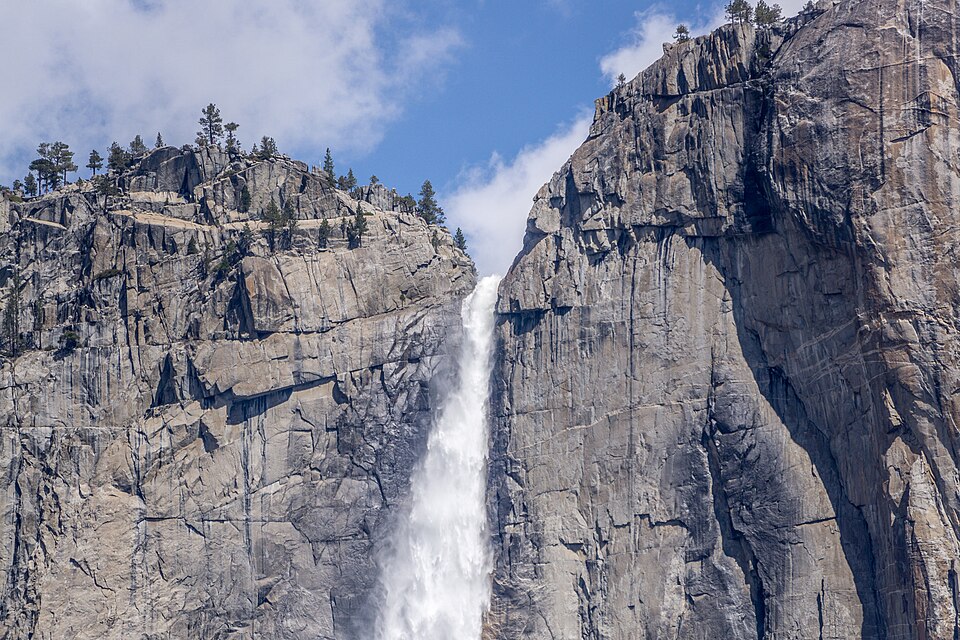
Horsetail Fall itself is a seasonal waterfall flowing on the eastern side of El Capitan. The waterfall drops from a total height of approximately 630 meters down to the Yosemite Valley floor.
Natural Conditions Shaping the Firefall Effect
The illumination of the waterfall requires a precise alignment between the Earth and the sun. Sunset light must hit the water stream on the El Capitan cliff at a certain angle.
As the primary water source, snowmelt at the top of the cliff determines the flow of Horsetail Fall. Daytime temperatures in the area must be warm enough to melt the accumulated snowpack.
Beside the water volume, weather conditions in the west serve as a crucial requirement. Sunlight must pass through the atmosphere clear of heavy cloud cover or dense fog.
If any of the three elements are missing, the burning waterfall illusion will not appear. The water stream will simply resemble a standard waterfall.
The Formation Process of the Water's Glowing Colors
The granite cliff of El Capitan faces southwest. The orientation allows the water stream to catch the low-angle rays of the setting sun directly.
As the sun approaches the horizon, Earth's atmosphere filters out most of the blue light waves. The natural scattering leaves behind red and orange light spectra that strike across the cliff face.
The color of the water stream shifts gradually from golden yellow to deep orange. At its peak, the falling water appears to reflect a glowing red hue against the rock wall.
The light on Horsetail Fall lasts for a short duration. The phenomenon persists for only five to ten minutes before the sun dips below the horizon completely.
The lighting angle occurs due to the sun's precise trajectory relative to the cliff notch during February. The setting light hits at an angle parallel to the recess of El Capitan.
The History of Horsetail Fall Photography Documentation
The public record of the natural Firefall phenomenon at Horsetail Fall began in the 1970s. Previously, the term Firefall in Yosemite referred to a man-made spectacle.
In the past, Yosemite park operators discarded hot glowing embers from Glacier Point. The artificial performance was officially discontinued in 1968.
A photographer named Galen Rowell captured the first color photograph of the natural Horsetail Fall phenomenon in 1973. The photo was subsequently published in outdoor media and magazines.
Before the publication of that photograph, the optical illusion at Horsetail Fall was known only to a few local residents and California-based photographers. The visual documentation reshaped the public perception of the Firefall term in Yosemite.
Since the publication of the photograph circulated widely, Horsetail Fall has become an object of research and photography documentation. The phenomenon is recorded as one of the annual natural illumination events in Yosemite National Park.