


Indonesian cocoa took a step closer to the international chocolate market on November 9, as France and Indonesia unveiled the first chocolates developed through the IndoKAKAO project at the Résidence de France in Jakarta.
Hosted by French Ambassador Fabien Penone, the event brought together government officials, researchers, agricultural institutions and industry representatives. Indonesia’s Minister of National Development Planning (PPN) and Head of Bappenas, Prof. Dr. Ir. Rachmat Pambudy, M.S., also attended and joined the chocolate-tasting session, highlighting food security as an important priority in Indonesia-France cooperation and cocoa as a commodity equally important as coffee.
The occasion marked more than the introduction of a new chocolate collection. It showcased a shared ambition to strengthen Indonesia’s cocoa industry through scientific research, agricultural innovation and better opportunities for farmers.
Five Chocolates, One Shared Ambition
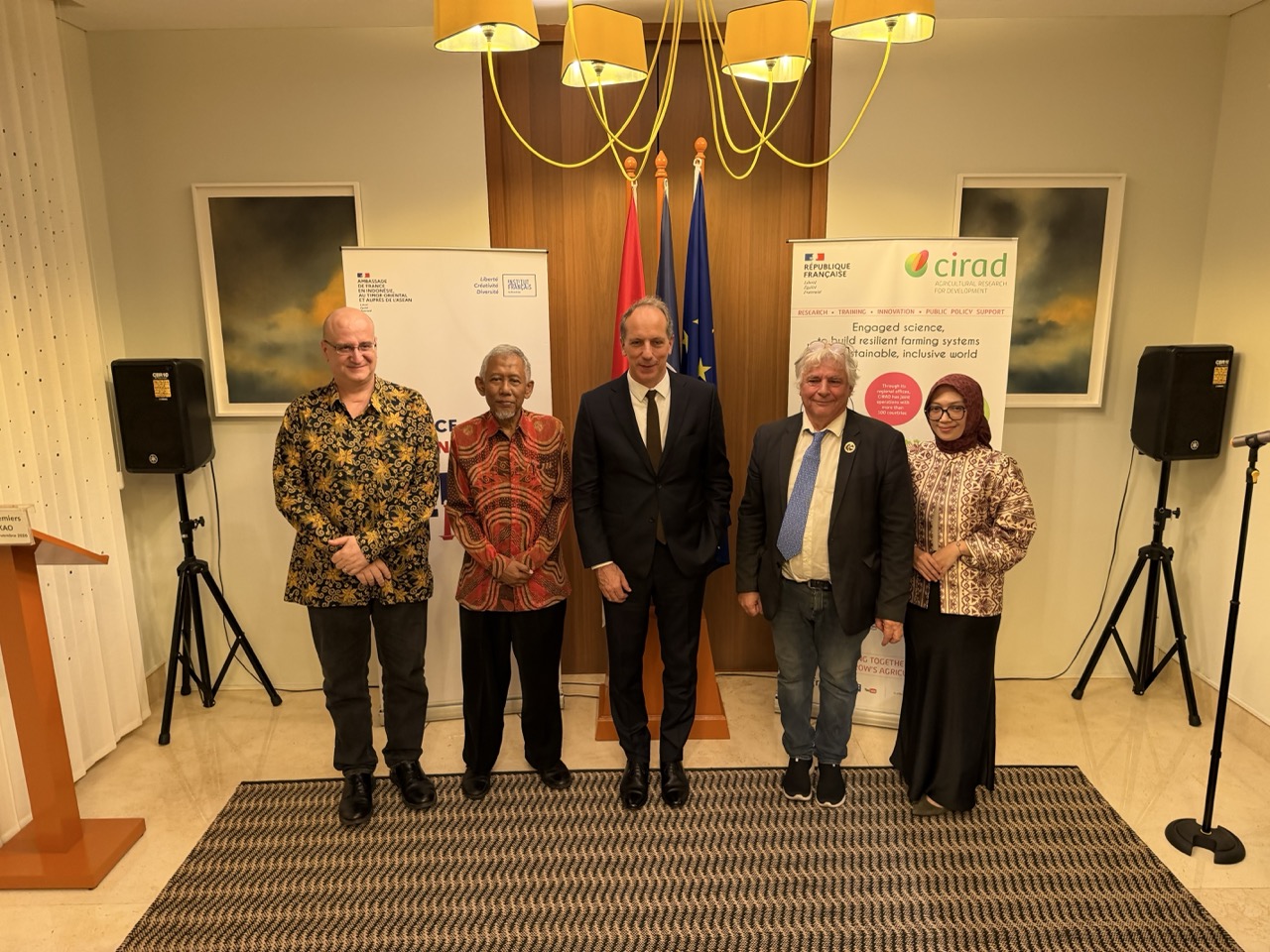
The highlight was the presentation of five chocolate varieties developed by French-Indonesian chocolatier JIKA Chocolat: three dark chocolates and two combining dark chocolate with fruit. Made from fermented and dried Indonesian cocoa beans, the collection demonstrates how improved cultivation and post-harvest processing can create higher-value products.
For Ambassador Penone, the chocolates represent tangible results of a partnership designed to strengthen Indonesia’s cocoa sector from bean to bar.
He emphasised that IndoKAKAO combines scientific expertise, technical innovation and local knowledge, ensuring that Indonesian professionals can independently build on the skills developed through international cooperation.
Strengthening the Cocoa Value Chain
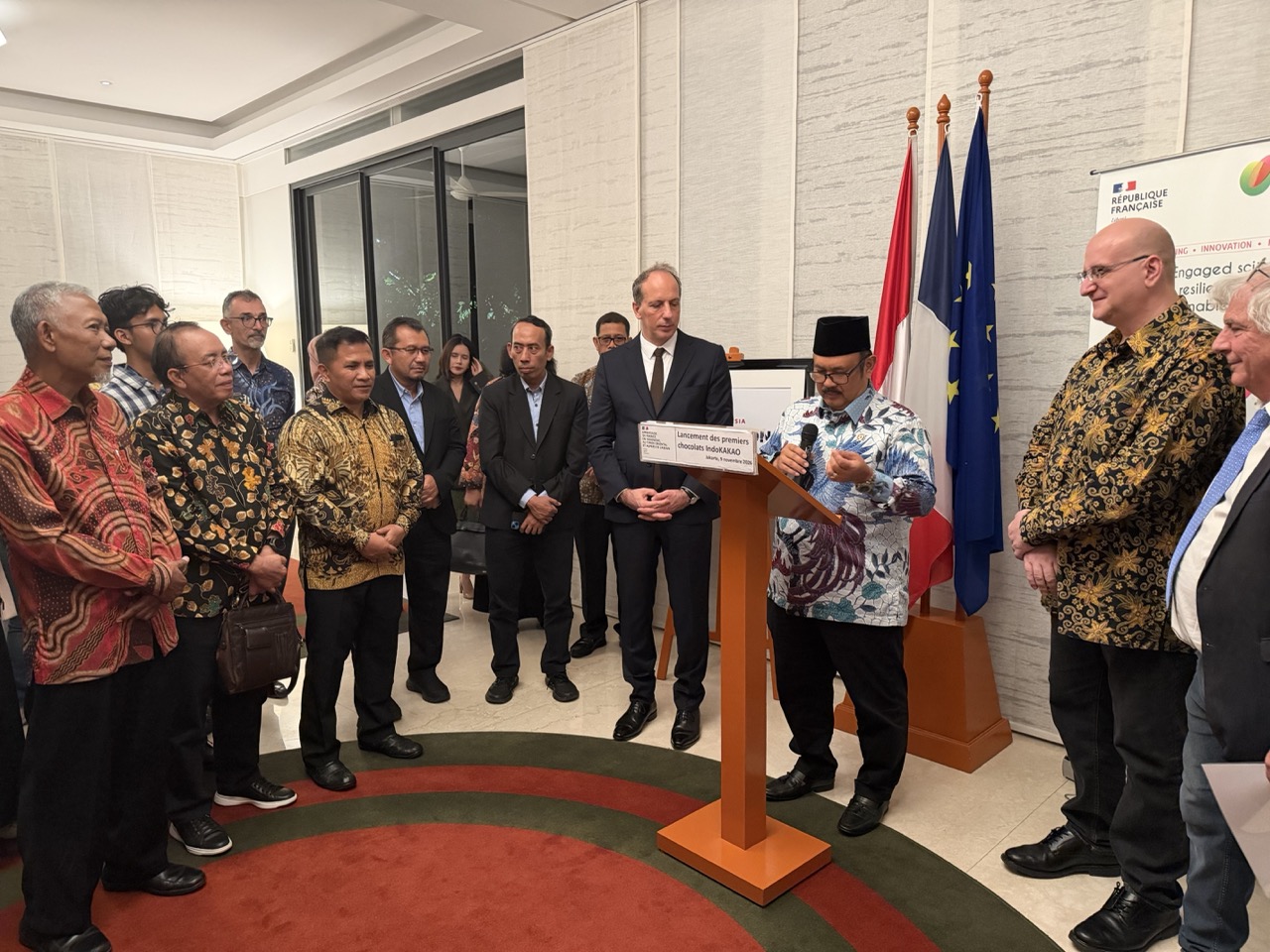
Launched in September 2025 by Bappenas, the French Embassy and the French Agricultural Research Centre for International Development (CIRAD), IndoKAKAO builds on agricultural cooperation discussed during French President Emmanuel Macron’s May 2025 state visit to Indonesia.
Funded by the French government through the Fonds Équipe France, the two-year initiative contributes to the France-Indonesia Year of Innovation 2026.
Its priorities include strengthening cocoa research, improving the value chain and promoting sustainable production. The project brings together CIRAD, Institut Pertanian STIPER (INSTIPER) Yogyakarta, the Indonesian Coffee and Cocoa Research Institute (ICCRI) and private-sector partners.
Dr. Christian Cilas, IndoKAKAO’s technical lead at CIRAD, highlighted training in sensory analysis, post-harvest techniques, agroforestry and cocoa farm management. Following specialised training in Montpellier, France, Indonesian professionals subsequently conducted training sessions in Jember and Yogyakarta, strengthening local expertise in evaluating cocoa aroma and flavour.
Research is also examining how genetics, cultivation practices and fermentation influence chocolate quality. Cilas noted that Indonesia’s geographical diversity could become an advantage, allowing different cocoa-producing regions to develop distinctive flavour profiles.
Moving Beyond Cocoa Production
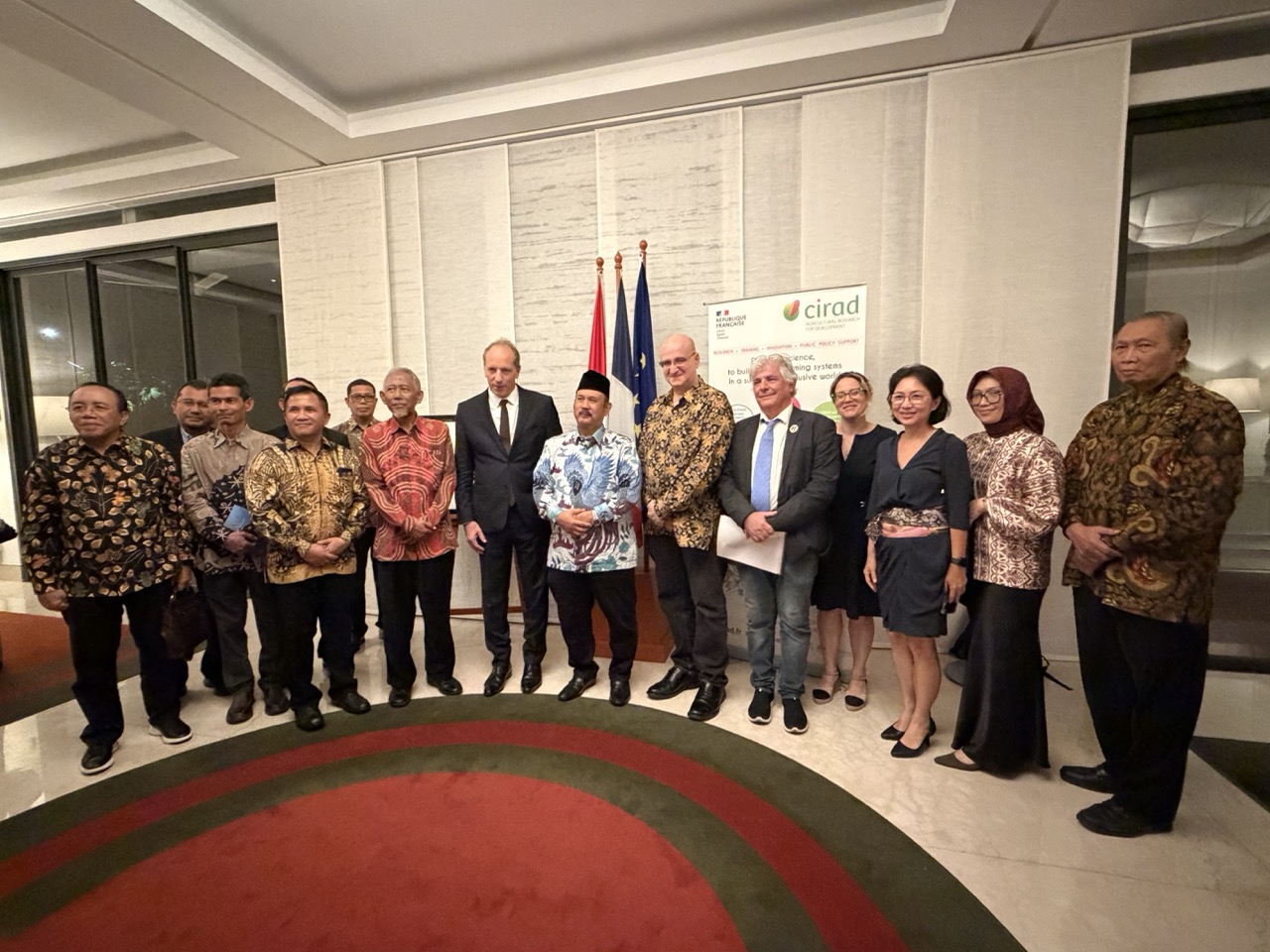
Jean-Marc Roda, Regional Director of CIRAD, described the current period as a turning point for Indonesia’s cocoa industry. Despite its position as a major cocoa producer, Indonesia faces declining production and challenges affecting farmers’ livelihoods.
He argued that the industry must move beyond competing through production volume and instead emphasise quality, regional identity and higher-value processing.
Drawing parallels with France’s experience in geographical indications and territorial branding, Roda suggested that Indonesia’s diverse islands and agricultural landscapes could support distinctive cocoa products linked to their origins.
He also highlighted the importance of developing domestic chocolate consumption, suggesting that a stronger local market could encourage better quality and create greater economic opportunities for farmers. The ambition discussed includes increasing the bean-to-bar segment from approximately 2% to 10%.
Dr. Ir. Harsawardana, M.Eng., Rector of INSTIPER Yogyakarta, emphasised that cocoa development must involve the entire value chain, from farmers and researchers to processors and businesses. He proposed establishing a more structured training and learning system, potentially through a dedicated cocoa school, to sustain the expertise developed through IndoKAKAO beyond its current project period.
Climate Resilience and New Opportunities
Climate change emerged as a central concern during the journalists’ question-and-answer session, particularly regarding its impact on smallholder cocoa farmers' productivity and livelihoods.
Responding to a question from Seasia about climate resilience, Cilas explained that agroforestry could help improve plantation conditions through suitable shade trees and diversified crops. However, agricultural solutions must reflect local environmental conditions, as Indonesia's landscapes and climatic challenges vary considerably.
He also stressed the importance of combining scientific research with farmers' accumulated knowledge and experience to identify more resilient cultivation practices.
The discussion also addressed opportunities to diversify cocoa-based products through downstream processing. Beyond conventional chocolate, cocoa derivatives have potential applications in beverages, cosmetics and personal care products, including cocoa-butter-based lotions and soaps.
Dr. Dini Astika Sari, Director of ICCRI, highlighted the importance of strengthening domestic chocolate consumption, developing Indonesia's bean-to-bar industry and creating products that reflect the country's distinctive cocoa identity.
The speakers indicated that downstreaming and derivative-product development are also part of the broader training and capacity-building agenda, helping strengthen opportunities throughout the cocoa value chain.
Building a Sustainable Partnership
Ambassador Penone said the next phase would focus on improving fermentation and cocoa quality, strengthening farmer training, developing agroforestry systems and supporting a sustainable cocoa development plan for Central Sulawesi.
The project targets 480 direct beneficiaries, including 240 women and 200 young people, while its digital outreach is expected to reach approximately 40,000 people indirectly. Its longer-term ambition is to extend benefits to as many as 722,000 cocoa farmers.
France and Indonesia are also exploring research cooperation in other agricultural commodities, including coffee, coconut, spices, bananas and rice.
The reception concluded with guests tasting the five newly introduced chocolates and receiving bags of JIKA chocolates to take home.
Ultimately, IndoKAKAO's success will depend on whether scientific cooperation translates into stronger local expertise, climate-resilient farming, better market opportunities and improved livelihoods for Indonesian cocoa farmers.
For now, these five chocolates offer a taste of what France and Indonesia hope to achieve together: an industry built not only on production, but also on quality, innovation and sustainability.


