Bir pletok sounds like beer, but this Betawi drink contains no alcohol at all. Bir pletok makers in Jakarta brew it from spices, and the result tastes sweet, warm, and slightly spicy.
Ginger, lemongrass, and pandan leaves bring the fragrance and the kick. Sappanwood, which locals call secang, adds the reddish color.
Betawi families have poured bir pletok at weddings and other big events for generations.
So why does a spice drink carry the name of a beer?
How Bir Pletok Got Its Name
Betawi tradition says the drink dates back to the Dutch colonial period, when Dutch people liked to drink beer. Betawi people did not want to be outdone, so they made a festive drink of their own.
They left out the alcohol and used spices instead, and the reddish color made the drink resemble beer and wine. That gave Betawi families a signature drink for their own celebrations.
The word "bir" most likely comes from "beer.” Others also suggest it comes from the Arabic word bi'r, which means “water source.”
However, the meaning of "pletok" is less clear, and there are some different explanations about this. One explanation says the name copies the sound of ingredients shaken in bamboo with ice cubes. Another says it imitates the pop of a bottle opening.
Whichever story is true, the drink itself has stayed popular since colonial times. Betawi cooks still pass the recipe down through families.
What Goes Into a Glass of Bir Pletok
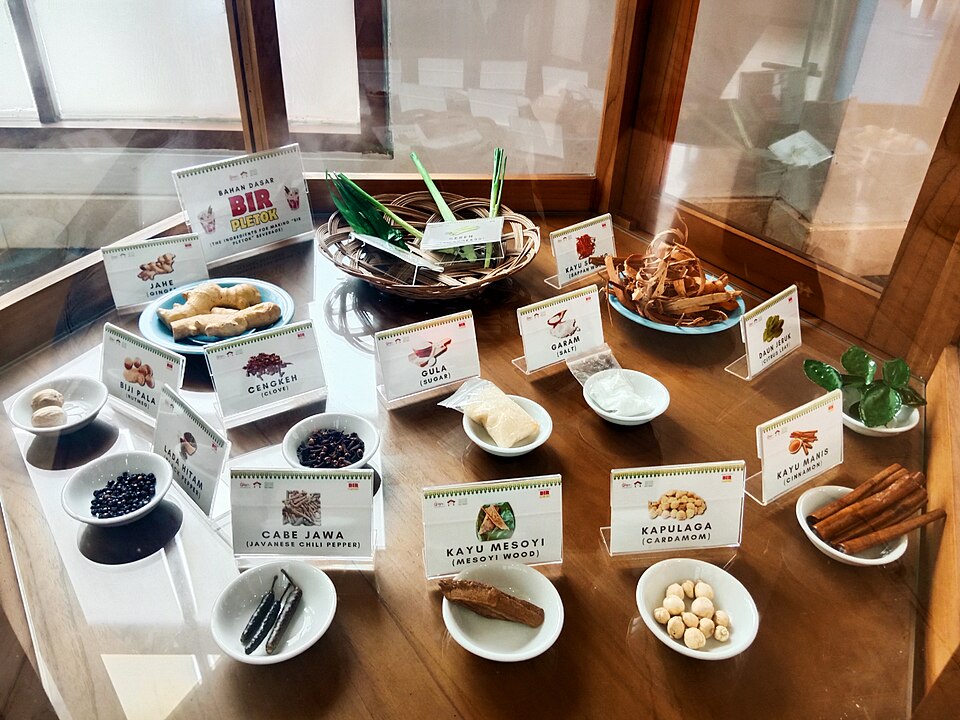
The base recipe uses water, sugar, ginger, lemongrass, pandan leaves, and sappanwood. Many people also add cloves, cinnamon, nutmeg, and cardamom for extra aroma.
Brewers boil the spices in water for one to two hours until the flavors come out. However, for commercial makers, the full process, from washing spices to cooling and bottling, can take eight to twelve hours.
Betawi people believe the drink is rich in antioxidants and helps boost immunity and ease mild flu. Moreover, ginger and the other spices also give a natural warm feeling, and people sometimes mistake that warmth for alcohol. Tradition also links the drink with a good appetite.
When Betawi Families Serve Bir Pletok
Traditionally, people drink bir pletok warm, though many also enjoy it chilled. Betawi families serve it at weddings, circumcision celebrations, and funerals.
Historian JJ Rizal says Betawi people treat it the way Europeans treat champagne, as a special drink that marks a successful event. Organizers at many cultural events also offer it as a welcome drink.
In 2012, Indonesia's Tourism and Creative Economy Ministry named bir pletok one of 30 iconic national dishes. The drink has been a Betawi staple since the colonial era.
The Indonesian Ulema Council (MUI) says producers can apply for halal certification without changing the name. The council confirmed that the word "bir" in Bir Pletok is historically established as a non-alcoholic traditional herbal drink.
Bir pletok faces one challenge today. Its popularity is falling among young people, who often prefer trendy coffee shop drinks and milk teas.
Beyond the taste, bir pletok has become a symbol of Betawi cultural pride and hospitality. Travelers in Jakarta can use a glass of it as an easy introduction to Betawi traditions