


In the 1850s, plantation products from Java accounted for more than half of the Dutch government's revenue. Two commodities played the biggest roles: coffee and sugar. Both generated substantial profits through the Cultivation System (Cultuurstelsel), a colonial policy that forced local populations to grow crops for export.
According to a study published in The Journal of Economic History, the net transfer of wealth from the Dutch East Indies to the Netherlands during this period reached nearly 4% of the Netherlands' gross domestic product (GDP) each year. Much of the profit generated by the Cultivation System came from coffee and sugar.
But these profits did not come about on their own. The colonial government established a system that controlled what farmers had to grow, how much they had to deliver, and how their crops were sold in Europe.
Before 1830, Coffee Was Already a Compulsory Crop
Long before the Cultivation System was introduced, people in Java were already required to grow coffee for the colonial government.
A study published in Verhandelingen Letterkunde records forced coffee cultivation in Priangan from the early 18th century, when the region was under the control of the Dutch East India Company (VOC). Local rulers were tasked with ensuring that residents planted coffee and sold their harvests at low prices.
The obligation continued even after the VOC lost power. The same study notes that compulsory coffee cultivation was maintained under the administrations of Daendels and Raffles.
This earlier practice helped lay the groundwork for a much broader system. In the late 1820s, Governor-General Johannes van den Bosch designed a compulsory cultivation policy to increase Dutch government revenue. Known as the Cultuurstelsel, the system began operating in the early 1830s.
Under this policy, farmers in Java were required to grow and surrender certain crops for export. The colonial government set production targets at the residency level, which were then distributed down to districts and villages.
How Did Java's Harvests Reach the Netherlands?
Under the Cultivation System, farmers could not freely decide which crops to grow. The colonial government determined the commodities they had to produce and the quantities they were required to deliver.
In return, farmers received payments known as plantloon. However, these payments were generally far below market prices. A study published in The Journal of Economic History also shows that part of the money returned to the colonial government through land taxes.
The harvested crops were then handed over to the Nederlandsche Handel-Maatschappij (NHM), a company established in 1824. According to an article in Tijdschrift voor Sociale en Economische Geschiedenis, the company handled the transportation and sale of these commodities through auctions in the Netherlands.
Through this arrangement, the colonial government controlled production in Java while the harvested commodities were marketed to generate revenue in Europe.
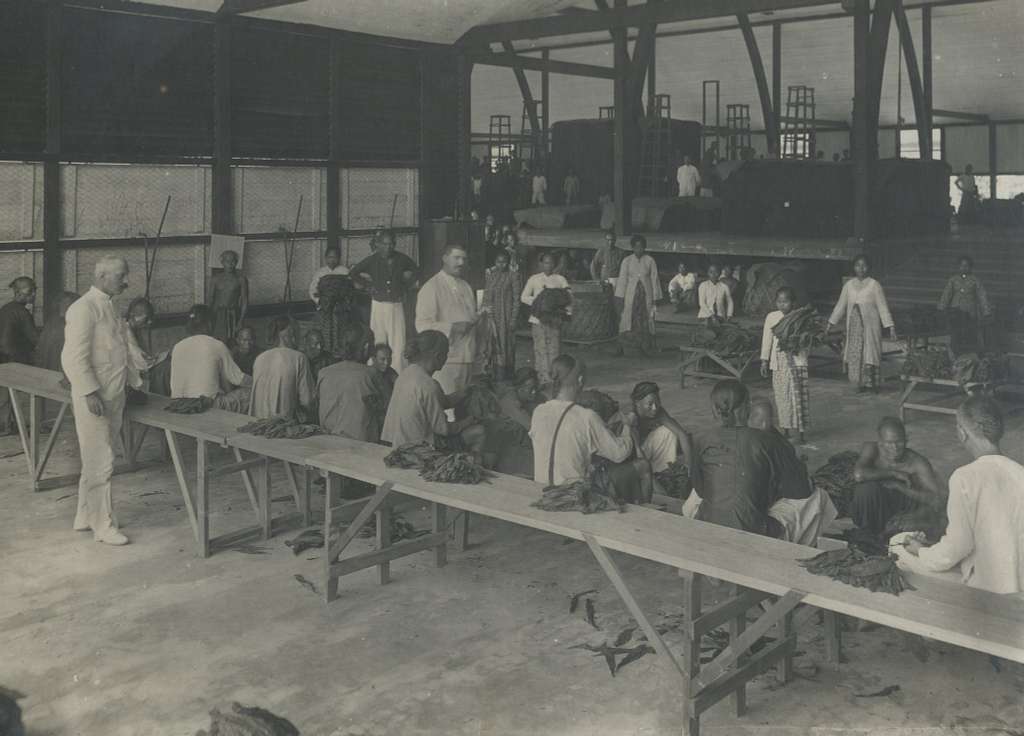
However, the system also created hardship for local communities. A study in The Journal of Economic History documents reports of smallpox and cholera outbreaks in 1834–1835 that were associated with the implementation of the system.
The period from 1844 to 1851 was also marked by crop failures, famine, and typhoid epidemics in several residencies. However, the available data do not establish how much of this hardship was directly caused by the Cultivation System.
The 1850s: Coffee and Sugar Generated More Than 96% of the Profits
After operating for roughly two decades, the Cultivation System reached its peak contribution to Dutch public finances in the 1850s.
A study published in The Journal of Economic History, drawing on earlier historical research, records that net transfers from the Dutch East Indies, known as batig slot, reached nearly 4% of the Netherlands' GDP each year. Their value was also equivalent to more than 50% of Dutch government revenue.
These figures cover the overall net transfers from the Dutch East Indies, rather than income from coffee and sugar alone.
The importance of these two commodities becomes clearer in a working paper published by the National Bureau of Economic Research (NBER). Citing historical research, the paper reports that coffee and sugar accounted for more than 96% of the Cultivation System's profits from the 1850s onward.
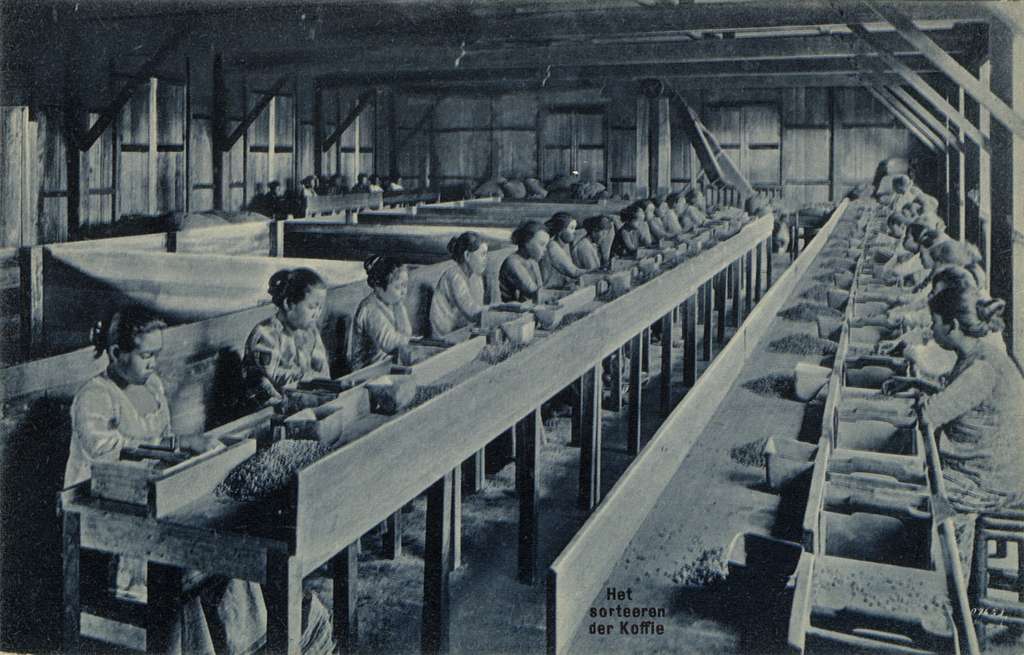
Among the two, coffee consistently generated the highest returns. The study in The Journal of Economic History records that average annual payments to farmers for coffee reached approximately 5.45 million guilders in the 1850s. Payments for sugar, meanwhile, amounted to around 3.02 million guilders.
These figures represent payments made to farmers, not profits received by the colonial government. Nevertheless, they illustrate the scale of production generated by the two commodities under the system.
The study in Verhandelingen Letterkunde also notes that coffee brought substantial profits to the colonial government. However, after the 1870s, other government-controlled crops began to surpass coffee in their contribution.
Why Did the Cultivation System Begin to Disappear?
The enormous revenue generated by Java's plantations did not mean the Cultivation System would last forever. The Dutch government began removing compulsory cultivation requirements for different crops in stages.
In 1862, compulsory pepper cultivation was abolished, followed by cloves and nutmeg a year later. In 1865, the obligations to grow indigo, tea, cinnamon, and cochineal, an insect used to produce dye, were also removed. Tobacco followed in 1866.
The changes accelerated after the Agrarian Law of 1870 was introduced. The law opened the door for Western private companies to operate in the Dutch East Indies and ended the government's monopoly over export trade.
However, the abolition of the Cultivation System was not immediate. The colonial government gradually withdrew from sugar production between 1878 and 1890.
In Priangan, compulsory coffee deliveries lasted even longer. According to the study in Verhandelingen Letterkunde, the final compulsory delivery of coffee to government warehouses took place in 1917.
The Profits for the Netherlands and the Costs for Java's Population
The revenue generated for the Netherlands raises another question: what happened to the people who produced these commodities? Several studies have examined the relationship between forced labour and the living conditions of Java's population.
A study published in The Journal of Economic History used data from different residencies across Java between 1834 and 1879. It found a strong relationship between the demand for forced labour and rising mortality rates. Additional statistical analysis led the researchers to conclude that this relationship was causal.
Poor nutrition, harsh and unhygienic plantation conditions, and the spread of infectious diseases were proposed as possible explanations. However, historical data on the specific causes of death remain limited.
The study also recorded a decline in the average number of forced labourers, from around 120 to 60 per 1,000 residents between the periods 1835–1840 and 1875–1879.
According to the study's estimates, the crude death rate in the late 1870s would have been 10–30% higher if the pressure of the system had remained at the levels seen in the 1830s and 1840s. This figure represents an estimated increase in the mortality rate, not a claim that 10–30% of Java's population died because of the Cultivation System.
Nevertheless, the system's overall impact on local welfare remains debated. The study in Verhandelingen Letterkunde notes that some farmers gained additional income through the expansion of rice fields and more diverse employment opportunities. However, these benefits existed alongside heavy compulsory labour, often for little or no payment.
Additional labour demands imposed by some colonial officials could also contribute to village famines or drive farmers to leave their homes.
Historical assessments of the system's effects also differ. Research discussed in The Journal of Economic History points to stagnation or declining living standards, while other historical studies have presented evidence of improvements in farmers' welfare.
Meanwhile, the NBER working paper finds that areas located closer to sugar factories in the 1850s tend to have higher levels of industrialisation, education, and consumption today than comparison areas. These findings reflect long-term differences between regions, rather than demonstrating that the entire population of Java benefited from the Cultivation System.
Ultimately, coffee and sugar from Java once provided a major source of revenue for the Netherlands. But the figures behind this economic success also reveal the system that made it possible: compulsory cultivation, the surrender of harvests, and the labour of Java's population.


