

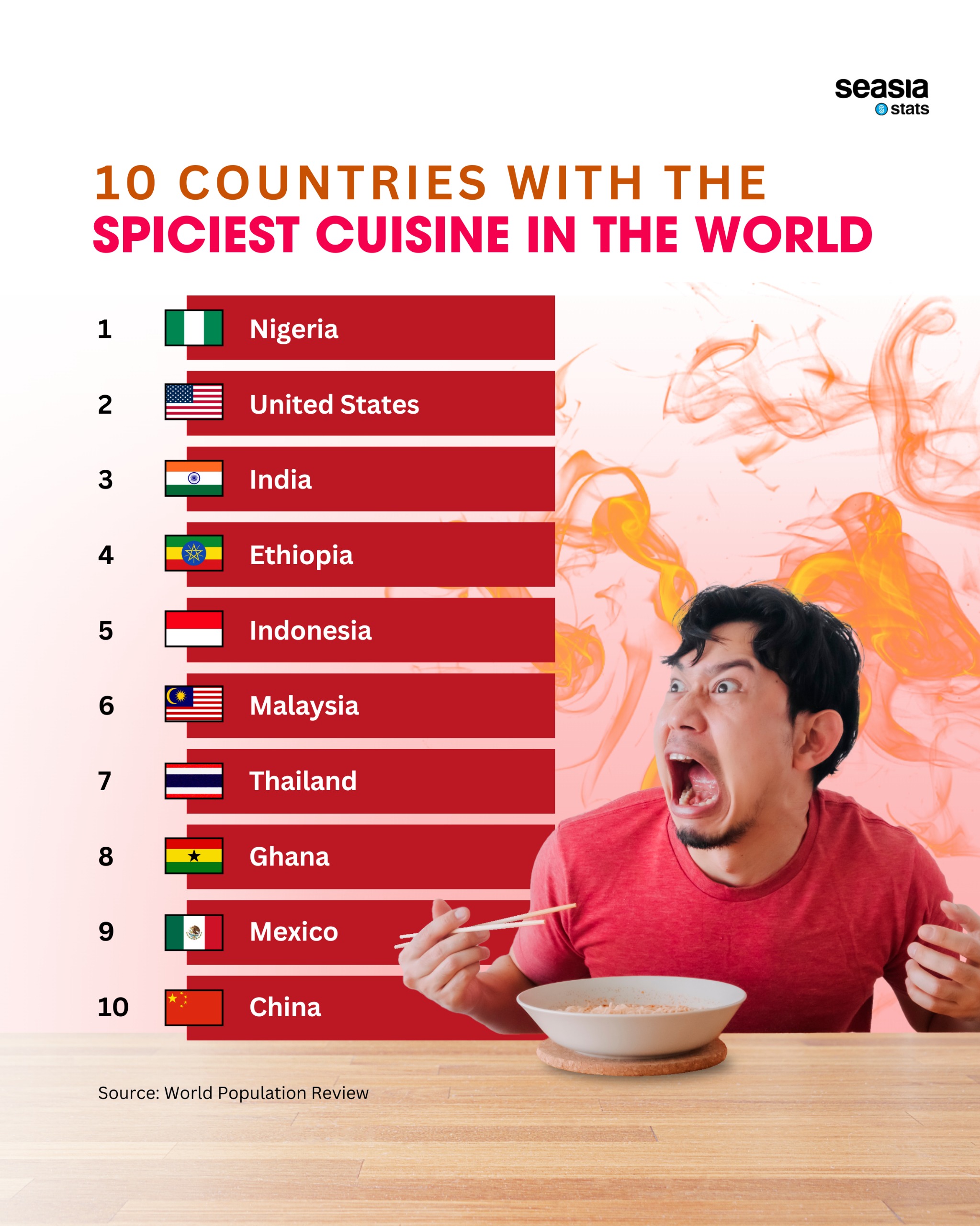
For those who love bold flavors and a fiery kick in their meals, some countries take spice to an entirely different level. A survey by World Population Review has identified the top 10 spiciest cuisines in the world, showcasing the nations where heat is an essential part of the culinary experience.
1. Nigeria – A Fiery West African Delight
Nigerian cuisine is packed with hot peppers, bold seasonings, and complex flavors. Dishes like suya (spiced grilled meat), ofada stew, and pepper soup showcase the country’s love for intense heat, often using scotch bonnet peppers to create unforgettable spice levels.
2. United States – A Melting Pot of Spicy Influences
While American food isn’t traditionally spicy, regions like Louisiana, Texas, and the Southwest have embraced heat in their cuisine. Cajun and Creole dishes, Buffalo wings, and spicy barbecue sauces incorporate hot peppers like cayenne, habanero, and ghost peppers, making the U.S. a hotspot for spice lovers.
3. India – The Land of Endless Spice Blends
India is famous for its diverse use of chilies, aromatic spices, and masalas. From the intense heat of Vindaloo curry to the bold flavors of Andhra Pradesh’s spicy dishes, Indian cuisine offers a spectrum of heat levels. Bhut jolokia (ghost pepper), one of the hottest chilies in the world, originates from India.
4. Ethiopia – Bold and Fiery Flavors
Ethiopian cuisine is known for its berbere spice mix, a fiery blend of chili peppers, garlic, ginger, and other aromatic spices. Doro wat (spicy chicken stew) is a national dish that packs a serious punch, typically served with injera, a spongy sourdough flatbread.
5. Indonesia – Heat in Every Bite
Indonesian food is famous for its sambal, a fiery chili paste used in almost every dish. Meals like rendang, ayam penyet, and sambal goreng are packed with bold spices and fresh chilies, making Indonesia a paradise for spice lovers.
6. Malaysia – A Perfect Balance of Heat and Flavor
Malaysia’s cuisine is an exciting blend of Malay, Chinese, and Indian influences, with heat playing a crucial role. Sambal belacan, laksa, and nasi lemak often feature bird’s eye chilies and spicy pastes, creating a deliciously fiery experience.
7. Thailand – Spice with a Sweet and Sour Twist
Thai food is world-famous for its intense spice, balanced by sweet, sour, and savory elements. Tom yum, som tam (spicy papaya salad), and Thai curries often use bird’s eye chilies, known for their sharp, lingering heat.
8. Ghana – West Africa’s Love for Heat
Like Nigeria, Ghanaian cuisine heavily features hot peppers. Dishes like shito sauce, kelewele (spicy fried plantains), and light soup use chilies to add an extra punch, making Ghanaian food both flavorful and intensely spicy.
9. Mexico – The Birthplace of Chili Peppers
Mexican cuisine is built on chilies, from mild poblanos to scorching habaneros. Dishes like mole, salsa, and tacos al pastor use different varieties of peppers to create depth, complexity, and varying heat levels, making Mexican food one of the most exciting spicy cuisines in the world.
10. China – A Nation of Regional Heat
Chinese cuisine varies by region, but Sichuan and Hunan cuisines are renowned for their fiery flavors. Sichuan peppercorns add a unique numbing spice, while Hunan cuisine uses fresh chilies for an explosive heat. Dishes like mapo tofu and hotpot showcase the country’s love for spice.
Spice Up Your Culinary Journey
Whether you love the deep, smoky heat of Mexico, the numbing spice of Sichuan, or the fiery sambals of Indonesia, these countries offer a thrilling culinary adventure for spice enthusiasts. If you’re daring enough, exploring these cuisines can take your taste buds on an unforgettable, sweat-inducing journey!


