

Brunei Darussalam
The Land of Unexpected Treasures
Search
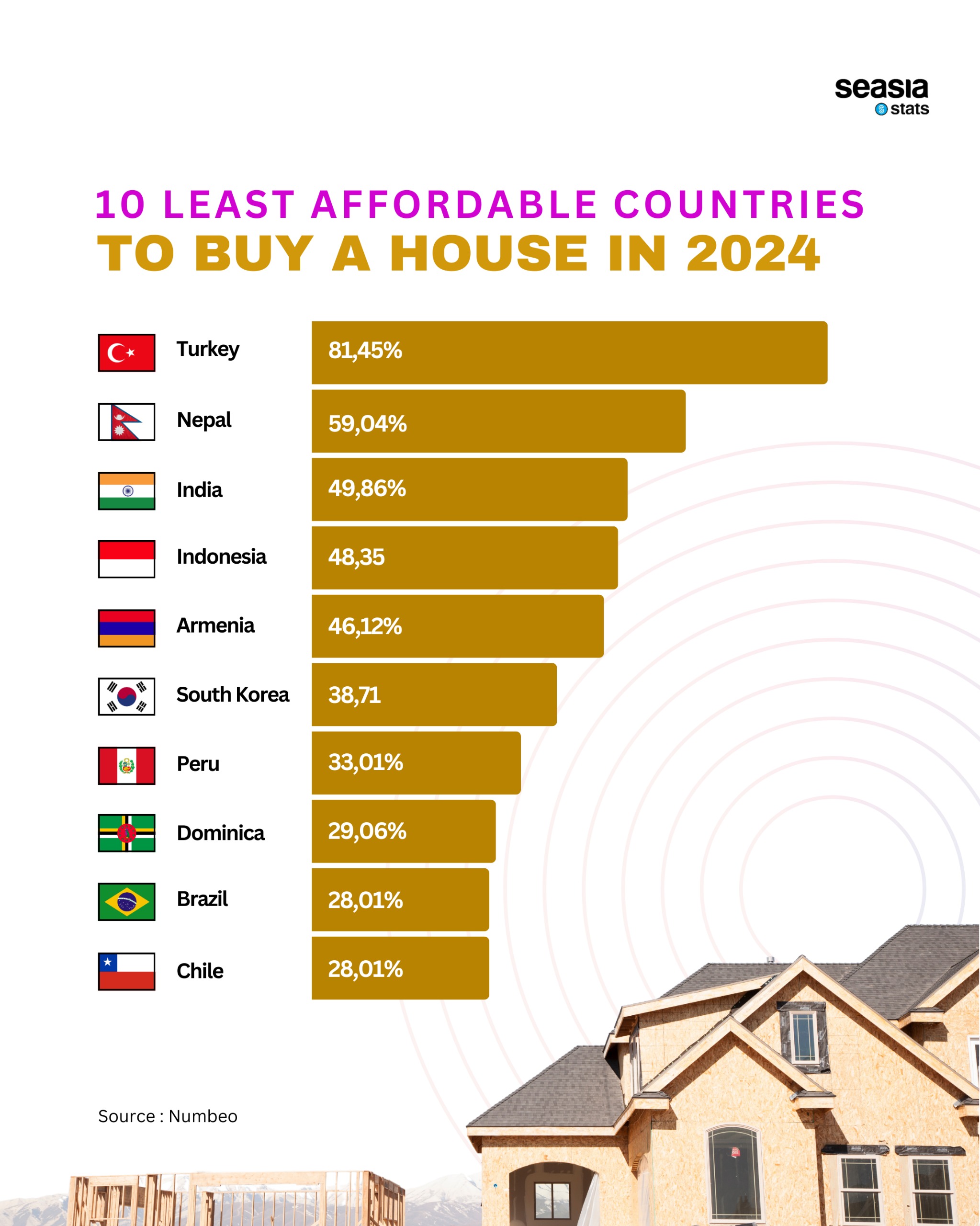
The dream of homeownership is becoming increasingly elusive as property prices soar worldwide. A recent analysis by Bestbrokers.com, drawing on data from Numbeo, sheds light on the growing disparity between house prices and average incomes across 62 countries in 2024.
Surprisingly, the study revealed that some of the most expensive homes are located in countries with lower-income economies. These findings challenge the common perception that high housing costs are exclusive to developed nations with elevated standards of living.
Instead, the ratio of house prices to average income is often disproportionately high in countries where wages remain modest, creating significant financial barriers to homeownership for the majority of citizens.
Indonesia emerged as one of the countries with particularly unaffordable housing. According to the report, the ratio of house prices to the average income in Indonesia stands at a staggering 48.35%. This means that nearly half of an average worker's income would be needed just to cover housing costs, highlighting a significant challenge for those aspiring to own a home in the country.
As a growing economy with increasing urbanization, Indonesia's housing market is driven by high demand, particularly in urban areas like Jakarta and Surabaya. However, stagnant wage growth and limited access to affordable housing options exacerbate the affordability gap.
The findings emphasize the complexities of the global housing crisis. For potential homeowners, affordability is no longer solely about mortgage rates or interest payments—it now encompasses the broader challenge of aligning wages with property market trends.
Policymakers and developers must address this imbalance by:
The housing affordability crisis is a pressing issue that transcends borders. While countries like Indonesia face particular challenges, the broader global trend highlights the urgent need for solutions that balance housing costs with sustainable income levels. Addressing this disparity is not only an economic necessity but also a critical step toward fostering equitable access to homeownership worldwide.


The Land of Unexpected Treasures

Land of the Khmer

The Emerald of the Equator

The Land of a Million Elephant

Land of Indigenous Malay

The Land of the Golden Pagoda

Pearl of the Orient Seas

The Lion City

Southeast Asia Region

The Land of Smiles

A Nation of the 21st Century

The Land of Blue Dragon

Beyond Southeast Asia