

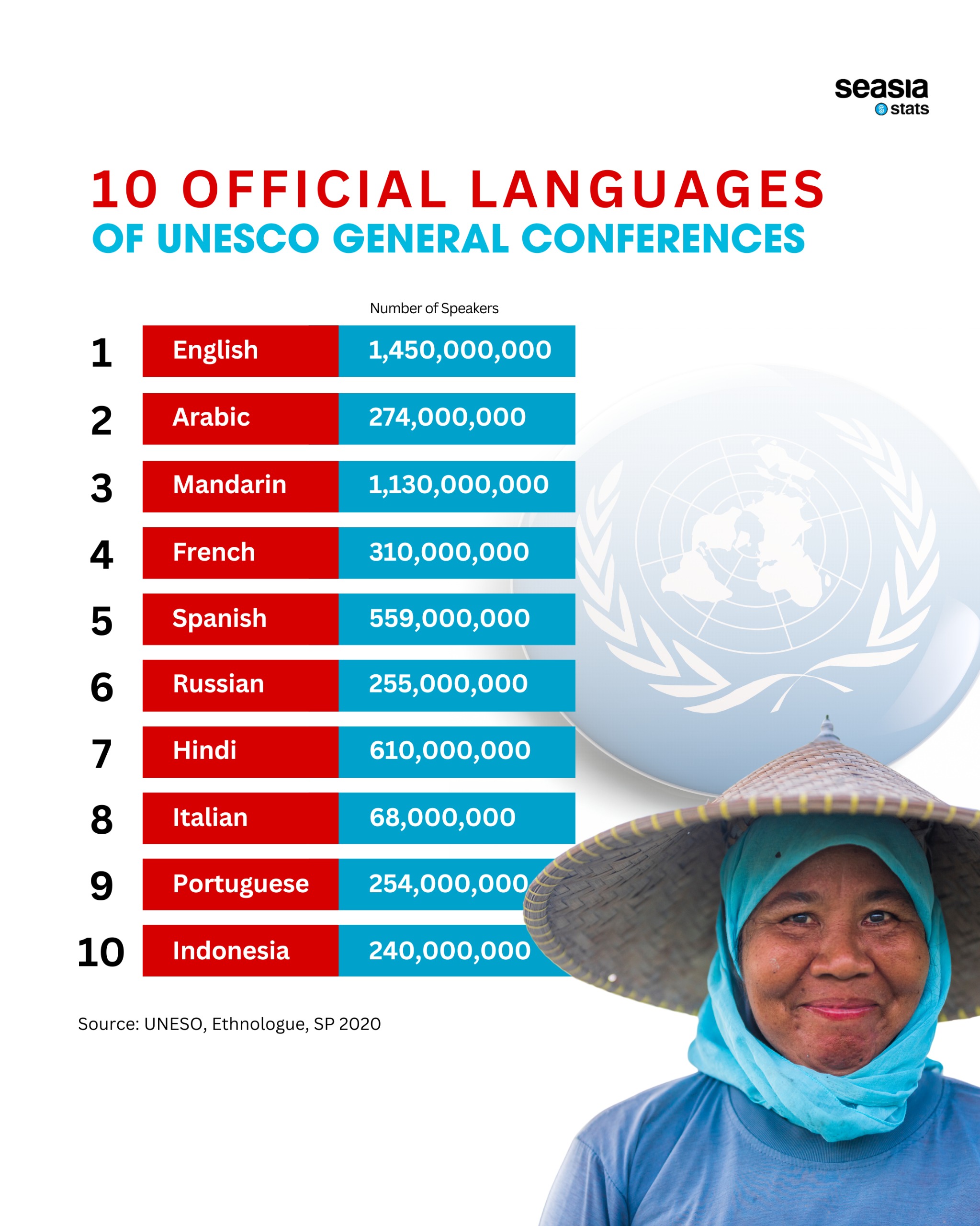
Language is at the heart of cultural identity and global communication. Recognizing this, the United Nations Educational, Scientific and Cultural Organization (UNESCO) embraces 10 official languages during its General Conferences. These languages represent diverse cultures and histories while facilitating international cooperation.
The 10 UNESCO Official Languages Ranked by Speakers
-
English (1.45 billion speakers)
As the world's most widely spoken second language, English serves as a global lingua franca, connecting people across continents. -
Mandarin Chinese (1.13 billion speakers)
The most spoken native language globally, Mandarin is essential for international diplomacy and economic exchange. -
Spanish (559 million speakers)
With official status in 20 countries, Spanish has a strong presence in Europe, Latin America, and even parts of the U.S. -
Arabic (274 million speakers)
Spoken across 26 countries, Arabic bridges communities in the Middle East and North Africa, holding deep historical and religious significance. -
Russian (255 million speakers)
A major language in Eastern Europe and Central Asia, Russian remains influential in diplomacy and scientific research. -
Portuguese (254 million speakers)
With speakers in Brazil, Portugal, Angola, and Mozambique, Portuguese is a truly global language spanning multiple continents. -
Hindi (600+ million speakers)
As one of India’s official languages, Hindi plays a key role in the linguistic and cultural diversity of South Asia. -
French (320 million speakers)
Historically the language of diplomacy, French remains an official language in many international organizations and former colonies. -
Bahasa Indonesia (200+ million speakers)
As the official language of Indonesia, the world’s fourth most populous country, Bahasa Indonesia unites a vast and diverse archipelago. -
Italian (68 million speakers)
Renowned for its contributions to art, music, and cuisine, Italian remains a significant cultural and European language.
UNESCO’s Commitment to Linguistic Diversity
By recognizing these languages, UNESCO fosters inclusivity and enables cross-cultural communication on a global scale. Language preservation is vital for safeguarding heritage, promoting education, and ensuring meaningful international dialogue. Through multilingualism, UNESCO strengthens cooperation between nations while honoring the world's linguistic richness.


