

Brunei Darussalam
The Land of Unexpected Treasures
Search
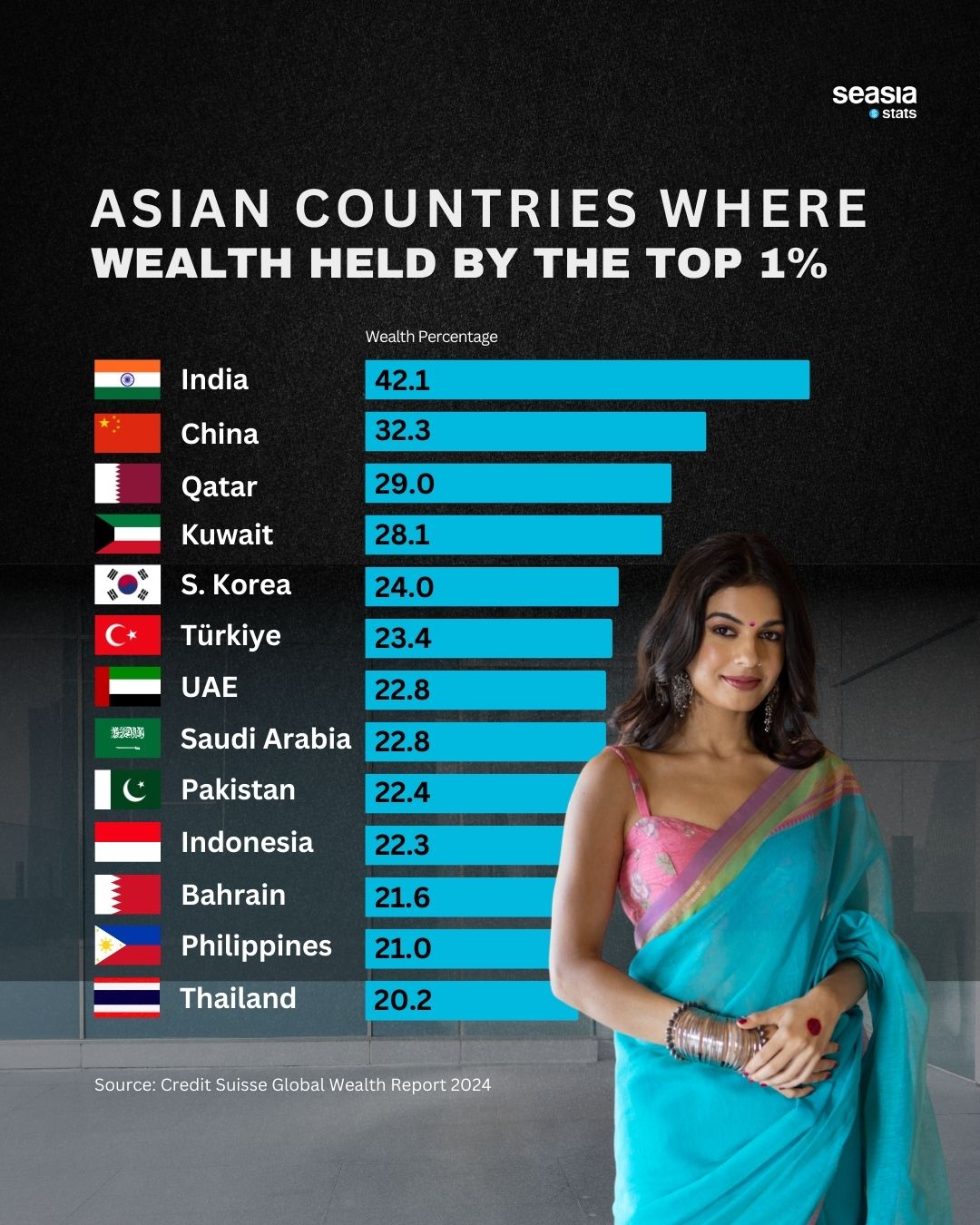
Despite impressive economic growth in parts of Asia, wealth inequality remains deeply entrenched, with a significant share of national wealth held by a very small elite. According to the Credit Suisse Global Wealth Report 2024, several Asian countries show extreme disparities, with the top 1% of the population controlling an outsized portion of total wealth.
These figures shine a spotlight on urgent socio-economic divides that continue to shape policy debates and public concern across the region.
India leads the region, with 42.1% of national wealth held by its top 1%. This stark concentration reflects a growing gap between the ultra-rich and the rest of the population. While India’s tech-driven economy and startup ecosystem have created billionaires, millions still struggle with basic access to health, education, and employment.
China ranks second, where 32.3% of wealth is concentrated in the hands of the richest 1%. Despite decades of poverty reduction and economic expansion, inequality remains a key concern in China’s shift toward consumption-driven growth and a more service-based economy.
In the Middle East, Qatar (29%) and Kuwait (28.1%) also exhibit high levels of concentration — outcomes often linked to oil wealth and limited diversification of economic participation. This has sparked ongoing regional conversations about inclusion, diversification, and sustainability.
The trend is mirrored in Southeast Asia, where countries like:
Indonesia (22.3%)
Philippines (21.0%)
Thailand (20.2%)
report wealth concentration levels that mirror global inequality patterns. These nations, despite fast-paced GDP growth and middle-class expansion, continue to face challenges in income redistribution, education access, and rural-urban divides.
Other countries rounding out the list include:
South Korea (24.0%)
Türkiye (23.4%)
UAE & Saudi Arabia (22.8%)
Pakistan (22.4%)
Bahrain (21.6%)
As Asia’s economies continue to modernize, the spotlight increasingly falls on how wealth is generated and shared. These disparities raise critical questions about economic justice, taxation policy, and the role of government in fostering inclusive growth.


The Land of Unexpected Treasures

Land of the Khmer

The Emerald of the Equator

The Land of a Million Elephant

Land of Indigenous Malay

The Land of the Golden Pagoda

Pearl of the Orient Seas

The Lion City

Southeast Asia Region

The Land of Smiles

A Nation of the 21st Century

The Land of Blue Dragon

Beyond Southeast Asia