

Brunei Darussalam
The Land of Unexpected Treasures
Search
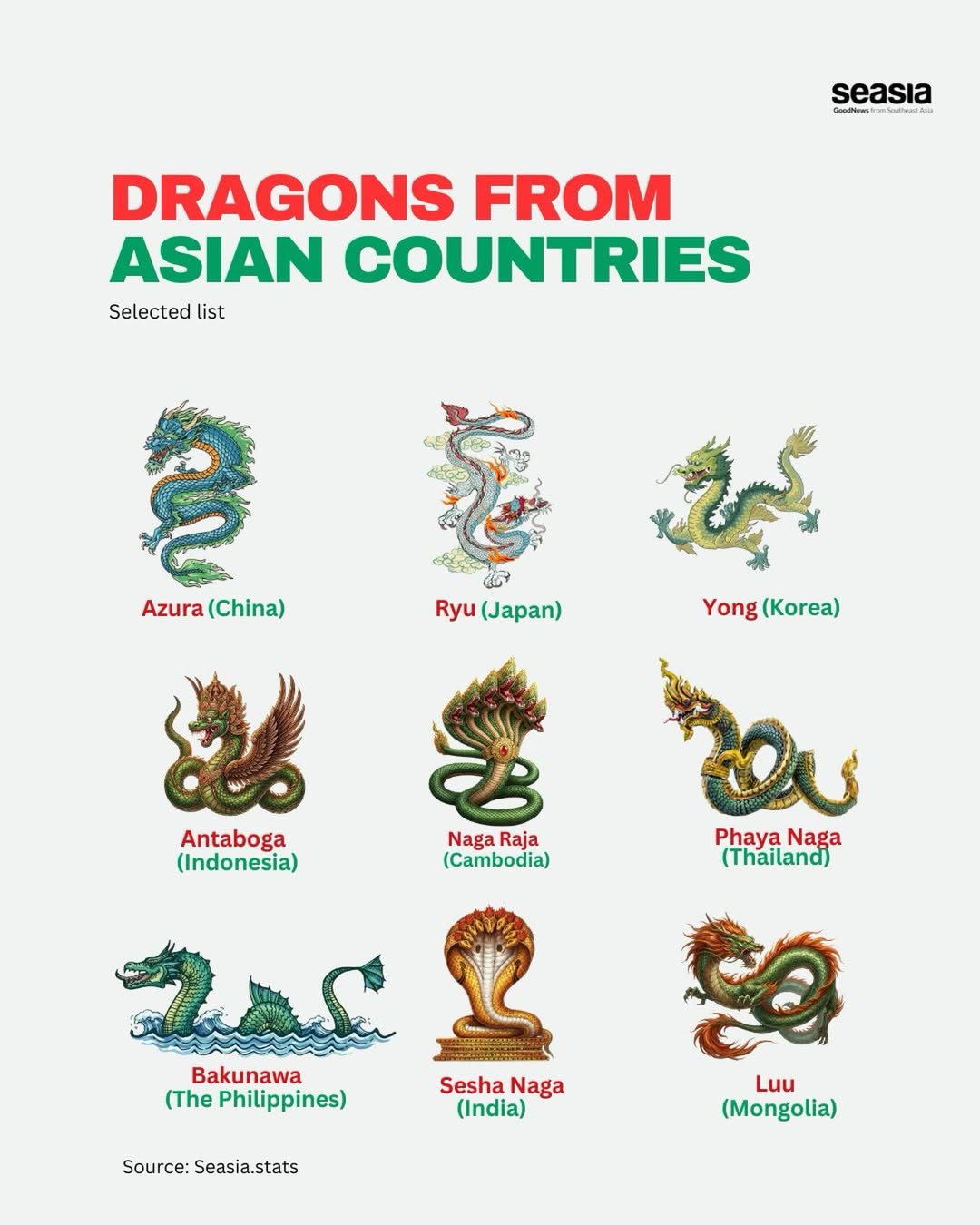
Dragons appear across many Asian cultures, each taking on unique forms and meanings shaped by local history, beliefs, and mythology. Rather than symbols of destruction, Asian dragons are often associated with wisdom, protection, balance, and natural forces such as water, rain, and fertility.
The image highlights a diverse selection of dragon figures from different parts of Asia, reflecting how widespread and deeply rooted these mythical creatures are across the region.
In East Asia, dragons like Azura from China, Ryu from Japan, and Yong from Korea are commonly depicted as long, serpentine beings connected to the heavens and weather. These dragons are often seen as benevolent guardians or divine creatures that bring prosperity and harmony. Their visual similarities show shared cultural influences, yet each carries distinct symbolic roles within its own tradition.
Southeast and South Asia present equally rich interpretations. Antaboga from Indonesia, Naga Raja from Cambodia, and Phaya Naga from Thailand are closely tied to water, earth, and spiritual realms, while Bakunawa from the Philippines is linked to cosmic myths involving eclipses.
Meanwhile, Sesha Naga from India represents infinity and cosmic order, and Luu from Mongolia reflects nomadic and steppe traditions. Together, these dragons illustrate Asia’s cultural diversity while highlighting a shared reverence for mythical creatures as powerful symbols of life, nature, and the universe.


The Land of Unexpected Treasures

Land of the Khmer

The Emerald of the Equator

The Land of a Million Elephant

Land of Indigenous Malay

The Land of the Golden Pagoda

Pearl of the Orient Seas

The Lion City

Southeast Asia Region

The Land of Smiles

A Nation of the 21st Century

The Land of Blue Dragon

Beyond Southeast Asia