

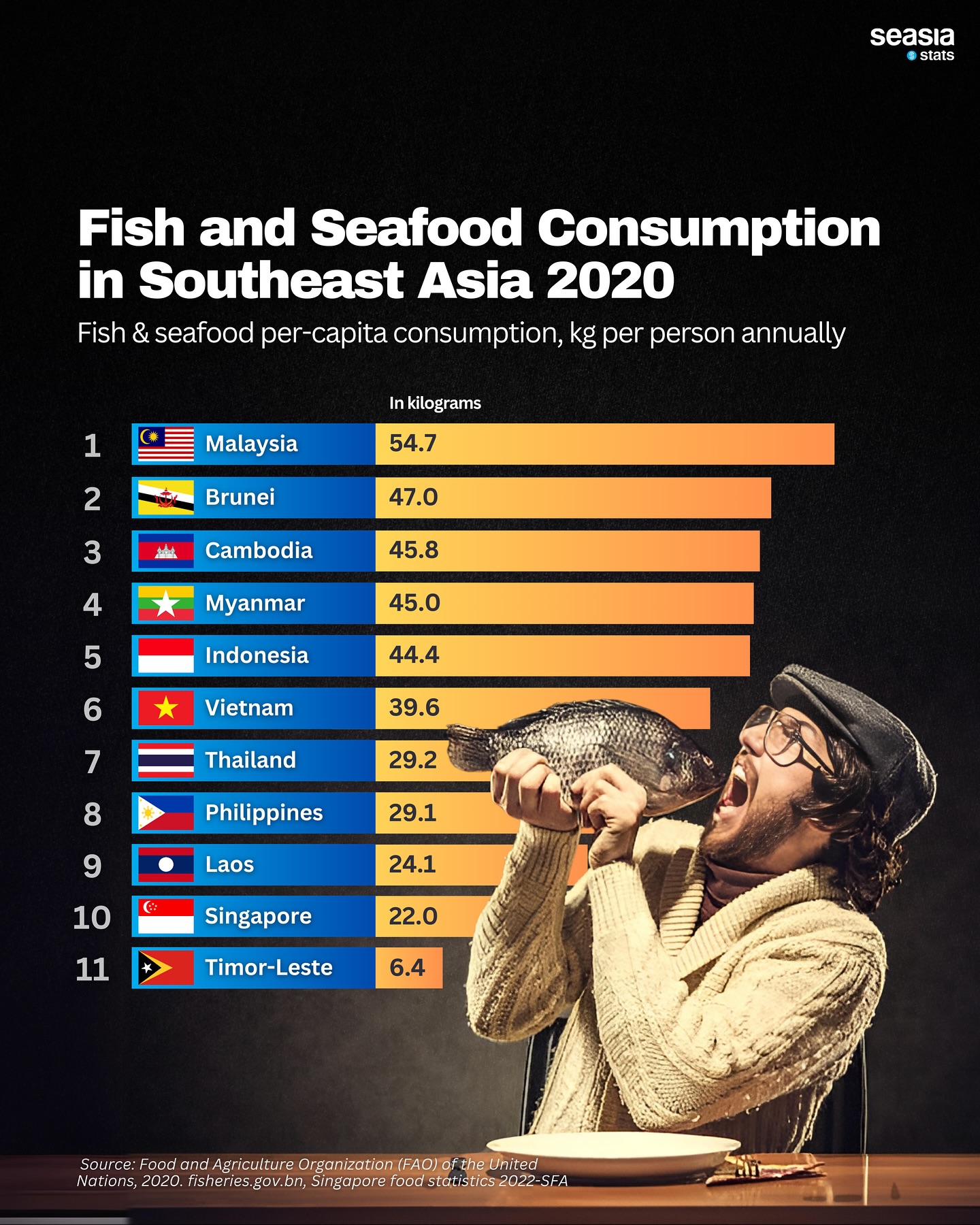
In 2020, Malaysia emerged as the undisputed leader in fish and seafood consumption across Southeast Asia, affirming its status as a nation with a deep-seated love for maritime delicacies. Based on meticulous data compiled by the Food and Agriculture Organization (FAO) of the United Nations, Malaysia claimed the top spot with an impressive per capita consumption of 54.7 kilograms of fish and seafood annually.
This statistic not only underscores Malaysia's profound connection to its coastal resources but also highlights the integral role that fish and seafood play in its culinary heritage. From bustling seafood markets to iconic dishes like nasi lemak with ikan bilis, Malaysia's gastronomic landscape is imbued with a rich tapestry of flavors derived from its bountiful marine ecosystems.
Trailing behind Malaysia in this aquatic race is Brunei, securing second place with a per capita consumption of 47.0 kilograms. Despite its smaller size and population, Brunei exhibits a notable appetite for fish and seafood, reflecting its coastal geography and cultural affinity for maritime cuisine.
Meanwhile, Cambodia clinches the third position with a respectable per capita consumption of 45.8 kilograms. Despite being an inland country, Cambodia's love for fish and seafood is evident in its culinary traditions, where freshwater catches like prahok and amok are celebrated staples in local cuisine.
The data not only serves as a barometer of consumption patterns but also provides insight into the dietary preferences and cultural significance of fish and seafood across the Southeast Asian region. Malaysia's leadership in this domain underscores the nation's deep-rooted relationship with its coastal resources, while showcasing the diversity that enriches the region's culinary tapestry.


