

Brunei Darussalam
The Land of Unexpected Treasures
Search
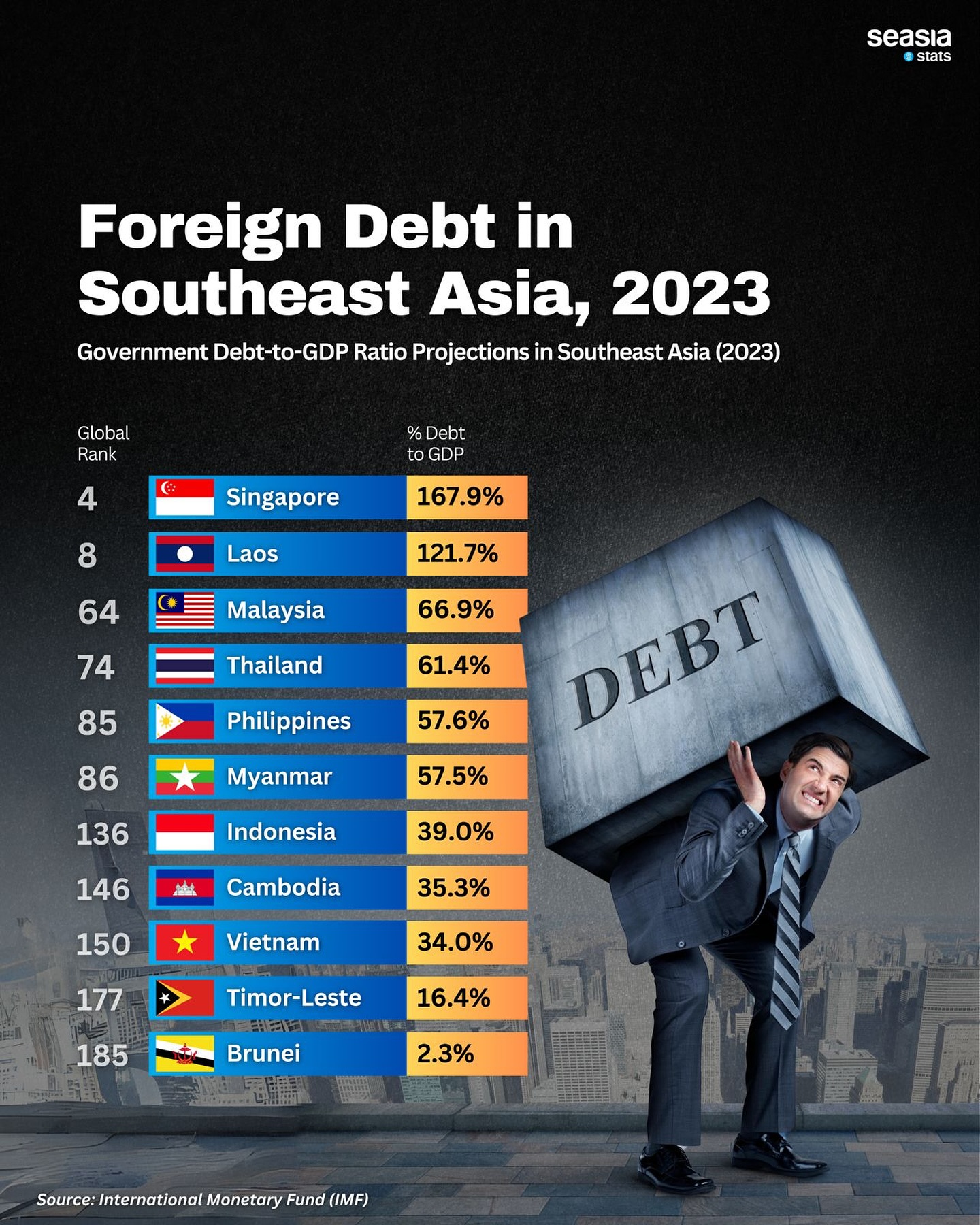
In a surprising turn of events, Singapore has emerged as the country with the largest foreign debt in Southeast Asia, according to recent data released by the International Monetary Fund (IMF). This revelation has sent shockwaves through the region, as Singapore, known for its robust economy and financial stability, now finds itself ranked 4th in the world for foreign debt.
The figures provided by the IMF paint a stark picture: Singapore's foreign debt stands at a staggering 167.9% of its Gross Domestic Product (GDP), surpassing all other nations in Southeast Asia by a considerable margin. This sharp rise in debt ratio has caught many off guard, prompting concerns and questions about the underlying factors contributing to this development.
Comparatively, neighboring Brunei boasts the lowest debt ratio in the region, a mere 2.3% of its GDP. This stark contrast highlights the diverse economic landscapes within Southeast Asia and underscores the magnitude of Singapore's current financial situation.
As stakeholders and observers scramble to make sense of this new reality, the call for vigilance and informed decision-making resonates louder than ever. With the landscape of Southeast Asian economics undergoing significant shifts, staying updated with reliable sources such as seasia.stats becomes imperative for understanding and navigating these complex dynamics.
The implications of Singapore's newfound status as the region's foremost debtor are profound and far-reaching. How the nation addresses and manages this challenge will undoubtedly shape the economic trajectory of not only Singapore but also the broader Southeast Asian region in the years to come.


The Land of Unexpected Treasures

Land of the Khmer

The Emerald of the Equator

The Land of a Million Elephant

Land of Indigenous Malay

The Land of the Golden Pagoda

Pearl of the Orient Seas

The Lion City

Southeast Asia Region

The Land of Smiles

A Nation of the 21st Century

The Land of Blue Dragon

Beyond Southeast Asia