

Brunei Darussalam
The Land of Unexpected Treasures
Search
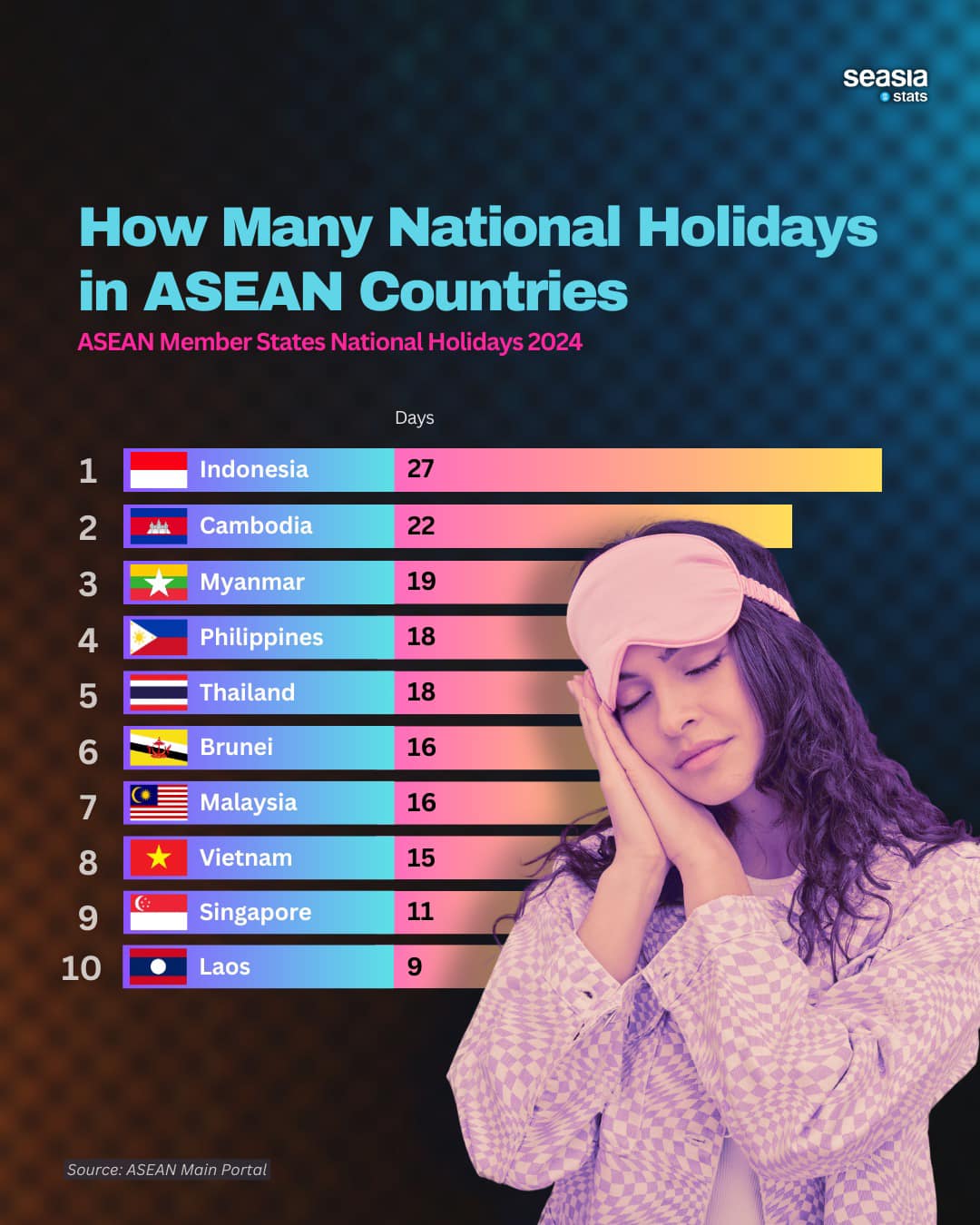
In 2024, Indonesia tops the list of Southeast Asian countries with the most national holidays, offering 27 days off for its citizens. This extensive number reflects the country’s diverse cultural and religious landscape, where national holidays are drawn from various religious traditions, including Islam, Christianity, Hinduism, and Buddhism, as well as key historical dates. These holidays provide important moments for reflection, celebration, and family gatherings.
Indonesia's large number of holidays also highlights the country’s commitment to recognizing its multicultural identity. From Idul Fitri and Christmas to Independence Day, each holiday plays a role in uniting the nation’s different communities. This abundance of holidays can have social and economic implications, as they affect both personal and business activities.
At the other end of the spectrum, Laos has the fewest national holidays among Southeast Asian nations in 2024, with only 9 official days off. The country’s limited number of holidays can be attributed to its relatively homogeneous cultural and religious composition. The key national holidays in Laos revolve around Buddhist traditions, such as the Lao New Year and Boun That Luang, alongside political events like National Day.
Despite having fewer holidays, these occasions are important cultural events in Laos, providing opportunities for communal activities and traditional rituals. The focus on a smaller set of holidays allows for deeper engagement with these events, which often involve family gatherings and religious ceremonies.
Southeast Asia’s national holiday schedules vary widely, reflecting the region's rich cultural and religious diversity. Countries like Thailand and Myanmar follow Indonesia closely, with 22 and 19 national holidays, respectively, driven by a blend of Buddhist, Christian, and animist traditions, as well as national milestones. Cambodia also observes 19 holidays, many of which are linked to Buddhist customs and royal events.
In contrast, countries like Singapore, which has 15 holidays, and Malaysia, with 16, maintain a balance between religious and secular holidays. Their calendars reflect the multicultural make-up of their populations, ensuring that key holidays from various faiths are acknowledged without leading to an overwhelming number of public days off.
The number of national holidays in a country can influence both the social and economic aspects of daily life. In nations like Indonesia, where holidays are plentiful, businesses must adapt to frequent disruptions in productivity, which can affect overall economic output. However, these holidays also provide opportunities for increased spending in sectors like retail and tourism, especially during long holiday periods such as Idul Fitri.
In countries with fewer holidays, such as Laos, the economic impact may be less pronounced, but the social value of these holidays remains significant. The importance placed on certain cultural and religious events ensures that even with a smaller number of holidays, these occasions are deeply meaningful to the people, reinforcing national identity and traditions.


The Land of Unexpected Treasures

Land of the Khmer

The Emerald of the Equator

The Land of a Million Elephant

Land of Indigenous Malay

The Land of the Golden Pagoda

Pearl of the Orient Seas

The Lion City

Southeast Asia Region

The Land of Smiles

A Nation of the 21st Century

The Land of Blue Dragon

Beyond Southeast Asia