

Brunei Darussalam
The Land of Unexpected Treasures
Search
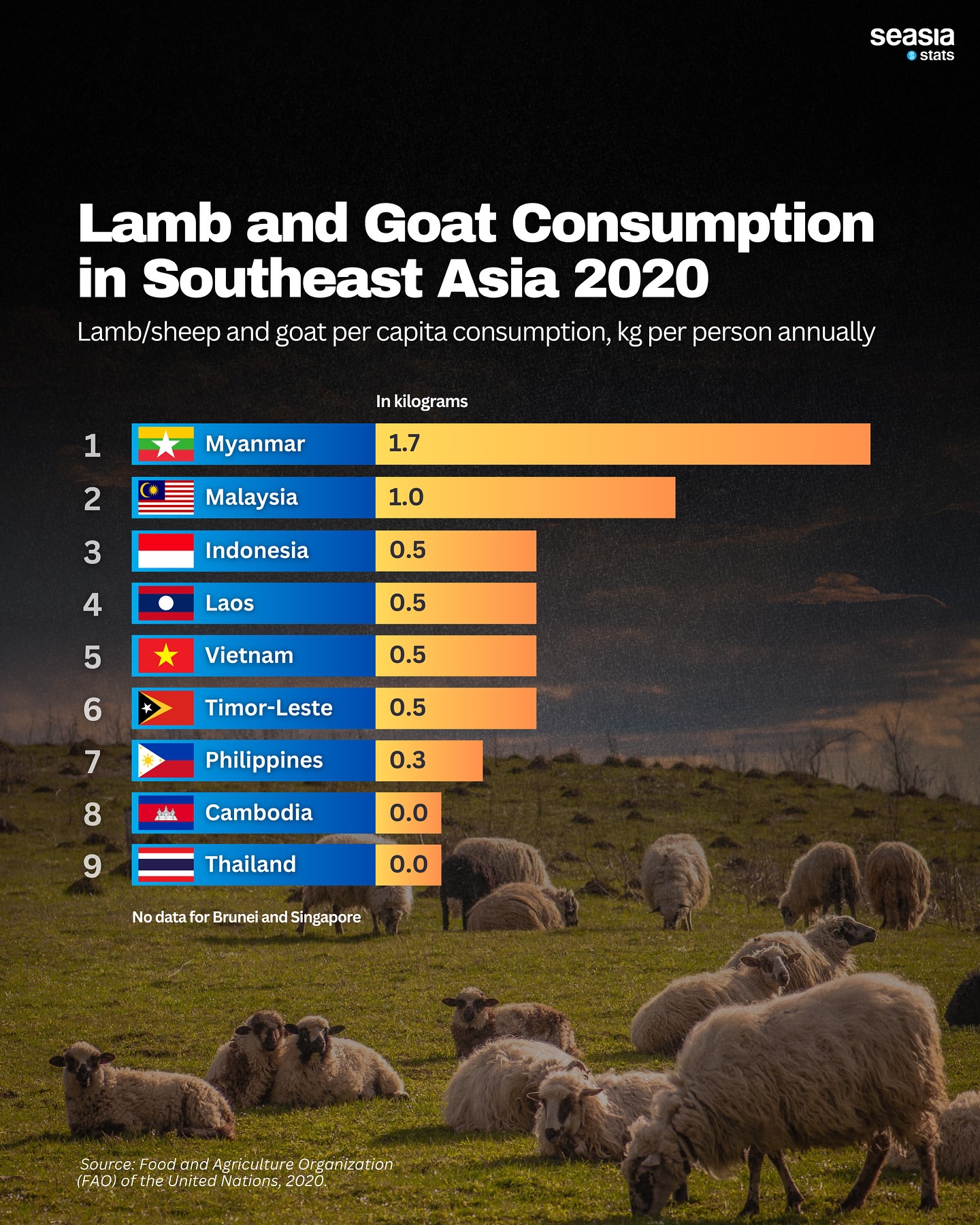
Myanmar stands out as the leading consumer of lamb/sheep and goat meats in Southeast Asia, showcasing a unique culinary inclination towards these protein sources. Based on data meticulously gathered by the Food and Agriculture Organization (FAO) of the United Nations in 2020, Myanmar claims the top position with a per capita consumption of 1.7 kilograms of mutton and other similar meats annually.
This statistic underscores Myanmar's distinct culinary preferences and cultural practices, where lamb/sheep and goat meats feature prominently in traditional dishes and culinary traditions. From hearty curries to succulent kebabs, these meats play a vital role in Myanmar's rich gastronomic heritage, reflecting a harmonious blend of flavors and influences.
Following closely behind Myanmar is Malaysia, securing the second position with a per capita consumption of 1.0 kilogram. While Malaysia may have a slightly lower consumption rate compared to Myanmar, the presence of lamb/sheep and goat meats in Malaysian cuisine highlights their significance in regional culinary landscapes across Southeast Asia.
The data not only sheds light on consumption patterns but also provides insight into the dietary preferences and cultural nuances prevalent in the region. Myanmar's leadership in per capita consumption of lamb/sheep and goat meats underscores the diversity and richness of Southeast Asian cuisines, while highlighting the importance of these meats in shaping culinary identities across the region.


The Land of Unexpected Treasures

Land of the Khmer

The Emerald of the Equator

The Land of a Million Elephant

Land of Indigenous Malay

The Land of the Golden Pagoda

Pearl of the Orient Seas

The Lion City

Southeast Asia Region

The Land of Smiles

A Nation of the 21st Century

The Land of Blue Dragon

Beyond Southeast Asia