

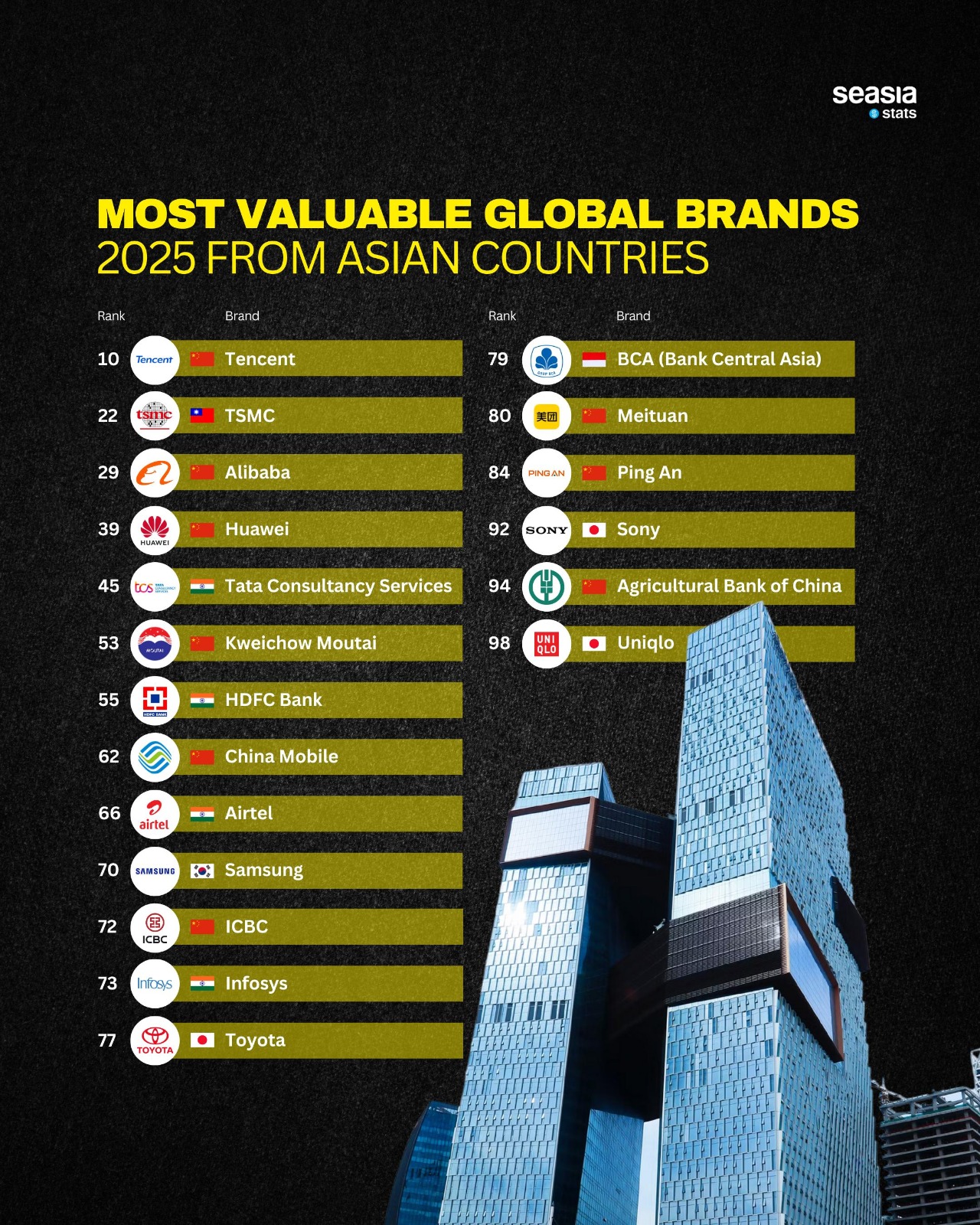
The 2025 Kantar BrandZ rankings spotlight the growing dominance of Asian brands on the global stage, with Tencent standing tall as the 10th most valuable global brand. With a valuation of over $440 billion, Tencent’s position as the highest-ranked Asian brand reflects its immense power in digital and gaming platforms. Its global reach continues to expand, marking China’s strength in shaping the future of tech and entertainment.
Tencent’s success is symbolic of China’s ever-expanding digital ecosystem, encompassing social media, gaming, and fintech. As its platforms like WeChat, Tencent Games, and Tencent Cloud grow, so too does its global influence. This tech titan leads the way for a slew of other high-ranking Chinese brands, proving China’s increasing power in the global market.
East Asia's Continued Dominance in Tech and Services
Following Tencent, TSMC (22nd), Alibaba (29th), and Huawei (39th) further bolster Asia’s presence in the global rankings. Taiwan’s TSMC, with its industry-leading semiconductor production, remains a key player in the global supply chain, while Alibaba and Huawei continue to assert themselves in e-commerce and telecom globally.
These companies signify East Asia’s continuing dominance in sectors like semiconductors, e-commerce, telecom, and cloud computing. With Huawei leading the charge in 5G technology and Alibaba at the forefront of online shopping, these brands reflect the region’s increasing control over the technologies that power modern economies.
India’s Growing Influence in IT and Finance
India also makes a strong mark in the global brand rankings, with Tata Consultancy Services (TCS) (45th), HDFC Bank (55th), and Infosys (73rd) showcasing the country’s rise in IT services and finance. India’s technology and financial sectors are rapidly expanding, establishing Indian brands as formidable players in global markets.
TCS, a leader in IT services, continues to grow as it helps companies worldwide navigate the digital transformation. Similarly, HDFC Bank has solidified its reputation as a financial powerhouse, while Infosys stands as a leader in consulting and technology services. These brands are building India’s global brand value, proving that the country’s technology and financial services sectors are now critical contributors to global business.
Southeast Asia Gets Recognition with BCA
Indonesia’s Bank Central Asia (BCA) stands proudly as the only Southeast Asian brand in the global top 100, ranked at 79th. With a value of $71 billion, BCA has successfully positioned itself as a leading brand in Southeast Asia, making this a significant achievement for Indonesia’s economy. BCA’s rise is a testament to the growing recognition of Southeast Asian brands in the global market.
BCA’s strong consumer base and continuous digital banking innovations have helped it gain recognition as a regional banking powerhouse. Its entry into the top 100 global brands further strengthens Southeast Asia’s growing economic presence and signals more opportunities for the region’s businesses on the global stage.
Japan and South Korea Maintain Strong Brand Presence
Representing Japan, Toyota (77th) and Uniqlo (98th) continue to cement their place among the world’s top global brands. With Toyota’s legacy in automotive manufacturing and Uniqlo’s global appeal in fashion, Japan remains a powerful presence in both industries.
South Korea also plays a key role, with Samsung (70th) proving its long-standing influence in consumer electronics. As a leader in smartphones, home appliances, and semiconductors, Samsung remains an enduring global brand that competes fiercely with companies like Apple and Microsoft in the tech industry.
The Future of Asia’s Global Brand Power
In total, Asia contributes 19 brands to the 2025 Kantar BrandZ top 100, with China leading the count. This dominance is reflective of Asia’s growing influence not only as a manufacturing hub but also as a source of cutting-edge technology, financial power, and consumer goods. The results underscore the region’s ability to produce globally competitive brands that drive international economies.
As Asian companies continue to innovate and expand globally, their ability to dominate brand rankings reflects the increasing importance of technology, e-commerce, and consumer goods in today’s interconnected world. The future is digital, and Asia is leading the charge in shaping the global brand landscape.


