

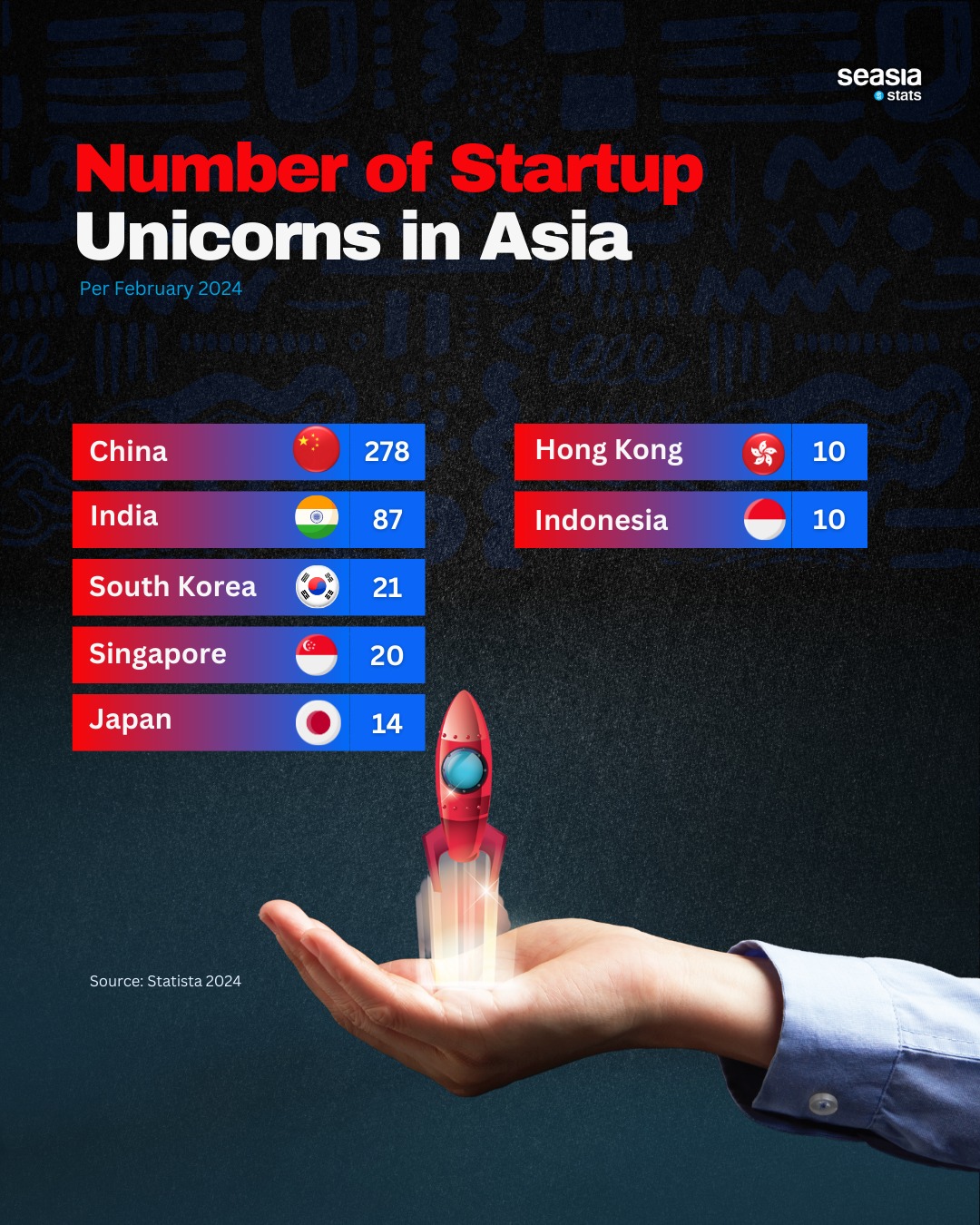
Asia solidifies its reputation as a global powerhouse for startups, hosting a significant number of unicorns—privately held startups valued at over $1 billion. These unicorns not only highlight the continent's innovative prowess but also underline the diversity and growth potential of its entrepreneurial ecosystems.
China: Leading the Pack with 278 Unicorns
China remains at the forefront with an impressive 278 unicorns, reflecting its robust technology and innovation-driven economy. Key sectors such as fintech, e-commerce, and artificial intelligence dominate the landscape, supported by a strong investment climate and a vast domestic consumer base. Major cities like Beijing, Shanghai, and Shenzhen serve as incubators for these startups, further bolstering China’s position as a global leader.
India: A Rising Power with 87 Unicorns
India ranks second in Asia, housing 87 unicorns across various industries. The country’s expanding startup ecosystem benefits from increased venture capital investments and government support initiatives like Startup India. Sectors such as fintech, edtech, and e-commerce drive growth, with cities like Bengaluru, Mumbai, and Delhi NCR emerging as innovation hubs. India's success story highlights its transformation into a global startup destination.
South Korea and Singapore: Technology and Finance Centers
South Korea and Singapore follow with 21 and 20 unicorns respectively. South Korea’s focus on advanced technology, including artificial intelligence and biotech, has fueled its unicorn count. Meanwhile, Singapore thrives as a financial and innovation center, leveraging its strategic location and pro-business policies to attract startups in sectors like fintech, logistics, and healthtech.
Japan: Steady Growth with 14 Unicorns
Japan’s 14 unicorns showcase a steady expansion in its startup ecosystem, particularly in technology and digital services. While traditionally known for large corporations, Japan's increasing focus on fostering innovation and entrepreneurship is bearing fruit, with unicorns emerging in fields such as software, e-commerce, and robotics.
Hong Kong and Indonesia: Emerging Players with 10 Unicorns Each
Hong Kong and Indonesia each boast 10 unicorns, signaling their growing significance in the Asian startup landscape. Hong Kong’s proximity to mainland China and its role as a global financial hub contribute to its appeal. Indonesia, with its large and youthful population, sees unicorns thriving in sectors like fintech, e-commerce, and ride-hailing, cementing its position as a key player in Southeast Asia.
The Future of Asian Startups
Asia’s dynamic unicorn ecosystem underscores the region’s innovation potential and investment attractiveness. As China leads the charge, countries like India, South Korea, and Singapore continue to rise, fueled by supportive ecosystems and global investor interest. With such momentum, Asia is set to remain a dominant force in the global startup landscape.


