

Brunei Darussalam
The Land of Unexpected Treasures
Search
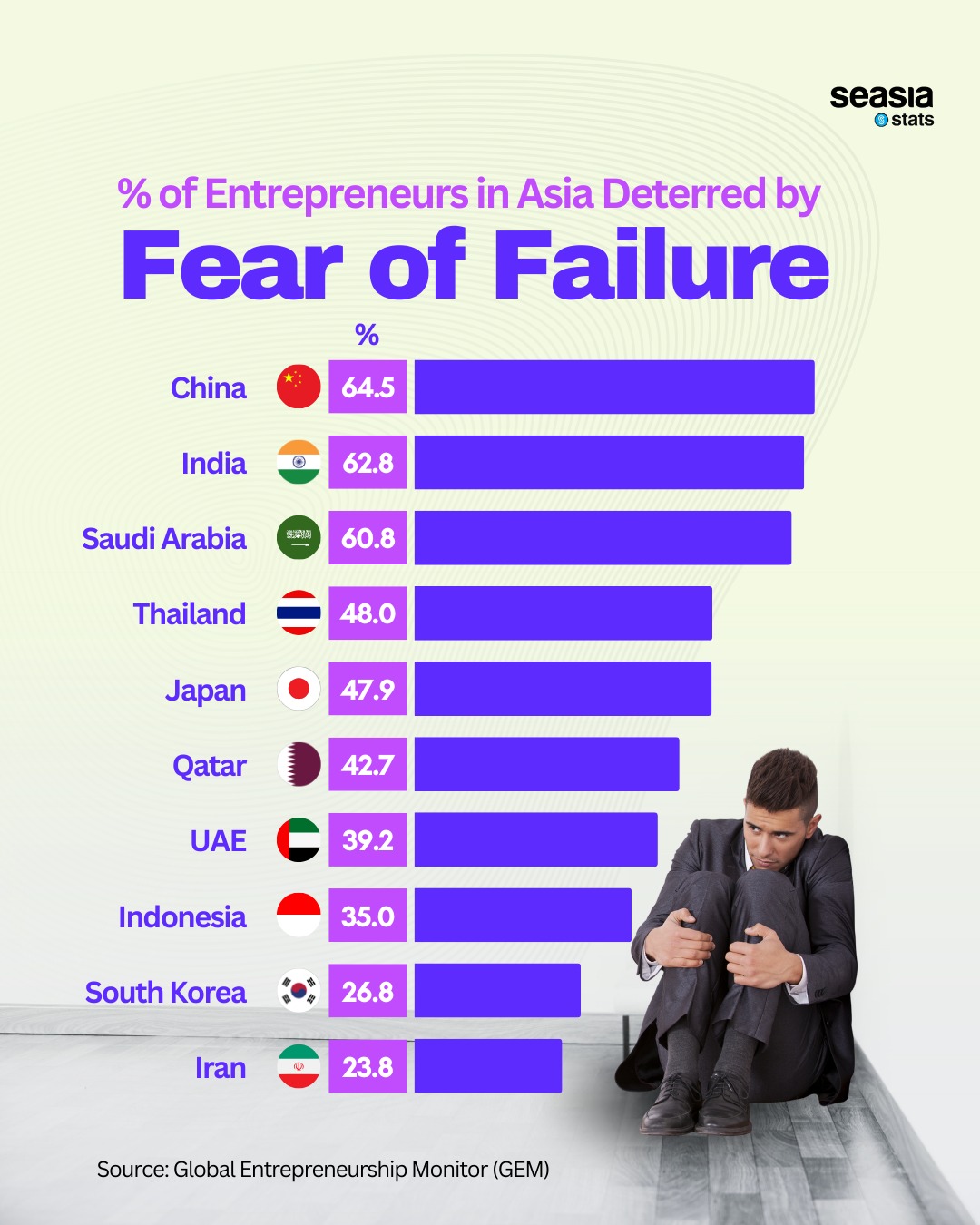
Entrepreneurship is a key driver of economic innovation and job creation, yet fear of failure often hinders its growth. The 2023 Global Entrepreneurship Monitor (GEM) highlights the significant role fear of failure plays in shaping entrepreneurial activity across the world, including in Asia. The findings reveal notable variations among Asian countries, reflecting differences in cultural, social, and economic factors.
Fear of failure is a psychological barrier that prevents many potential entrepreneurs from starting a business. It encompasses concerns about financial losses, societal judgment, and personal setbacks. GEM, which annually surveys entrepreneurial activity in numerous countries, captures insights into these attitudes through extensive data collection methods, including adult population surveys and expert interviews.
In Asian countries, the fear of failure often stems from deep-seated cultural norms and societal expectations. While some economies celebrate risk-taking as a pathway to innovation, others may view business failure as a source of shame, discouraging individuals from pursuing entrepreneurial ventures.
Countries like China, India, and Japan report higher rates of fear of failure among potential entrepreneurs. Several factors contribute to this trend:
Cultural Pressures: In societies with strong expectations for stability and success, the stigma of failure can have long-lasting effects. In Japan, for instance, societal perceptions of failure often discourage individuals from starting a business, as failure is viewed as a personal and professional setback rather than a learning experience.
Economic Risks: Financial instability following business failure is a significant deterrent in densely populated nations like China and India. Limited safety nets and high competition further exacerbate these fears, making entrepreneurship a daunting prospect.
Despite these challenges, initiatives such as China’s push for innovation through state-backed funding and India’s “Startup India” program aim to create supportive environments that reduce barriers to entry.
Contrastingly, countries like Indonesia exhibit lower levels of fear of failure. Factors that contribute to this difference include:
Community and Familial Support: In Indonesia, strong familial ties and community networks provide a safety net that mitigates the risks associated with entrepreneurship. This support system fosters a culture of encouragement and shared risk-taking.
Proactive Policies: Government initiatives like Indonesia’s “National Entrepreneurship Movement” play a pivotal role in reducing fear by offering training, mentorship, and financial support. These programs help build confidence and equip entrepreneurs with the tools to succeed.
As a result, Indonesia’s entrepreneurial ecosystem continues to grow, with a focus on local innovation and small business development.
Addressing fear of failure is crucial for building dynamic entrepreneurial ecosystems in Asia. Governments, educational institutions, and private sectors can collaborate to implement several key strategies:
Promoting Resilience through Education: Integrating entrepreneurship education into schools and universities can help individuals develop the skills and mindset needed to navigate risks. Emphasizing problem-solving and adaptability prepares future entrepreneurs to handle challenges.
Expanding Access to Resources: Providing accessible funding, mentorship, and business incubation centers can lower entry barriers for entrepreneurs. These resources offer a sense of security and guidance, making entrepreneurship more feasible.
Shifting Cultural Narratives: Encouraging societies to view failure as a stepping stone rather than a defeat can change attitudes toward entrepreneurship. Sharing stories of successful entrepreneurs who overcame initial setbacks can inspire others to take risks.
Fear of failure continues to shape entrepreneurial activity in Asia, with varying degrees of influence across countries. While developed economies like China, India, and Japan grapple with high rates of fear, emerging markets such as Indonesia demonstrate resilience through supportive networks and policies. By addressing the underlying causes of fear and fostering supportive ecosystems, Asian nations can unlock the full potential of their entrepreneurial talent, driving economic growth and innovation across the region.


The Land of Unexpected Treasures

Land of the Khmer

The Emerald of the Equator

The Land of a Million Elephant

Land of Indigenous Malay

The Land of the Golden Pagoda

Pearl of the Orient Seas

The Lion City

Southeast Asia Region

The Land of Smiles

A Nation of the 21st Century

The Land of Blue Dragon

Beyond Southeast Asia