

Brunei Darussalam
The Land of Unexpected Treasures
Search
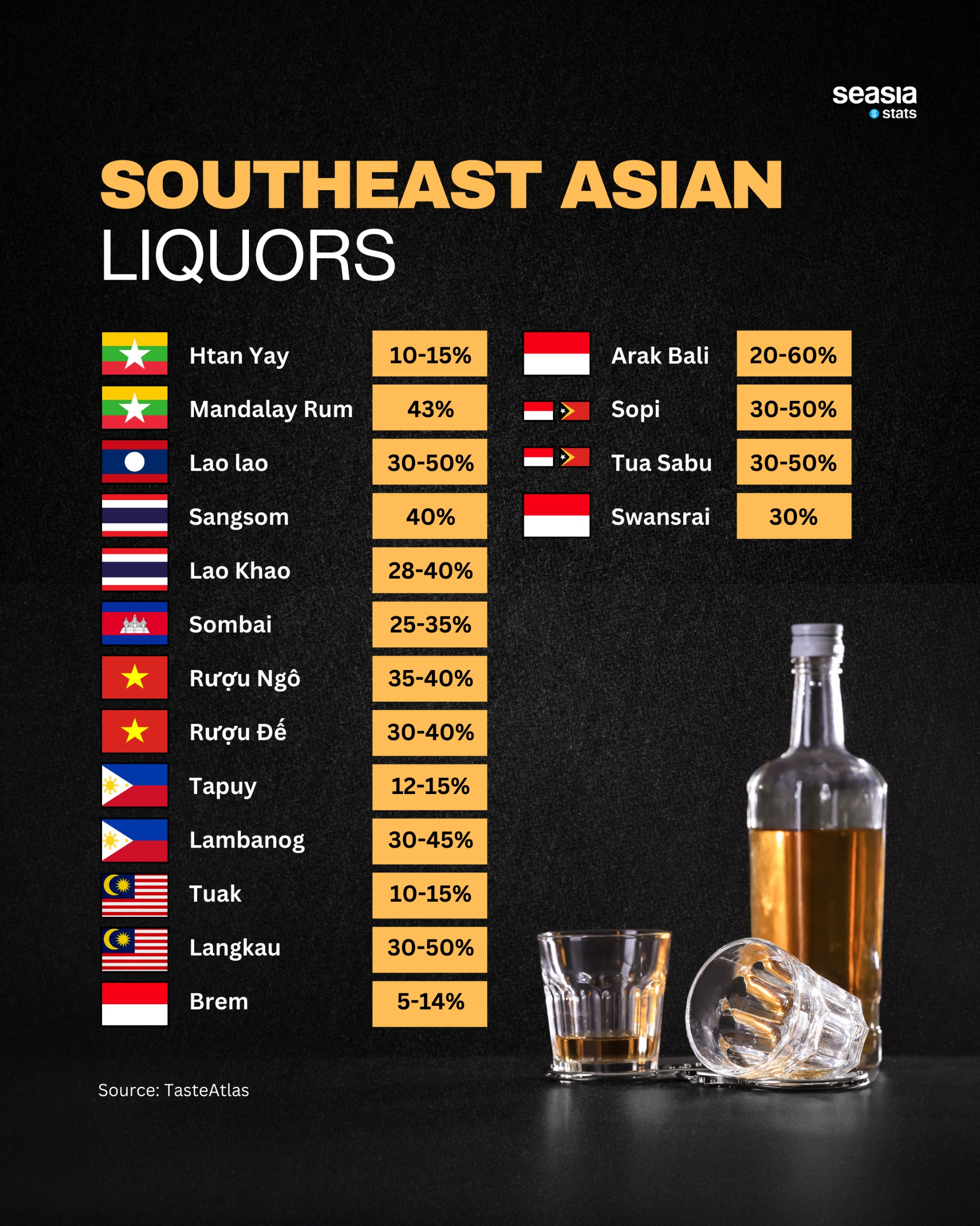
Southeast Asia is renowned for its rich cultural heritage, and its diverse array of traditional liquors is no exception. Each country in the region boasts unique alcoholic beverages that reflect local ingredients, traditions, and tastes. From rice-based spirits to infused wines, these liquors play an important role in social rituals, ceremonies, and everyday life.
Myanmar
Htan Yay: A traditional liquor with an alcohol content ranging from 10–15%. Commonly consumed during social gatherings and celebrations.
Mandalay Rum: A strong, locally produced rum with an alcohol content of 43%, favored for its bold and distinctive flavor.
Laos
Lao Lao: A staple rice whiskey that varies in strength between 30–50%. Widely consumed in both casual and ceremonial contexts.
Lao Khao: Another rice-based liquor, Lao Khao has an alcohol content of 28–40% and is often used in traditional ceremonies.
Thailand
Sangsom: A popular rum with a smooth taste and an alcohol content of 40%. Known for its accessibility and strong presence in both local and tourist markets.
Cambodia
Sombai: An infused rice wine with an alcohol content of 25–35%, Sombai is celebrated for its flavor complexity derived from native fruits and spices.
Viet Nam
Rượu Ngô: A corn-based liquor with an alcohol content of 35–40%. Often served during family gatherings and local festivities.
Rượu Đế: A traditional spirit with an alcohol content of 30–40%, considered one of the most iconic liquors in southern Viet Nam.
Philippines
Tapuy: A mild rice wine with an alcohol content of 12–15%. Known for its smooth texture and cultural significance among indigenous groups.
Lambanog: Often referred to as coconut vodka, this potent liquor ranges from 30–45% in alcohol content and is a festive favorite across the islands.
Malaysia
Tuak: A rice wine with an alcohol content of 10–15%, commonly brewed for festivals and community events in East Malaysia.
Langkau: A distilled rice liquor with a higher alcohol content of 30–50%, known for its strength and traditional use among indigenous communities.


The Land of Unexpected Treasures

Land of the Khmer

The Emerald of the Equator

The Land of a Million Elephant

Land of Indigenous Malay

The Land of the Golden Pagoda

Pearl of the Orient Seas

The Lion City

Southeast Asia Region

The Land of Smiles

A Nation of the 21st Century

The Land of Blue Dragon

Beyond Southeast Asia